
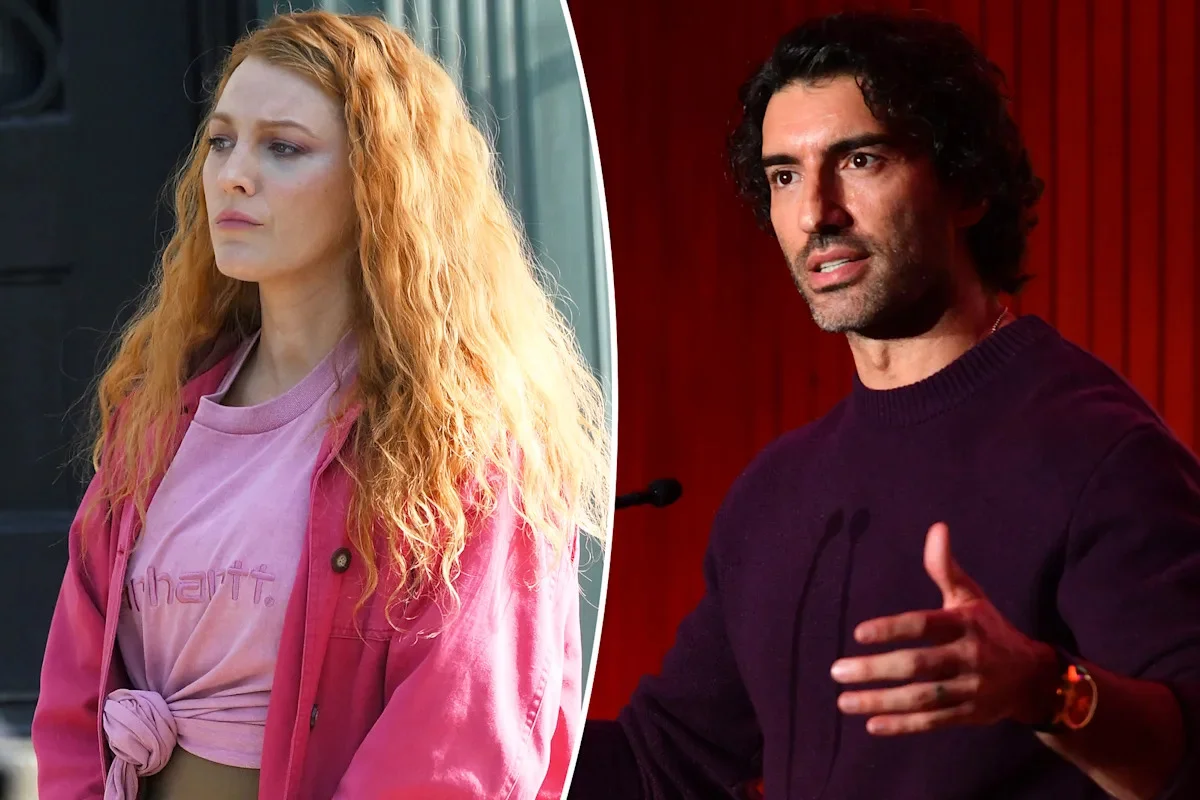
Leaked internal emails from Sony reveal hostile and inflammatory comments made by executives targeting Blake Lively and Justin Baldoni amid controversy surrounding the film’s promotion and related disputes in 2024. The revelations highlight intense tensions within the studio over Baldoni’s remarks and Lively’s involvement in the project.
Justin Baldoni’s Controversy Sparks Backlash Within Sony
Actor and director Justin Baldoni became the focus of significant criticism from Sony executives following remarks he made during an August 2024 interview, which stirred controversy regarding sensitive content in the film. Senior marketing executive Danni Maggin labeled Baldoni a “moron” in an email after taking issue with his description of a key scene involving his character Ryle and Blake Lively’s character Lily.
Baldoni had explained the scene’s violent undertones as Ryle’s twisted attempt to
“force any love she had for Atlas out of her,”
referring to a physical assault. This phrasing alarmed Sony’s marketing team, which reportedly edited the interview before release but still expressed displeasure in internal communications. Maggin wrote,
“Justin is basically alluding to ‘raping’ Atlas out of Lily when talking to the Dallas Morning News. We cut the tape but he is a moron.”
According to Josh Greenstein, former president of Sony, Baldoni
“shouldn’t do any more press but he has a lot left so maybe we can talk asap,”
reflecting the company’s concern over his public statements. Baldoni had sought to explain Ryle’s motivations as rooted in jealousy and insecurity rather than condoning the assault, but studio executives found his choice of words deeply problematic.
Clashes Over Film Promotion and Legal Battles
The emails also reveal a clear rift between Sony’s marketing team and Baldoni’s approach to promoting the film. The studio’s promotional plan, cited in Blake Lively’s ongoing lawsuit against Baldoni, advised the actors to
“avoid talking about this film that makes it feel sad or heavy”
and to emphasize
“Lily’s strength and resilience as opposed to describing the film as a story about domestic violence.”
Baldoni deviated from these instructions, openly discussing domestic violence themes in public interviews.
Baldoni’s legal team responded by denying that he ever agreed to such restrictions, asserting his commitment to raising awareness of domestic abuse.
“Against much resistance from the Film’s distributor, Baldoni, from day one, made it clear that he was making this Film to bring awareness to domestic violence and would not refrain from doing so when promoting the Film. He did not ‘go rogue,’ as Lively alleges,”
his lawyers maintained.
Profanity and Personal Attacks Directed at Blake Lively
Unsealed communications contain explicit insults aimed at actress Blake Lively, reflecting the fraught atmosphere behind the scenes. Andrea Giannetti, Sony’s executive vice president of production, admitted in legal depositions to calling Lively a “f-cking terrorist,” a label echoing throughout other internal messages, including one from Sanford Panitch, president of Sony’s Motion Picture Group, who used the same term informally.
Giannetti explained,
“There was a tremendous amount of money that had been invested and spent, and we had to finish the movie or it was unreleasable,”
underscoring the high stakes involved in the project.
In addition to harsh name-calling, Sony executives criticized Lively’s decision to launch a haircare brand during the film’s release. Panitch described the timing as “epic-level stupid,” expressing frustration that she “wouldn’t listen,” despite reports stating the product launch was scheduled well in advance and could not be postponed.
Panitch wrote,
“It’s quite ironic because she has a huge hit movie headed to $300M-plus. And probably will never work again, or not for a while. Although even Hathaway recovered. Tom thinks she’s probably and bizarrely unhirable right now.”
Legal Action and Ongoing Fallout
Blake Lively filed a lawsuit against Justin Baldoni in December 2024, accusing him of sexual harassment and retaliation related to their work on the film. Baldoni denies these allegations, and the case is slated for trial in May 2026. The leaked Sony emails reveal an escalating internal conflict, amplified by the use of harsh language and personal attacks from high-level executives.
This discord between the star, director, and the studio not only complicates the film’s promotion but also tarnishes its public image at a critical moment. The clashing perspectives over marketing strategies and personal conduct underscore a broader struggle within the industry about handling sensitive topics responsibly, managing talent, and protecting reputations.
The intensifying tension at Sony reflects the challenges studios face when balancing creative expression with public relations, especially around films addressing difficult subjects such as domestic violence. As the court battle approaches, stakeholders will be watching closely to see how the dispute between Lively, Baldoni, and Sony evolves and impacts future projects.
Related semantic context: related coverage · external reference.
