
Chalamet Spent Six Figures is the primary entity for this article, supported by Entertainment topic context.
Related WII context: related keeper article. External authority context: industry context.
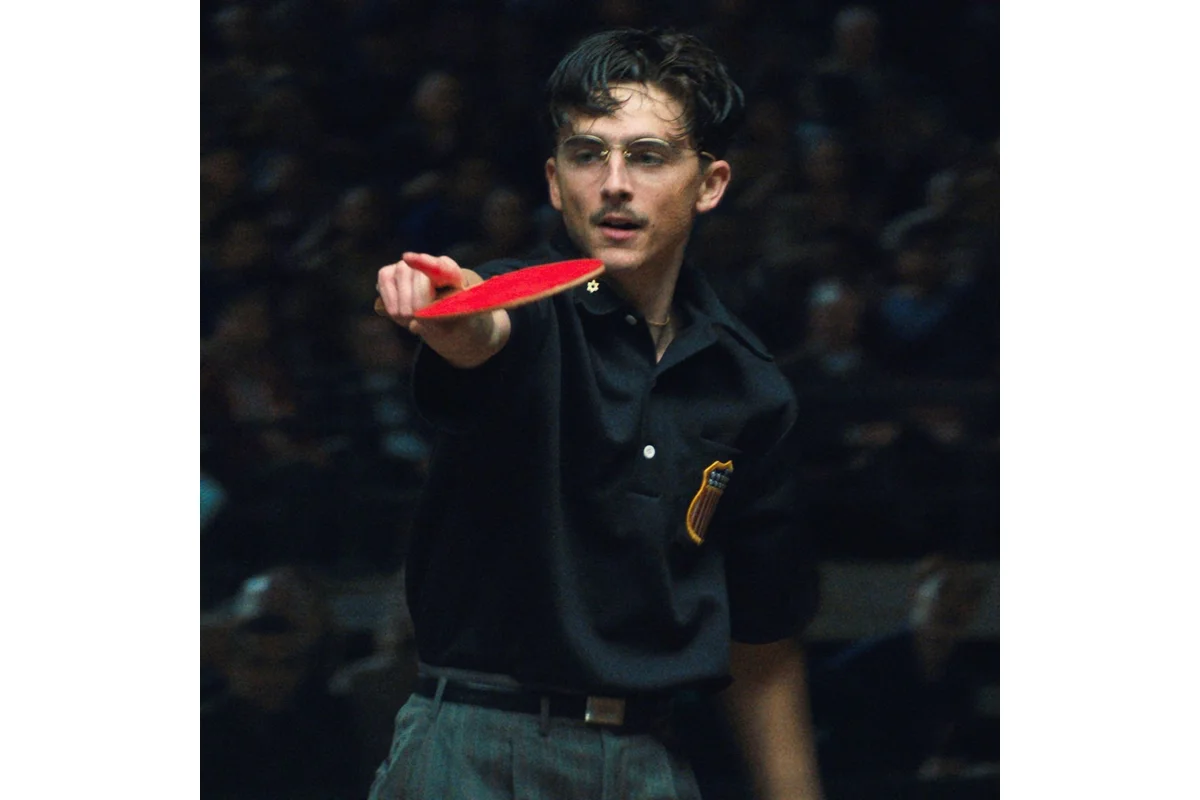
Timothée Chalamet has drawn widespread attention for his unique approach to the Timothée Chalamet press tour, beginning with the Bob Dylan biopic A Complete Unknown and extending to this year’s highly talked-about Marty Supreme. At a Q&A event held Sunday at London’s Prince Charles Cinema, the Oscar-nominated actor explained that his innovative promotional tactics are less about marketing and more about artistic expression.
Chalamet’s Press Tour as an Extension of Artistic Vision
In a candid discussion with filmmaker Richard Curtis, Chalamet addressed his unconventional press strategies, including transforming the Las Vegas sphere into a giant ping-pong ball and hosting a deliberately chaotic Zoom meeting. He insisted these stunts should not be mistaken for simple publicity gimmicks.
“Here’s the thing — this risks killing any mystery around it, but I really don’t look at it as promotion or marketing. I see myself as an artist expanding,”
Chalamet said.
“And certainly the Zoom had a little bit of satire to it, but the initial video in the glass box, those [ping-pong ball] heads, I feel like I’m expressing myself. You know, a lot of people want to be told what to say, how to say it and where to stand — I’m talking on the acting front. Also, people don’t want to misstep. I feel like I’ve got the keys, I’ve got the right attitude, I’ve got the juice.”
Early Steps in Reinventing the Publicity Playbook
Chalamet traced the origin of his distinctive promotional style back to A Complete Unknown, where he lip-synced to Bob Dylan’s “Visions of Johanna” on a New York City pier and performed deep Dylan tracks on Saturday Night Live. He shared that convincing the show’s producer, Lorne Michaels, to allow him to perform both as host and musical guest required persistence and a personal financial investment exceeding six figures.
“I spent over six figures out of my pocket to do the ‘SNL’ performance,”
he revealed.
“Lorne Michaels said, ‘Hey, do you want to host ‘SNL?’’ I said, ‘Yeah, can I do the music?’ He’s like, ‘No.’ I said, ‘Alright, I’m not doing it.’ He said, ‘OK, do the music.’ But I refused to take no for an answer.”
Breaking Down the Intent Behind Chalamet’s Strategies
Chalamet described his approach as a new model for reaching diverse audiences, especially those less engaged with traditional cinema-going. He pointed out that Marty Supreme attracted a lower-frequency moviegoing crowd, which he considers a positive sign. Far from conventional marketing, he said his efforts come from a place of sincerity.
“This is the new way of doing stuff. I’m trying to reach audiences, you know. I don’t want to be in the pretentious in-crowd. ‘Marty Supreme’ in America had the least frequent moviegoing audience this year — people that weren’t going to see everything. That’s my favorite feedback on the movie. So the most pretentious answer I could give you, which I actually honestly feel, is that it’s not marketing or promotion. That sounds like a gimmick, and this is not a gimmick. This is coming from my heart and my soul.”
Chalamet’s Acting Preparation Reflects His Authenticity
Beyond press tours, Chalamet said his process for taking on roles emphasizes emotional immersion and method acting. He acknowledged that over-calculating performances isn’t consistent with his style and reiterated the intensity he brings to his craft.
“I feel like Method energy, that’s kind of my thing,”
he said.
“So that just means being in the tone of the film … I think anything too calculated — some actors are like that, that’s not really my style.”
Oscar Ambitions and Industry Realities
With Marty Supreme now positioning him for another best actor Oscar nomination, after last year’s loss to Adrien Brody for The Brutalist, Chalamet was asked directly whether he desires the award. His response was thoughtful and measured, describing awards shows as reciprocal endorsements among filmmakers rather than the sole focus of his career.
“Listen, yes. But I want to give you context for that, because sometimes I feel like I’ve been misinterpreted in my quest,”
Chalamet said.
“All these award things, they supplement the movie. I’m not going to turn this into a monologue about the crisis of theaters and stuff, but when you go to an awards show, everyone’s participating in an advertisement for each other — in the best sense of the word, I’m not saying that in a malicious way. I’m supporting ‘Hamnet’ and ‘One Battle After Another’ the way anyone in those movies is supporting ‘Marty Supreme.’ So anything else, yes, it helps to feed into the narrative … everyone’s pursuing it, you know?”
He swiftly clarified his remarks to avoid misunderstandings about his motivations.
“I don’t want it to be misinterpreted that the world is in the condition it’s in and I’m going to bed like, ‘Fuck man, I need that [Oscar].’ You know, I’m living on planet Earth.”
Lighthearted Moments on Personal Topics
During a playful rapid-fire segment, Chalamet fielded questions about his private life, including his relationship with Kylie Jenner. Asked if he plans to marry, he responded with a mix of humor and caution.
“Wow, that’s so personal,” he remarked before adding,
“Yeah, no — you’re going to get me in trouble, man.”
Chalamet’s Legacy and Purpose
Wrapping up the session, Richard Curtis inquired about what Chalamet hopes to be remembered for and his sense of purpose, themes central to his character Marty in the film. Chalamet spoke about the importance of inspiring younger generations, especially those facing challenges.
“These days, it’s paying it forward,”
Chalamet said.
“When you’re young, you need things to believe in — narratives to believe in, stories to believe in. Particularly if you grew up like Marty, particularly if you grew up like me, you believe in figures that make you dream.”
He referenced the late fashion designer Virgil Abloh as an inspiration, explaining how he tries to live authentically in the moment.
“Virgil Abloh, the late fashion designer, he had a great quote: He said he was living his 17-year-old dream, or something to that extent. I feel like right now I’m in a position where I’m doing it.”
Chalamet concluded with a declaration of ownership over his achievements and a desire to encourage future generations.
“That’s why I try to own it. I’m not shying away from it, I’m not being fake humble where I don’t feel it. And equally, I’m leaving it behind for someone that I hope I’m inspiring. So if they’ve got a fucked up life, they can go, ‘Man, but he’s fucking doing it. And I want to do it like that.’”
