
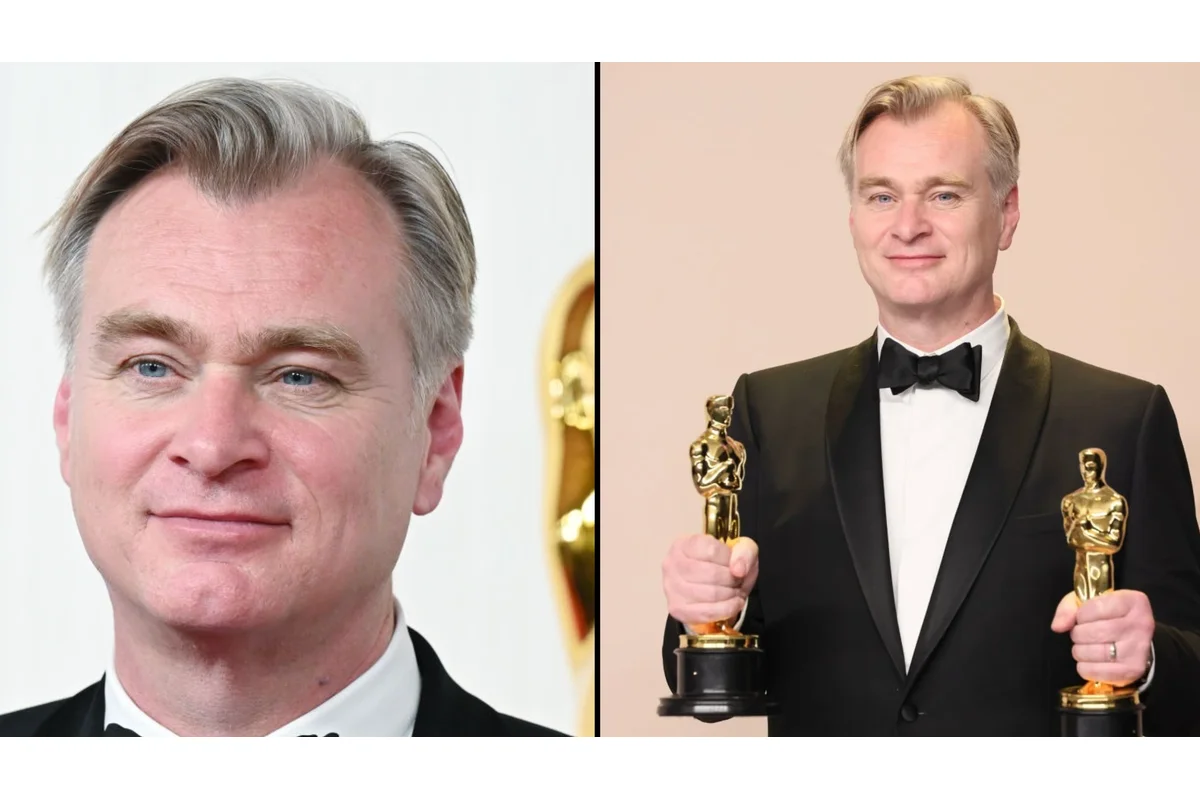
Christopher Nolan, the newly elected president of the Directors Guild of America (DGA), has expressed skepticism about the likelihood of the union agreeing to any five-year contract extensions with Hollywood studios. During a recent interview, Nolan discussed the upcoming negotiations with the Alliance of Motion Picture and Television Producers (AMPTP), emphasizing that longer contract terms would not be a realistic path forward given the rapidly changing industry landscape.
Unlikely Prospects for Extended Contract Lengths
When questioned about the possibility of extending the DGA’s contract terms beyond the current three-year standard, Nolan acknowledged the guild’s flexibility but firmly dismissed the notion of a five-year deal. He stated,
“Well, the DGA prides itself on being open to discussing anything.”
However, he quickly tempered that openness by adding,
“I don’t think a five-year extension is in any way a realistic proposal, and I think the AMPTP probably knows that.”
Nolan pointed to the volatility facing the industry, stressing that studios are navigating ongoing turmoil in business models, shareholder demands, and marketplace shifts.
He further explained the risks associated with longer term commitments, saying,
“If we had agreed to a five-year contract in March of 2020, where would we be now? We are living in an industry where things are shifting very, very fast in terms of how they choose to run their businesses, and there are no assurances they’d be able to give us on how that’s settling down or what that path would be.”
Nolan emphasized the need for flexibility to allow renegotiation at appropriate intervals, reinforcing that while discussions remain open, a long-term contract seems highly improbable.
Additionally, Nolan commented on proposals linking contract duration with health care contributions, stating,
“I think tying it to healthcare seems inappropriate, frankly,”
suggesting that health and pension fund issues should be handled separately from contract length negotiations.
Addressing Health and Pension Fund Challenges
The directors union, along with the Writers Guild of America (WGA) and SAG-AFTRA, is currently facing financial challenges related to their health and pension plans, which have required dipping into reserves over recent years. Among the three, the DGA’s plans remain the most stable but are still under pressure.
Nolan and DGA National Executive Director Russ Hollander alerted union members last November about the financial strain, noting that the health plan
“has run negative for the past two years, and those losses are projected to increase significantly in the future.”
To manage rising healthcare costs realistically, the DGA has implemented benefit reductions, with Nolan stating that they have taken steps
“to be realistic about rises in healthcare costs.”
He further explained the dynamics of employer contributions, clarifying,
“With collective bargaining, the employer contribution becomes fixed for the term of the contract. So whereas with their other employees, they’ve had to contribute more to their health plans, ours have been frozen, and so that’s had to be paid for from the reserves.”
Nolan remains hopeful that studios will be more cooperative this round, observing an encouraging focus from the AMPTP on the health and pension issues.
He asserted firmly,
“The employers are going to have to raise their contributions. That’s just a fact of life. Health care costs have gone up enormously in this country, and it’s one of the reasons for the last government shutdown. Everybody’s aware of that, and we’ll do our part, but the employers are going to have to step up and do this.”
Reevaluating Residuals and Profit Participation in the Streaming Age
The last contract between the studios and the guilds included provisions for streaming residuals, such as a bonus paid when titles exceed performance expectations on streaming platforms. The studios also agreed to alter foreign residual payments to correlate with streamer subscriber counts abroad rather than domestically. Hollander noted that this change led to a 76% increase in foreign residual payments and a 21% overall boost in streaming residuals.
Nolan described this shift as a response to the need to “reappraise” old compensation frameworks in light of streaming’s rapid growth and disruption. He highlighted a fundamental tension, explaining,
“The big disconnect, always, between the companies we work for and our members is that the companies we work for are rewarded by Wall Street for living in the future, and that doesn’t work for our members, because they don’t get the benefits of that speculation.”
Nolan cited Amazon’s two decades without declaring profits as emblematic of this gap, where Wall Street applauds future-focused investment while creatives do not see corresponding rewards. He also pointed to the persistent undervaluing of cable assets, noting that
“those assets still make tremendous amounts of money,”
yet are often dismissed because they are not considered “the future.” This disconnect frustrates members whose livelihoods rely on present income.
He acknowledged the guild’s historical commitment to balancing present needs with future demands:
“I think the guild has done a very good job historically, trying to look, ‘Okay, where do we need to get to without losing the necessary structures that we have in the present that are so important?’”
Nolan insisted that any progress in backend profit participation must preserve these essential structures.
On the threat of innovation undermining compensation, Nolan warned,
“I think one of the things that happens with disruption, one of the things that happens with things that come under the heading of innovation, is—whatever the merits of those models—they tend to come with the ability or the desire to pay us less.”
He lamented any dilution of the residual system, which he called the “lifeblood of our industry,” vital for enabling working professionals
“to raise a family, to have a life, to buy a house.”
Protecting Members Against AI Challenges
Nolan chairs the DGA’s AI committee, formed under the 2023 contract to monitor and address the increasing role of artificial intelligence in filmmaking and content creation. The agreement includes scheduled biannual meetings between the guild and studios to discuss AI developments.
While Nolan acknowledged that agreeing to regular meetings can sometimes delay decisive action, he insisted,
“We have excellent protections, but that’s not enough. You have to have a voice in how this tool is used moving forward. Also, we like to try and have a voice in, what’s the legal framework?”
He highlighted the challenge that directors are typically not copyright holders, so their income depends heavily on proper monetization of those rights. Nolan stressed ongoing dialogue with studios to ensure that creative work’s value is maximized.
“We do benefit from that enormously,”
he said.
Nolan also discussed the difficulty of fully anticipating AI’s impact, suggesting a cautious approach:
“So, for example, the deal Disney did with OpenAI. I see that as a positive in terms of establishing the principle of licensing, but until we see how that’s going to be paid through to the union members of all three unions, which, at the moment, we don’t know what that’s going to be,”
he explained. He added,
“When these companies will have the support of the deals is when they’ve shown how creatives are going to benefit from those kind of licensing opportunities.”
Another new concern Nolan mentioned is AI’s growing role in targeted advertising, especially on ad-supported platforms that interrupt television and film with commercial breaks. He noted this is the first time in decades that audiences experience interruptive ads during theatrical releases or prestige television. Nolan said,
“In creative terms, there’s a huge number of struggles around, ‘Okay, what happens to our work that goes on television?’ That’s been a historic struggle, but the guild has had a major voice here, and in a strange way, with this brand new technology, we’re sort of looping back into those kinds of scenarios.”
He further remarked on how streaming formerly allowed uninterrupted viewing but ad-supported models threaten creative integrity.
“Something like the ad-supported model coming in, it might seem like a simple business decision, but it has creative rights impacts, huge ones,”
Nolan commented.
Lastly, Nolan expressed the guild’s intent to influence emerging legal frameworks governing AI and new tech companies such as OpenAI, which he says
“are trying to essentially position themselves as a distribution platform, mostly, I think, to get the benefits of section 230 and try to inoculate themselves from any kind of legal consequences for copyright there.”
He questioned,
“If they’re becoming distribution platforms, how will they manipulate? How can we have a voice in ensuring the things that we’re passionately dedicated to on the creative side?”
Domestic Production and Federal Incentives
California’s recent expansion and generous funding of its film and TV tax credit program has shown early signs of boosting local production. However, union leaders like Nolan continue advocating for federal incentives to help reverse domestic production declines.
Nolan outlined the union’s goal of securing a federal film tax rebate that could
“be competitive with other places in the world that are siphoning production from the United States because of the excellent incentives that they have.”
He specifically mentioned seeking a “stackable 25% rebate” to combine effectively with state credits.
Nolan also recalled the Trump administration’s appointment of Hollywood veterans Jon Voight, Sylvester Stallone, and Mel Gibson as special ambassadors tasked with offering solutions to revitalize U.S. production. While voicing skepticism of tariff or bond-based approaches, Nolan conceded,
“But I will say that, since President Trump has started banning these ideas around, there’s a much more serious conversation from the studios about how to improve the situation in the United States, to be perfectly frank.”
Beyond competitive incentives, Nolan highlighted the global contraction in production spending by major studios. He questioned the contradiction between stable consumer demand and shrinking workforce numbers, asking,
“If you look at the overall spending from a consumer, on media, on entertainment, on our work, it’s extremely stable, but we’re looking at a 35 to 40% decline in employment for our members last year. How do you reconcile those things? What’s happening to the investment? Why aren’t we reinvesting the consumer?”
He emphasized the pressing need to understand how new business models have created a disconnect between consumer engagement and actual production investment, implying that this divergence threatens the livelihood of union members despite consistent audience interest.
Implications for the Industry and Union Members
Christopher Nolan’s remarks underscore the urgency and tension surrounding the forthcoming DGA contract negotiations. His doubts about five-year agreements reflect an industry in flux, where studios face persistent turbulence and uncertainty. As the guild confronts mounting challenges from health and pension fund deficits, evolving residuals in the streaming era, and disruptive technologies like AI, the leadership remains committed to protecting members’ rights and compensation.
The union’s insistence on preserving existing residual structures and demanding increased employer contributions for health benefits signals a determined stance in negotiations. Nolan’s focus on AI protections further illustrates the DGA’s proactive approach to emerging threats that could undermine creative control and income.
With domestic production facing continued headwinds despite local incentives, the push for comprehensive federal support also highlights broader industry concerns about maintaining the United States as a competitive production hub.
As contract expiration approaches in June, the DGA’s position, as articulated by Nolan, suggests firm demands will be made without concessions that could compromise flexibility or established protections. These negotiations will likely shape the guild’s future approach to collaboration with studios and the sustainability of careers for its members amid ongoing industry transformation.
Related semantic context: related coverage · external reference.
