
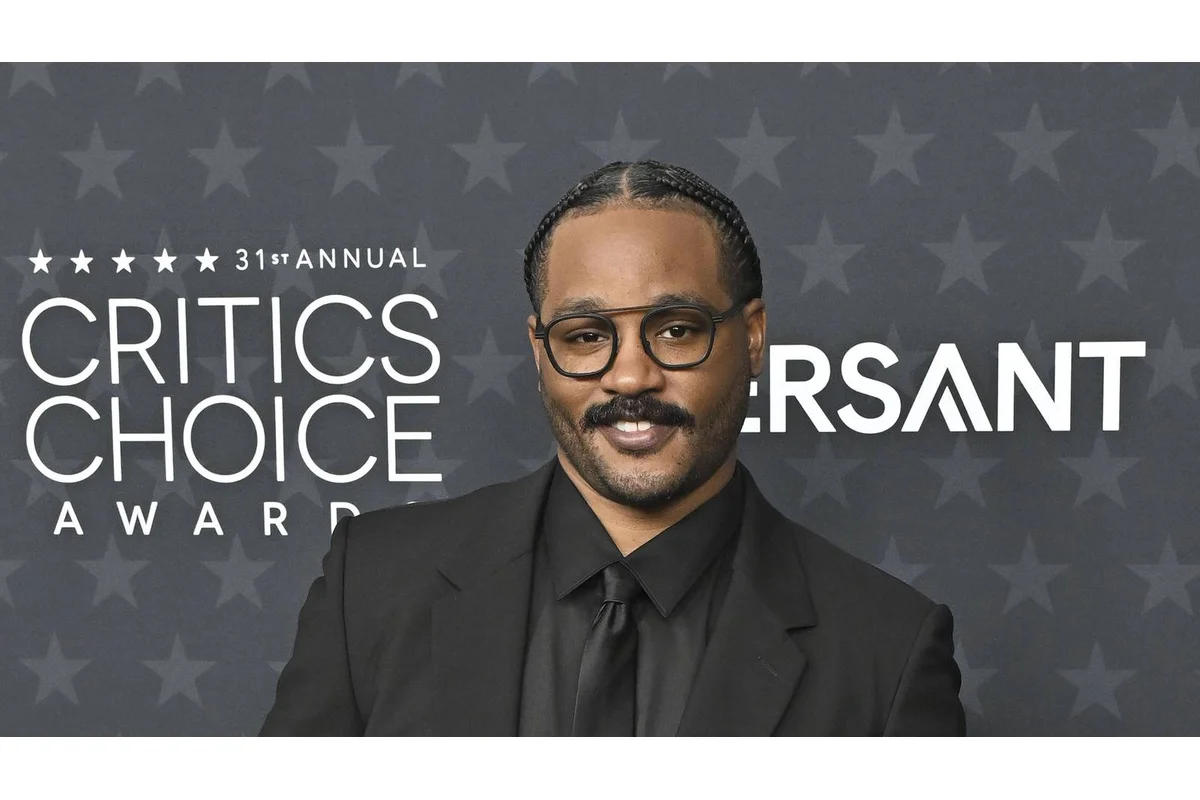
Oakland, California, remains integral to filmmaker Ryan Coogler’s identity at 39 years old, as he continues to draw inspiration from his hometown. Known for his deep connection to the Bay Area, Coogler shares favorites like coffee shops Aint Normal and Highwire on College Avenue and highlights cultural landmarks such as the Black-owned Marcus Books and the Grand Lake Theatre, where he experienced foundational cinematic moments, including watching Malcolm X with his father as a child. These neighborhoods and personal history shape much of his storytelling and creative worldview.
On a January afternoon near North Oakland and Berkeley, Coogler balances intense work sessions on his upcoming X-Files reboot with moments of reflection. He describes his writing progress with candor, admitting:
“I’m in deep now. Today’s a good day,”
and acknowledging the tougher moments along the journey:
“Been a lot of days that weren’t so good.”
Breaking Oscar Records and Industry Milestones
Coogler recently made history at the Academy Awards with his genre-bending film Sinners, which received a record-breaking 16 Oscar nominations, surpassing the previous highest of 14 set by 1950’s All About Eve and matched by Titanic and La La Land. Since its April release, Sinners has continued an extraordinary run as the highest-grossing original film in North America since 2010’s Inception, all under Warner Bros.’ banner.
Next on Coogler’s horizon is the potential to make long-overdue history as only the seventh Black filmmaker nominated for the Oscar for Best Director—and the first to possibly win this accolade. Additionally, Coogler is competing in the categories of Best Picture, as a producer, and Best Original Screenplay. The film’s recognition has reignited focus on Coogler’s significant career contributions.
Throughout the recent awards circuit, he has spoken openly about battling impostor syndrome and anxiety while maintaining a humble demeanor. His joy alongside Oscar-nominated colleagues reflects both his collaborative spirit and the acknowledgment of his creative achievements by peers.
A Decade of Accomplishments and Evolving Storytelling
With five feature films to his name, Coogler’s impact is undeniable. From his Sundance breakout, Fruitvale Station, to the rejuvenation of the Rocky franchise through Creed, to the culturally transformative Black Panther films, his work consistently resonates with depth and nuance. Sinners stands out as a daring original film exploring historical traumas within an uncommon entertainment framework on a $90 million budget.
Michael B. Jordan, star of Sinners and longtime Coogler collaborator, expresses pride in their shared journey:
“To go through every stage of filmmaking and creation—writing through the studio system and independent film, from preexisting IP to making original IP—this entire journey just feels full. It feels complete. To see everybody embrace him, for him to get his flowers this way, it’s just a tremendous sense of joy.”
Lessons from Chadwick Boseman and Personal Growth
The transformation Coogler feels within himself connects strongly to his experience working on Black Panther with the late Chadwick Boseman. Reflecting on their artistic relationship, Coogler recalls a period when self-doubt clouded his perspective:
“Engaging with him on an artistic level, conversations that will forever just be between me and him—I was about 30 years old, stressed, completely out of my mind, sleep-deprived, convinced that the movie wasn’t going to work.”
He admits he struggled to fully appreciate those moments on set, haunted by feelings of unworthiness:
“I robbed myself of truly enjoying that privilege—even of sitting there and enjoying the countless Chadwick Boseman takes, because he didn’t have a bad take. So when he passed, I’m like, ‘Oh my God, how much stuff have I not allowed myself to enjoy because I was in my own head—feeling like I was unworthy?’”
With a smile, he affirms the enduring impact Boseman’s example has on his life:
“I’m going to take the lessons from Chad for the rest of my life, bro. That includes all of this. I have to see the good in things, see the value in things, and not let impostor syndrome or guilt or negativity rob me of moments with my cast who I love—or with folks who want to say, ‘Hey, good job.’”
Strong Family Ties and Oakland’s Influence
Coogler’s family ties to Oakland run deep. His grandfather and uncle worked on the docks as longshoremen for the International Longshore and Warehouse Union (ILWU), where union discussions were common:
“I was brought up on union talk,”
Coogler reflects, gesturing towards that side of the city.
His mother was a community organizer while his father worked as a probation counselor at a juvenile hall. Raised in a private school environment that contrasted with some neighborhood realities, Coogler met his wife Zinzi in adolescence. She is now mother to their three children and co-founder of Proximity Media, their production company formed with longtime friend Sev Ohanian. Coogler’s sense of home remains tightly bound to Oakland, where his children grow up and he balances family life with his rising career.
Transition from Football to Filmmaking
Coogler began his higher education on a football scholarship, first at Saint Mary’s College and then Sacramento State, before shifting his focus to film. Early passion for cinema sparked in childhood matured through a gift from Zinzi—a copy of Final Draft screenwriting software—that encouraged him to dedicate himself fully to storytelling.
Zinzi recalls his moment of transition:
“When football began to feel like a chapter he might be closing, I could see he was looking for a place to pour that same energy into, and filmmaking was it.”
Accepted into USC’s film program, Coogler arrived filled with hunger and ambition, inspired by filmmakers like John Singleton and Spike Lee. He was determined to challenge cinematic portrayals that failed to truly represent his generation.
Creating Fruitvale Station: A Story of Racial Justice
Fruitvale Station dramatizes the 2009 police shooting death of Oscar Grant in Oakland, examining the events leading up to the tragedy with emotional depth. Forest Whitaker produced, Octavia Spencer joined the cast as Oscar’s mother, and Michelle Satter of the Sundance Institute provided guidance throughout development. Filming began shortly after the shooting of Trayvon Martin, an event that intensified national conversations on racial injustice when George Zimmerman was acquitted the day after the film’s release.
The film earned critical acclaim and multiple awards at Sundance, grossing over $17 million worldwide against a modest $900,000 budget. However, the film’s impact took an emotional toll on Coogler, who, at age 27, struggled with self-doubt and the pressures of representing such a weighty issue:
“I did have a need to make that movie, but I was not convinced that I belonged in what comes after that.”
He explains the isolation of his background:
“When you come from where I’m from, that’s not necessarily an affirming environment all the time. You can convince yourself that somebody’s playing a joke on you. You can convince yourself that none of this is real: ‘I don’t deserve to be here. This place isn’t for me.’”
Artistic Maturity and Confronting Realities
Coogler expected Fruitvale Station to awaken the world to systemic racial problems, a burden too great for a young filmmaker to bear alone. He now reflects on his earlier naïveté:
“That movie was made by a person who didn’t totally understand how the world worked—like, straight up. Playing football and going to school my whole life, I wasn’t studying all the factors that led to Oscar being executed on camera. I know more now—and it doesn’t make you optimistic.”
Recent events, such as the death of Alex Pretti at the hands of an ICE agent, have renewed Coogler’s sense of urgency. When asked what advice he would give a young filmmaker today, he insists on the importance of naïve optimism in art:
“This is why we need films from people who are naive, the reason why we need films from people who aren’t old enough or jaded enough to understand that art can only do so much. There’s a place for optimism. There’s a place for youthful ignorance. It’s a vital place.”
He condemns the violent betrayal when protectors become perpetrators:
“Violence is horrible to see—violence in any way, shape or form—and when you are forced to bear witness to it, it should mess you up. Then, when you see violence inflicted by people who are there to protect people—by people who were funded by tax dollars? That’s a whole ’nother thing.”
Collaborations that Shaped His Craft
Octavia Spencer, who played Wanda in Fruitvale Station, vividly recalls filming a difficult morgue scene:
“It was so realistic that it scared me and I froze. I looked away. Ryan came up to me and he said, ‘I need you to see him. I need you to see him.’”
She adds,
“I have to deal with the fear.”
Coogler himself learned from Spencer’s approach. On a challenging scene, he initially struggled to direct her:
“I was trying to direct her too much,”
until she requested space to perform freely. That take became part of the finished film. He traces the lineage of his directing to moments with Spencer and later performances by Angela Bassett in Wakanda Forever and the ensemble in Sinners.
From Indie Filmmaker to Studio Leadership with Creed
Soon after Fruitvale Station, Coogler was attached to direct Creed, the revitalized Rocky franchise spinoff starring Michael B. Jordan. Moving from familiar Oakland to Philadelphia demanded detailed research and sensitivity to local culture:
“I have this fear of getting a place wrong. I don’t ever want somebody who’s from the place to be excited to go buy tickets to a movie, then sit down and say, ‘Oh, man, they got it wrong.’ That’s getting punched in the gut.”
The film’s commercial success, grossing $173.6 million worldwide, demonstrated Coogler’s ability to helm larger productions without sacrificing authenticity. Tessa Thompson, who co-starred as Bianca, praised his navigation of the studio system:
“Watching Ryan navigate that [studio] system, it didn’t feel like he was making the concessions that you think about when you think of smaller indie filmmakers moving into that space. It felt seamless and homegrown and tender.”
Cultivating Wakanda: Immersion and Artistic Collaboration
Coogler’s next challenge was directing Black Panther, which called for creating the fictional African nation as a richly detailed, authentic world. To achieve this, he traveled extensively across Africa, engaging with cultures in Kenya, South Africa, and beyond to capture the textures, aromas, and histories that define Wakanda.
Key collaborators from Black Panther, such as costume designer Ruth E. Carter and production designer Hannah Beachler, carried their creative momentum into Sinners, with both earning Oscar nominations for their work this year. Carter fondly recalls Coogler’s attention to detail even in personal moments, like his wedding attire:
“He was getting married, and he wanted me to see what he was wearing to his wedding and give him some tips. He liked that athletic fit. He didn’t want to wear a tie. I said, ‘Well, just think that your wedding photos will be around forever. Everybody will look at ’em.’”
When asked if Coogler wore the tie, Carter admits she does not know, but he confirms with a laugh that he did, acknowledging the weight of her advice.
Black Panther grossed $1.35 billion worldwide and received a Best Picture Academy Award nomination, cementing Coogler’s status as a major creative force.
Facing Loss and Resilience in Wakanda Forever
The production of the sequel, Wakanda Forever, was shattered by the death of Chadwick Boseman in 2020. Coogler had to reimagine the narrative around T’Challa’s passing, leading the project through grief and healing. He reflects on the process:
“I would look around to people who had been making movies as long as I had been alive, bro, sometimes longer, and they would say: ‘I’ve never seen anything like this.’ We had to work from the place of being brokenhearted, or else it wouldn’t have got done. … Me and Chad were getting closer, so it was like a wound to the heart. It was like somebody had taken the sun away and we were all these planets floating.”
Angela Bassett, nominated for her powerful portrayal of T’Challa’s mother, praises Coogler’s leadership:
“You could just see [Coogler’s] heart, and every day in every way I wanted to give in full measure. Something about him makes you show up for him—and for yourself.”
Coogler takes pride in his resilience amid the tragedy:
“I learned that I was more resilient than I give myself credit for—I’ll say that was the biggest thing. And that movie gets watched at home so much more than the other Panther did. I think about that: People may be watching when they want to feel something specific.”
Exploring Personal Heritage: Mississippi Blues and Legacy
Despite extensive travels for film festivals and production, Coogler had never visited Mississippi, home to his great-uncle James Edmonson, an important influence who introduced him to blues music. Following inspiration from his uncle’s legacy, Coogler journeyed along the Mississippi Blues Trail with composer Ludwig Göransson, confronting painful histories of slavery and Jim Crow while connecting with his roots tied to the Great Migration’s second wave.
Creating Sinners: A Frame for Cultural and Musical Legacy
After over a decade, Coogler returned to directing an original story free from preexisting intellectual property. Sinners is a daring vampire film set in 1932 Mississippi, centered on twins Smoke and Stack (both played by Jordan) trying to open a juke joint. The film merges entertainment with a nuanced exploration of blues music’s cultural heritage and issues around ownership and appropriation.
Proximity Media, Coogler’s company co-founded with Zinzi and Ohanian, produced the film, marking his first time producing his own directorial work. Jordan observes the film’s intimate reflection of Coogler’s identity:
“I see Ryan the most in this movie.”
Zinzi adds:
“This film is deeply reflective of him. It’s personal in a way that’s woven into the DNA of every character and every choice.”
Industry Challenges and Triumph with Warner Bros.
Coogler negotiated the return of Sinners rights from Warner Bros. 25 years post-release, a rare arrangement stirring debate about benefits for both him and Warner Bros., which was experiencing industry turbulence. Warner Bros. executives Michael De Luca and Pamela Abdy faced pressure after recent box office failures, and observers questioned whether Sinners could succeed amid the shifting theatrical landscape.
Contrary to skepticism, Sinners exceeded expectations. Coogler approached the situation with support for Warner Bros. executives despite doubts:
“I admired Mike and Pam and what they were doing, so I didn’t mind that our film was the one coming at a time when they needed something to work—I actually liked that.”
He embraced the challenge, seeing it as an opportunity to champion creativity and bravery in cinema.
He remarks:
“If somebody said, ‘Hey man, there’s going to be a whole debate around the movie business, if it is worth it or not, if people should be taking gambles on things that aren’t sequels’—and gave me the choice of, ‘Do you want it to be your movie?’ Yes! I’d be excited.”
Focused Filmmaking Centered on Audience Experience
Sinners stands apart from Coogler’s prior films by intentionally prioritizing the audience’s experience, with cinematographer Autumn Durald Arkapaw bringing innovative visual style. The film’s filmmaking choices invite viewers rather than distance them, broadening its appeal to diverse audiences. Kodak’s promotional release of a detailed, 10-minute breakdown by Coogler on aspect ratios and optimal theatrical viewing garnered nearly 17 million views on social media platform X, underscoring the filmmaker’s dedication to engaging viewers.
Coogler explains:
“I wanted people to know we were thinking about them—that’s it. Every time we framed up a shot, we would talk about the aspect ratios and what was going to be available where, and why we should back the camera up or move it closer. We were thinking about the audience on this movie every day. Sometimes it is nice to know that you were thought of, you know what I mean?”
The Surreal Montage and Artistic Collaboration
A notable highlight of Sinners is its surreal montage centerpiece, collapsing centuries of musical genres into a vibrant, collective celebration of ancestry and artistic expression. The technical and creative teams brought expansive vision to this sequence, blending sound, costume, and movement in a powerful tribute to cultural heritage.
Ruth E. Carter emphasizes the freedom given to her and other artists:
“Everyone who read it from a different discipline could hear the music, could see the movement, could see the costumes. That is the beauty of allowing your team to understand the material but also give them room for their own vision.”
Marvel Studios president Kevin Feige praises the film’s musical significance:
“The music was incredibly meaningful to me, and I told Ryan that my jaw was on the floor. It should win best picture for that alone. The Academy doesn’t always, in my opinion, recognize the movies that are most relevant for audiences today. But, boy, did they hit it with this one.”
Navigating Hollywood Power and the Warner Bros. Sale
Approaching 40, Coogler has assumed more leadership within the Hollywood and studio landscape. He carefully addresses the impending Warner Bros. sale to Netflix, cognizant of the stakes for filmmakers and unions:
“What I’m going to always be advocating for is jobs. Strength of opportunity for our union membership and our sister unions. We don’t want to see consolidation lead to less buyers, less jobs, less opportunity—and that tends to be the pattern when these things happen. It is never good for the working filmmaker.”
He remains cautiously optimistic:
“We are eyes and ears open and hoping for the best in a situation that’s not ideal, it looks like.”
Balancing Ambition with Family and Future Projects
Though focused now on delivering the X-Files reboot, a personal project tied to childhood memories shared with his mother, Coogler confirms his commitment to the next Black Panther installment. Despite pressures, he juggles work with family life, picking up his children in Oakland and staying grounded in his roots.
He acknowledges the anxiety that accompanies creative demands:
“There are times when I wish that I could separate and have a day where I’m not anxious about having to deliver the draft.”
This ongoing blend of dedication and vulnerability illustrates the continuous challenges of maintaining artistic excellence.
Mentorship and Legacy: From Vince Gilligan to Hollywood’s Greatest
Coogler’s career is marked by meaningful mentorships, including his encounter with Vince Gilligan at the Deauville American Film Festival in France, which paved the way to the X-Files reboot. He recalls Gilligan generously sharing advice via Zoom:
“Vince gave me a couple hours of advice over Zoom and answered all the questions I had—I’ve got them all in my notebook, and I go back to it often.”
Coogler’s influence has helped break barriers for many collaborators. Sylvester Stallone earned his first Oscar nomination in 40 years for Creed, Angela Bassett received her first nomination in 30 years for Wakanda Forever, Ruth E. Carter won two Oscars for costume design including for Black Panther, and Delroy Lindo obtained his first Grammy nod for Sinners after a five-decade career. Though Coogler shies away from personal praise, he listens and acknowledges the significance of these milestones.
He credits a conversation with filmmaker Chris Nolan for inspiring him to embrace longevity:
“I remember my first conversation with Chris Nolan—he was talking about his experiences with Michael Caine, and how they work together all the time. He was talking about how much he loves working with him. These people, bro, they have a youthfulness to them. It is so clear. They are ageless. It is so infectious, and it gives you hope.”
For Coogler, this means his journey is just beginning:
“I realized with that conversation: I’d be blessed to work as long as Sly or Delroy. I want to work for a long time.”
Related semantic context: related coverage · external reference.
