
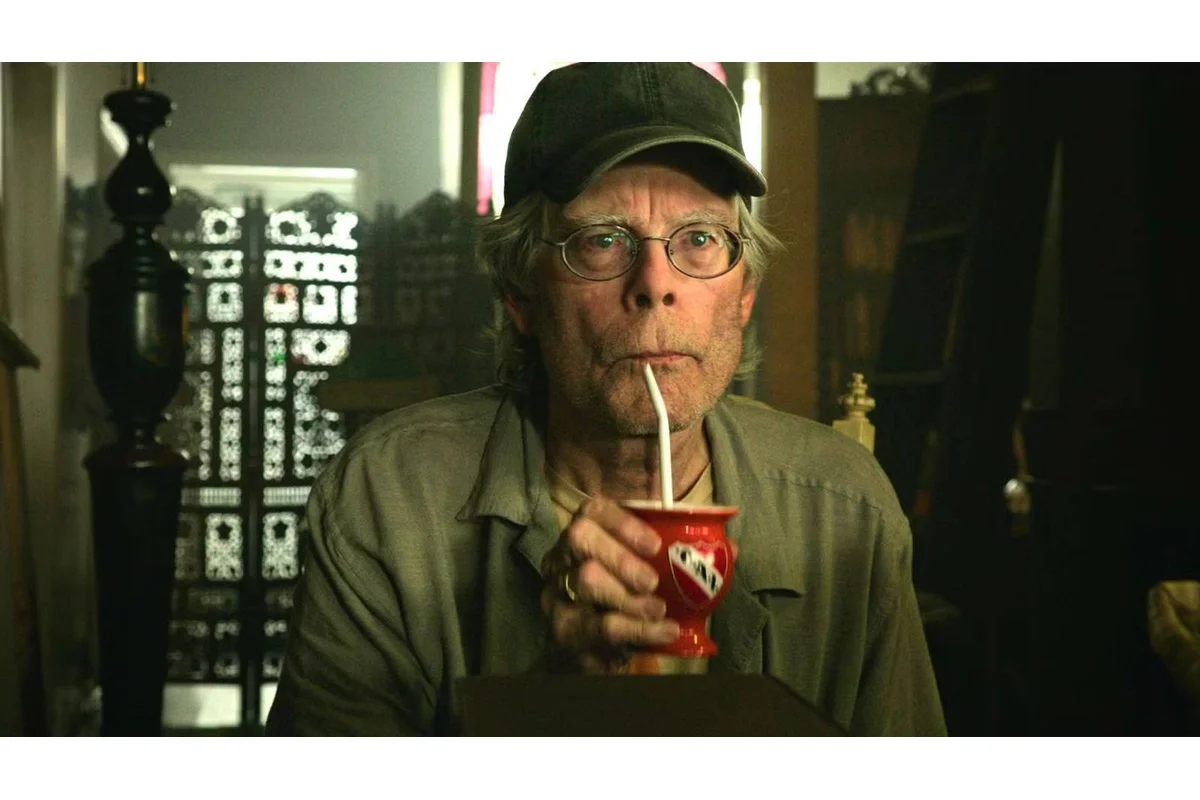
Stephen King, one of the most prolific and influential authors of our time, has a less obvious choice when it comes to his personal favorite work among his many novels. Known for shaping the horror genre across more than fifty years, King’s body of work includes iconic titles like Carrie, The Shining, and It, but his own favorite book is Lisey’s Story. This unexpected selection reveals a side of King’s creative mind that few outside his closest circle have fully understood.
While public opinion often highlights The Stand, The Dark Tower series, or 11/22/63 as King’s best, Lisey’s Story stands apart as a deeply personal novel that King also chose to bring to television in 2021, adapting every episode himself. The miniseries starred Julianne Moore as Lisey Landon, and Clive Owen took on the role of Scott Landon, further drawing attention to this unusual favorite.
Exploring the Complexity of Lisey’s Story
Describing Lisey’s Story is a challenge because it diverges from the straightforward narratives found in many of King’s other works. The novel is both intimate and enigmatic, weaving elements that make the story feel almost elusive to readers who don’t share a personal connection with its themes. It focuses on Lisey Landon, a woman wrestling with her memories and coming to terms with her late husband’s death in a way that is far from conventional.

Scott Landon was a writer whose mysterious life and legacy unfold as Lisey sifts through his personal effects, including notes and items from his workspace. The journey she embarks on blends reality with otherworldly dimensions and memories, making Lisey’s Story not only messy and confusing, but also sentimental and raw in its emotional depth. The novel confronts themes of grief and self-reflection, offering a narrative that feels intensely private and challenging to outsiders.
What Draws Stephen King to Lisey’s Story?
For King, Lisey’s Story is more than just a fictional work; it appears to be a personal expression meant for himself and his wife, Tabitha King (born Tabitha Spruce), who is an accomplished author in her own right and has been married to Stephen King since 1971. The novel reportedly originated during a period when King was recovering from pneumonia, and his wife’s act of tidying his work area sparked a contemplation of what happens to one’s creative space—and life—after death.
While Lisey’s Story is not autobiographical in the conventional sense, it channels King’s meditation on mortality, creativity, and legacy through a fictional lens enriched by supernatural elements. The story offers a disguised glimpse into King’s own thoughts about the end of life and the shadows left behind. However, the novel is deliberately oblique, often cryptic, and layered with symbolism that can feel invasive or unsettling to readers.
Why Lisey’s Story Received Mixed Reactions from Readers and Viewers
The complexity and personal nature of Lisey’s Story did not translate into universal acclaim. Many readers and critics found the novel difficult to engage with, citing its sprawling structure and awkward language. The book’s unique and often contrived vocabulary—including invented words like “smucking,” “bool,” “sowisa,” and “babyluv”—was intended to illustrate the deep bond between Lisey and Scott but instead alienated some audiences due to its excessive repetition and forced familiarity.
The plot’s non-linear style and repetitive sequences contributed to a sprawling narrative that some felt lacked the cohesion and gripping quality that characterize King’s better-known works like It or The Stand. This uneven pacing and confusing elements made Lisey’s Story a challenging read for many, and the television adaptation closely followed the book’s tone, offering little improvement.
Viewers of the miniseries, starring Julianne Moore and Clive Owen, often echoed the critiques that the story felt excessively indulgent. King’s direct involvement in adapting the series meant the final product reflected his original intentions, warts and all, rather than a streamlined or more accessible interpretation. This closeness to the source material left many wondering whether Lisey’s Story should have reached the broad public at all.
“so obsessed with whether he could, he didn’t stop to think about whether he should”
— Reviewer’s comment on the novel’s publication
Ultimately, Lisey’s Story challenges the boundaries between artist, art, and audience in a way that feels uneasy and raw. It may serve as a deeply personal account meant more for King himself and his family than for general readership or adaptation, posing questions about what creators choose to reveal and what should remain private. For those who wish to explore King’s greatest strengths, diving into his other works might offer a richer experience than starting with the novel he holds closest.
Related semantic context: related coverage · external reference.
