
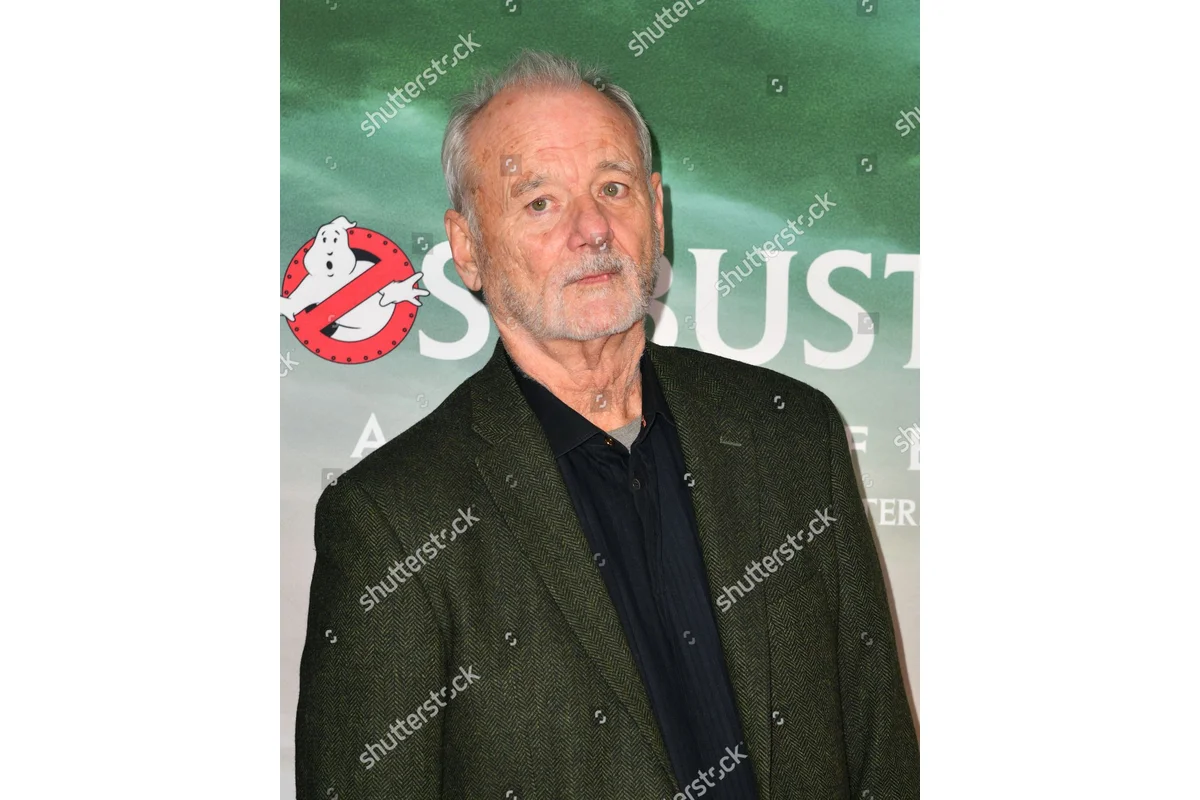
In 1984, Bill Murray took a bold step away from his comedic roots by starring in the historical drama The Razor‘s Edge, a film adaptation of W. Somerset Maugham’s 1944 novel about a war veteran searching for spiritual enlightenment. Despite Murray’s ambitions to showcase his dramatic range, the movie flopped commercially and critically, sparking tension with famed film critic Roger Ebert and shaping Murray’s career trajectory.
Bill Murray’s Dramatic Ambition and ‘The Razor’s Edge’ Failure
Before his acclaimed turn in Lost in Translation, Bill Murray sought to redefine his image beyond comedy. He co-wrote The Razor’s Edge screenplay with director John Byrum over 18 months, driven by his commitment to portraying Larry Darrell—a World War I veteran haunted by trauma who embarks on a journey through Paris and the Himalayas in search of life’s meaning. The title derives from a Hindu saying,
“The path to salvation is narrow and as difficult to walk as a razor’s edge,”
highlighting the film’s spiritual undertones.
Murray was so determined to star in The Razor’s Edge that he negotiated with Columbia Pictures, refusing to proceed with the comedic hit Ghostbusters unless the studio agreed to release his passion project. His Ghostbusters co-star Dan Aykroyd reportedly laid out this condition, which the studio accepted. Though Ghostbusters premiered in June 1984 to massive success, solidifying Murray as a top comedy actor, The Razor’s Edge debuted four months later in October and turned into a box office disaster.

The film grossed approximately $6.6 million against a $12 million budget, recovering just over half its production costs. Critics delivered harsh reviews, with the film earning a disappointing 47 Metascore and a 47% rating on Rotten Tomatoes. Ironically, although Roger Ebert was among the more favorable reviewers, Murray misunderstood and resented the critique, igniting a public feud between the actor and critic. Despite the flop, some speculate that without Murray’s insistence on The Razor’s Edge, Ghostbusters may never have come to fruition.
Roger Ebert’s Mixed Critique of Bill Murray’s Performance
Roger Ebert awarded The Razor’s Edge a 2.5 out of 4 stars, describing the film as an awkwardly placed 1960s-style self-discovery narrative set in an earlier era. He found the story’s themes anachronistic, but his main concern was how Murray embodied Larry Darrell. Ebert observed,
“But the flaw in this movie is that the hero is too passive, too contained, too rich in self-irony, to really sweep us along in his quest. And that, I’m afraid, is the fault of Bill Murray, who plays the hero as if fate is a comedian, and he is the straight man.”
— Roger Ebert, Film Critic
Further elaborating on Murray’s portrayal, Ebert noted:
“Murray, who is usually such a superb actor, has taken the wrong path in this performance, giving us moments when everybody in the film and in the audience is moved, except Murray. There are times when he seems downright obstinate in his performance, giving us a ramrod posture, a poker face, and eyes that will not let us inside. Perhaps, in his desire to make a break with the comic roles we know him for, he was overreacting. That makes even more curious the moments in the film when he allows himself to be funny: The comic side of his character doesn’t seem to be coming out of anything.”
— Roger Ebert, Film Critic
This critical appraisal highlighted Murray’s struggle to convincingly inhabit a dramatic role, suggesting his performance felt emotionally distant or restrained, at odds with audience engagement.
Bill Murray’s Reaction to Ebert’s Review and Their Ongoing Feud
Though Ebert’s review was one of the few that offered some acknowledgment of the film’s merits, Bill Murray took offense at the critique. In a 2010 interview with NJ.com, Murray reflected on the film’s failure and the critic’s harsh remarks:
“A lot of work went into that, and nobody saw it. But if you haven’t had an experience like that, you haven’t had a career. I don’t know, what are you going to do? Razor’s Edge came out, Roger Ebert said there should be a law that Bill Murray can only do comedies.”
— Bill Murray, Actor
Murray’s memory of Ebert’s words is not literal, as Ebert never proposed such a law; rather, it reflects the actor’s frustration at the limited reception to his dramatic efforts. In 1993, Murray conceded to Entertainment Weekly that he had been mistaken in assuming a period drama would resonate with audiences when the studio had preferred a contemporary version.
Shortly after the review’s publication, Murray reportedly confronted Ebert in person, recounting:
“I saw him a while ago. I said, ‘Oh yeah, Roger? Oh yeah?’ But we know each other; he’s a Chicago guy, too, so I can do that.”
— Bill Murray, Actor
While playful, this exchange revealed lingering irritation. The feud continued when Ebert reviewed Murray’s 1988 Christmas comedy Scrooged, giving it just one star. Ebert criticized Murray’s portrayal of the grumpy Frank Cross as lacking the humor that typically underpinned his performances:
“[Frank] Cross is a thoroughly miserable wretch, played by [Bill] Murray in a thoroughly miserable mood. What seems to be missing are the lightness and good cheer that lurk beneath the surface of most Murray performances. He’s often gruff in his movies, but in a way that lets you know he’s just kidding. This time, he doesn’t seem to be kidding.”
— Roger Ebert, Film Critic
In response, Murray challenged the scathing critique on Rogerebert.com, remarking:
“How do you plan to explain your one-star review of Scrooged? It wasn’t that bad. It had some good stuff in it. Watch it on video, and you’ll see…I thought maybe you had some inside information, you know, about an unhappy set or something.”
— Bill Murray, Actor
Legacy of the Feud and Murray’s Growth as a Dramatic Actor
Although Ebert’s criticisms of The Razor’s Edge were pointed, time has shown Bill Murray’s range to be far more versatile than his 1984 project suggested. He developed into a respected dramatic actor with performances in films such as Ed Wood, Rushmore, The Royal Tenenbaums, Broken Flowers, Get Low, Hyde Park on Hudson, Moscow on the Hudson, and On the Rocks. Perhaps most notably, his role in Lost in Translation earned widespread acclaim, with Ebert himself acknowledging the strength of Murray’s performance:
“These are two wonderful performances. Bill Murray has never been better. He doesn’t play ‘Bill Murray’ or any other conventional idea of a movie star, but invents Bob Harris from the inside out, as a man both happy and sad with his life — stuck, but resigned to being stuck.”
— Roger Ebert, Film Critic
Bill Murray’s journey from the box office disappointment of The Razor’s Edge to his later triumphs demonstrates a career forged by persistence and resilience, walking a fine line between comedy and drama as precariously as the razor’s edge itself.
Related semantic context: related coverage · external reference.
