
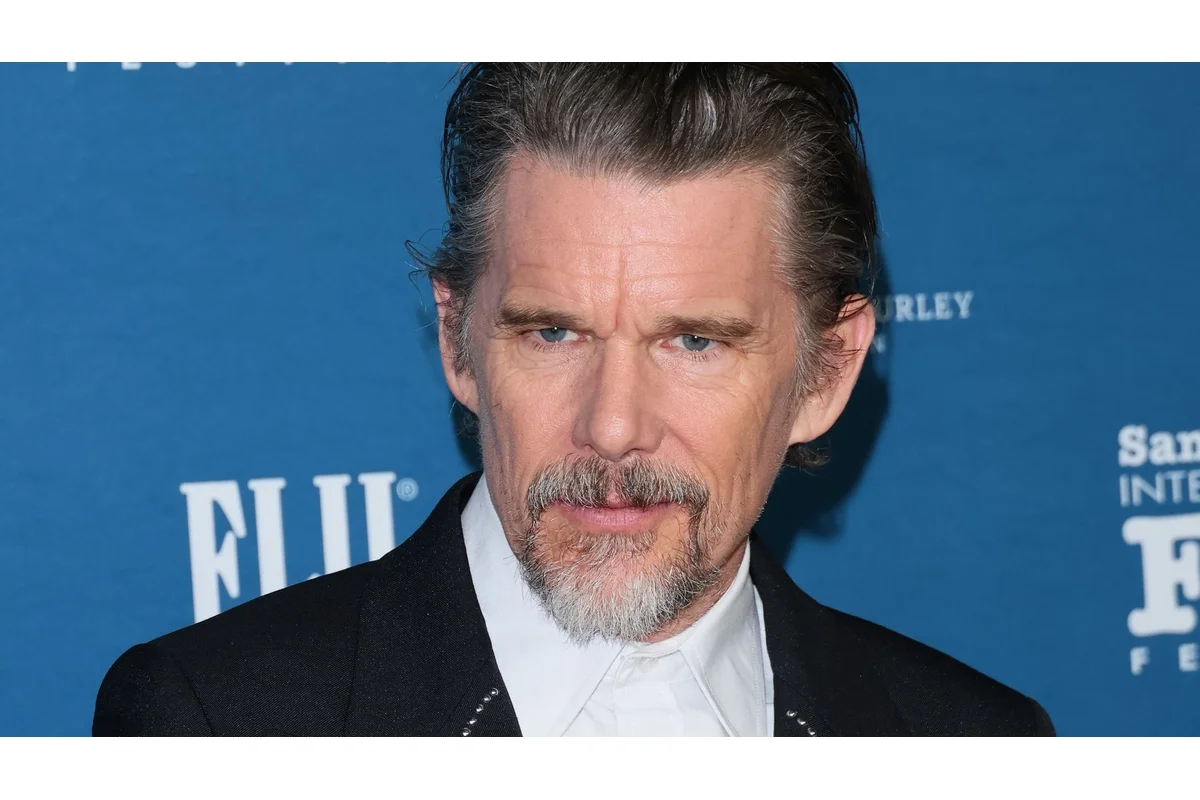
“Blue Moon,” a film starring Ethan Hawke Blue Moon fans have long anticipated, is now available to stream on Netflix. Released in 2025, this tragi-comedy directed and written by Richard Linklater showcases Hawke in one of his most intense and complex performances to date. Set entirely in a New York City bar on a single night, the movie vividly captures the emotional turmoil of lyricist Larry Hart, whom Hawke portrays using a series of inventive stagecraft techniques.
The story is centered around the historic opening night of the Broadway show Oklahoma!—the moment Rodgers’ collaboration switched from his longtime partner Larry Hart to Oscar Hammerstein after the latter’s breakthrough success. The film’s tightly constrained setting not only grounds the narrative but also allowed the production team to cleverly manipulate stage design and perspective to reflect the physical stature of its real-life subject, a man notably shorter than the actor who plays him.
The Real Height Contrast: Ethan Hawke vs. Larry Hart
In reality, Ethan Hawke stands 5 feet 10 inches tall, which presented a distinct challenge for the filmmakers trying to portray Larry Hart, who was significantly shorter, measuring just five feet in height. This discrepancy required a broad range of creative decisions to convincingly depict Hawke as a smaller man.
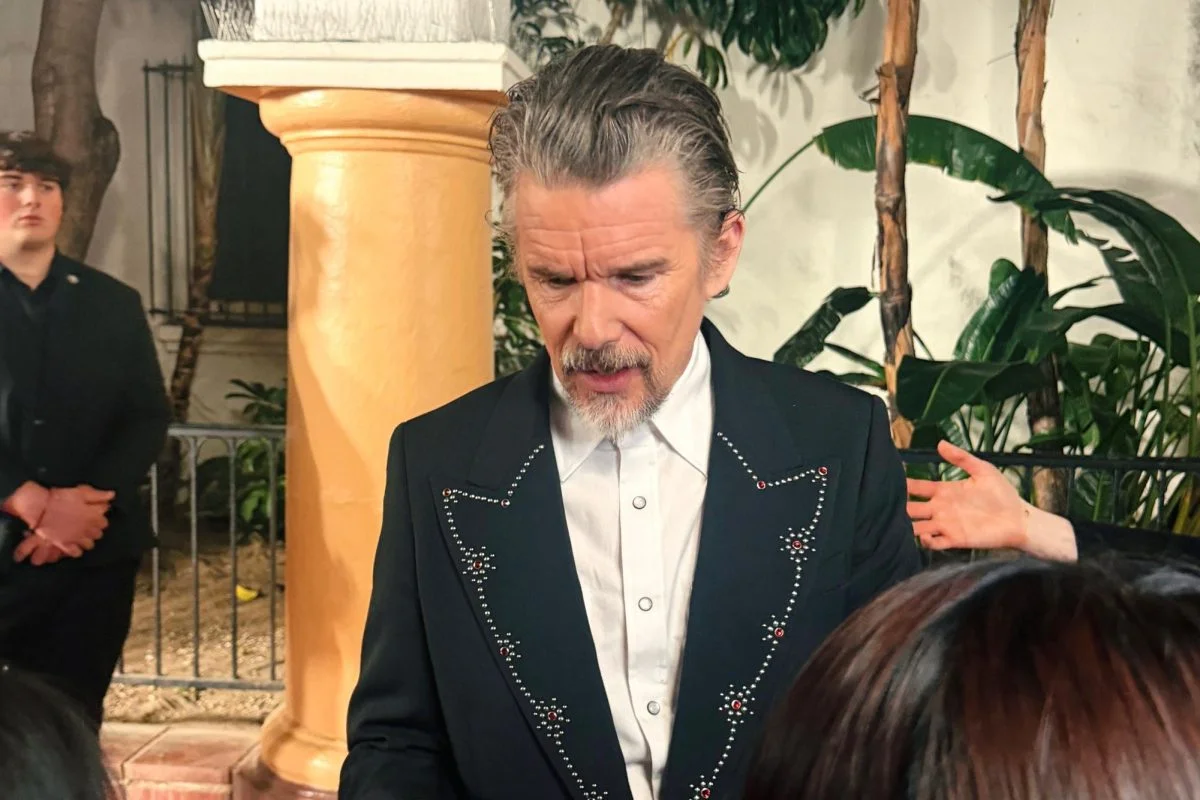
During a Q&A session at the Toronto Film Festival, Hawke touched on the personal and societal struggles tied to height.
The challenge is understanding the way the world looks at each one of us differently, and so much of our self-esteem is rooted in how we think other people view us, which is very difficult,
he shared.
People are height-ist! I mean, they really are. […] Everybody’s looking at Larry like he’s something less than, so it’s driving him mad. It has been his whole life.
Hawke’s candid remarks emphasize the emotional core of his character’s experience.
Techniques Used to Visually Reduce Ethan Hawke’s Stature
Richard Linklater insisted on avoiding digital alterations for the role, instead opting for traditional methods of stagecraft to transform Hawke physically. The production relied heavily on illusions created through costuming, set design, and camera angles to achieve this impression of diminished size.
Hawke elaborated on the process in an interview with Parade Magazine, describing a combination of techniques:
Rick didn’t want any digital effects, because the movie is rooted in such realism. We just used every old-school, stage craft. There wasn’t one way we did it. There was a million ways—some with perspective, some with costumes. Sometimes we dug trenches in the floor. Sometimes chairs are different heights. Sometimes the paintings are hung differently, to make it look… you know, every angle, every shot, was a different math experiment. It was extremely difficult, to do every day. But it works. It was fun.
Among these were practical adjustments like constructing trenches in the floor for Hawke to walk in, dressing him in oversized suits, and modifying the height of chairs and decor on set. These meticulous details created a convincing illusion of Larry Hart’s lesser height, grounding the character firmly in reality.
Physical Changes Ethan Hawke Made for the Role
In addition to these set modifications, Hawke physically altered his appearance to embody Larry Hart more fully. On “The Tonight Show,” he discussed shaving parts of his head to match his character’s look.
I grew my hair long, and then I shaved this part,
Hawke explained while gesturing to his scalp.
And then I left this part long [he gestures to the side of his head], so I could do the comb over.
The result was an unconventional hairstyle that Hawke admitted was far from flattering. Which is fine on set, he said with a laugh, adding,
But when you’re going to buy coffee in the morning, you know what I mean? I look like a full-blown lunatic. It was devastating to my self-esteem.
The Complex Character of Larry Hart Revealed Through Performance
Hawke’s portrayal captures the contradictions of Hart—a man who was physically the smallest person in every room yet emotionally one of the most significant. Hawke said,
He was the smallest person in every room, and he was the biggest person in every room,
illustrating the lyricist’s compelling blend of bravery and insecurity.
He was the bravest, and he was the most nervous and insecure. He was gay, and in love with a woman. He was full of contradictions. Everything about him was complicated.
This layered depiction reflects not only Larry Hart’s personal struggles but also speaks to broader themes of identity, acceptance, and the tension between external perception and internal reality.
The Cultural and Cinematic Significance of ‘Blue Moon’
“Blue Moon” stands out as a bold film in 2025’s landscape, offering an unvarnished glimpse into a pivotal moment in Broadway history and a deeply human story about a man overshadowed by his colleagues yet unforgettable in his complexity. With Hawke delivering what many consider a career-defining performance supported by Linklater’s skilled direction, the movie pushes viewers to reconsider ideas about stature—both literal and metaphorical.
In this way, the film’s innovative use of traditional stagecraft complements its intense emotional narrative, reminding audiences of the power of film to transform appearances and reveal truths. As “Blue Moon” continues to gain attention, Hawke’s role could well become a landmark portrayal in his body of work, perhaps even influencing awards conversations despite stiff competition.

Related semantic context: related coverage · external reference.
