
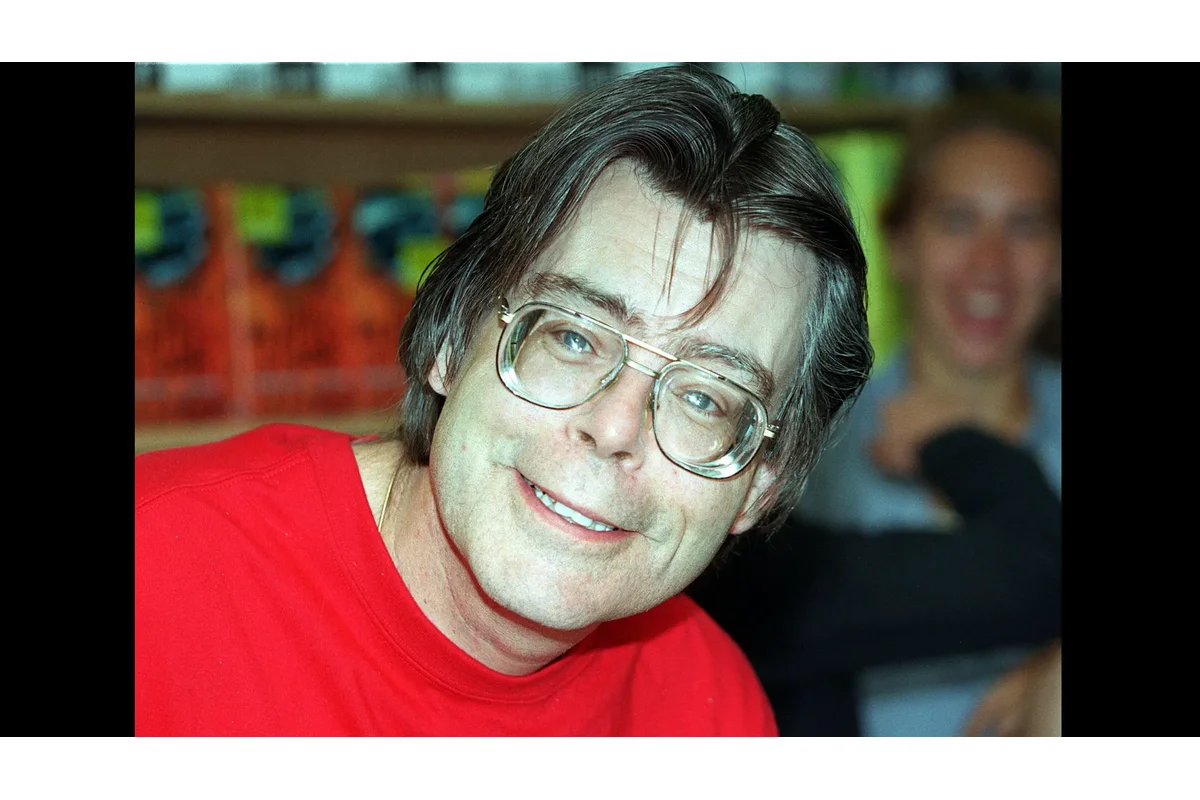
Stephen King adaptations have become a familiar fixture, with a new film or series appearing nearly every year. The 2008–2024 period, except one year, consistently delivered fresh takes on his stories. Among these, King regards the Stephen King Cell adaptation starring John Cusack and Samuel L. Jackson as undeservedly overlooked, despite its direct-to-video release and mixed reception.
Stephen King’s Surprise at Cell’s Lack of Appreciation
In a recent interview with Yahoo Movies, Stephen King reflected on past adaptations of his work that he felt did not receive fair treatment. While noting that he might reconsider his stance on Dreamcatcher, King specifically highlighted Cell as a film that he found to be an eccentric and strong effort. He praised the performances of its lead actors, saying:
“I frankly never understood why people didn’t like Cell, because to me that was a terrific, eccentric movie with some really eccentric, strange performances in it. John Cusack at his best, and Samuel L. Jackson is terrific.” – Stephen King, Author
Despite the pedigree of its cast and source material, Cell bypassed theaters for a straight-to-video release. Upon debut, critics largely dismissed it, reflected in its low 11% rating on Rotten Tomatoes. The criticism often focused on the film’s lack of suspense and reliance on zombie genre tropes rather than fully exploring the novel’s deeper themes.
King acknowledged that while the movie isn’t flawless, its strengths lie especially in the acting. Samuel L. Jackson’s performance, while not his most iconic, complements Cusack’s portrayal of Clay Riddell. King further expressed his personal taste for unconventional films, adding:
“But I’m one of the people where the worst movie I ever saw. I thought it was f–king great!”
“So, you know, even things like Robot Monster when I was a kid, I thought, ‘Oh man, that’s great!’” – Stephen King, Author
Synopsis and Critical Issues within Cell
The story follows Clay Riddell (John Cusack), an artist who leaves his family to chase a dream of publishing his graphic novel. One year later, as he attempts to reconnect, a mysterious signal causes cell phone users to mutate into violent beings known as “The Phoners.” Clay teams up with Tom (Samuel L. Jackson), a train conductor, to survive and find his loved ones.
The film opens powerfully, depicting chaos as people affected by the signal exhibit horrifying behavior, including a girl repeatedly injuring herself and catastrophic crashes. However, critics and fans often point to the ending as a weak point. The decision to transform the Raggedy Man—a symbolic antagonist in the book—into a tangible villain for the screen was widely seen as a misguided narrative choice, detracting from the story’s impact.
The Impact of Production Challenges on the Film
Some of the movie’s shortcomings can be traced back to a difficult production process. Eli Roth, known for directing the horror film Hostel, was originally set to direct Cell after completing Hostel: Part II in 2008. However, Roth left the project due to creative disagreements with the studio and his preference for original stories over adaptations. At the time, his recent successes suggested he might have elevated the film’s execution.
What Makes Cell Worth Watching Despite Its Flaws
Although Cell has varied critical reception, it offers a distinctive take on the zombie genre. Unlike many similar stories that explain their creatures through disease or supernatural forces, this film uses technology—a deadly signal broadcast via cell phones—as the cause. This angle makes it not only entertaining but also a compelling cautionary tale about modern dependence on devices.
Moreover, Cell works as a crisis narrative, capturing the intense human emotions and instincts triggered during sudden, life-threatening upheaval. These aspects, paired with performances from actors like Samuel L. Jackson, John Cusack, Isabelle Fuhrman, Clark Sarullo, and Ethan Andrew Casto, contribute to the film’s unique appeal despite its imperfections.
For viewers seeking a sci-fi thriller with a different spin on apocalyptic horror and a glimpse of human resilience in chaos, Cell deserves reconsideration. It stands as a reminder that not every well-received book-to-film adaptation follows traditional storytelling paths, and some works find their strongest advocates in their creators.
Related semantic context: related coverage · external reference.
