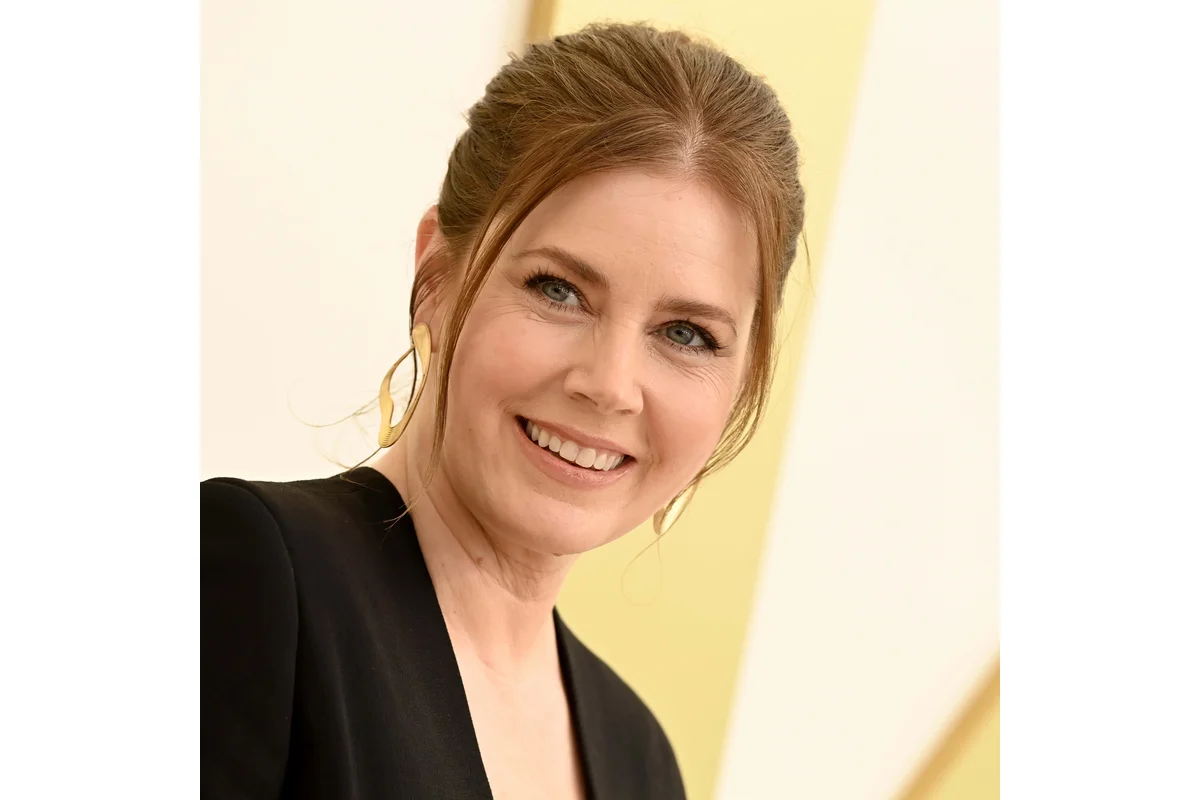
Amy Adams at the Sea: dancing through fragments of life. [Image Source: PARADE]
Amy Adams headlines At the Sea as Laura Baum, a woman returning home after a six-month rehab stay, in a film directed by Kornél Mundruczó. Premiering at the Berlin Film Festival, the movie explores Laura’s efforts to rebuild her life amid family and professional turmoil, but struggles to fully embrace its unusual themes despite Adams’ central presence.
The Struggles of Laura Baum’s Personal and Professional Worlds
Laura leads a dance company her demanding late father once founded, a legacy she is reluctant to relinquish. Her recent absence from the company was hidden behind a fabricated story about an expedition to Bali. At home, her husband Martin, played by Murray Bartlett, wants to sell their beach house, while George (Rainn Wilson), her main business partner, considers pulling funding from the dance troupe. Meanwhile, Laura’s children, Josie (Chloe East) and Felix (Redding L. Munsell), attempt to adjust to her return after a prolonged absence.
Surface-Level Family Conflicts and Underdeveloped Company Issues
The film repeatedly returns to Laura’s family discord and backstage tensions at the dance company but fails to explore either in meaningful depth. Kata Wéber’s screenplay delivers confrontations that feel forced and overly expository, with characters often exchanging sharp accusations without fully developing the stakes behind their conflicts. While the script includes lines like
Image of: Amy Adams
“I’ve always put this company first! It’s all about the dance!”
?Laura Baum and
“You didn’t know shit about dance when I first hired you as my assistant!”
?Unnamed character, it offers little insight into the actual work, the artistic process, or the community surrounding the company.
Marital Drama Fails to Engage Emotionally
The relationship between Laura and Martin suffers from weak writing, leaving their arguments feeling empty and unconvincing. Their shouting matches lack tension because the consequences of their disputes remain unclear to the viewer. In one scene, they suddenly laugh amid a heated exchange, which seems less like a natural moment and more like an awkward acknowledgment by the actors—and perhaps the filmmakers—that the material lacks direction or resolution.
The Elusive Meaning Behind Laura’s Attachments
Laura’s connection to her family home and her father’s dance company are central themes, yet the film tells rather than shows these bonds. Flashbacks of Laura’s childhood with her father are fleeting and abstract, failing to provide emotional resonance. Other characters, like Jenny Slate’s drunken ex-wife of George, add minor drama without real purpose. Similarly, Brett Goldstein’s brief role as a recovering addict introduces a metaphor about kites and wind energy but disappears abruptly, leaving the narrative fragmented.
Mundruczó’s Vision Hinted at Through Dance Moments
While much of the film feels disjointed, moments of dance break through the fractured storytelling, hinting at what the film might have been. Josie’s emotional dance in the family’s studio briefly suggests a shift toward a more intense and vivid approach. Laura’s own dance scenes, whether in flashbacks or the present, remain too brief to fully develop, leaving the viewer wanting more exploration of movement as a form of expression.
Potential for a More Experimental and Energetic Film
Kornél Mundruczó, known for his adventurous filmmaking and acclaimed stage productions, shows glimpses of a bolder concept behind At the Sea. The sporadic symbolic and visionary elements suggest the original idea may have been far more daring and experimental, relying less on clumsy dialogue and more on dance and motion to convey meaning. The kite metaphor introduced by Goldstein illustrates this potential by emphasizing energy and freedom, a tone the current iteration struggles to maintain.
The Film’s Place and Future Possibilities
At the Sea ultimately feels like a missed opportunity—a project that remains stuck between a conventional drama and an innovative dance film. Amy Adams, with her background as a former ballerina, seems ideally suited for a version that would lean into the story’s dance aspects and emotional rawness. The significance of the film lies in its potential rather than its execution, suggesting that a more daring, movement-driven adaptation could offer audiences a unique cinematic experience that fully utilizes Adams’ talents and Mundruczó’s distinctive style.