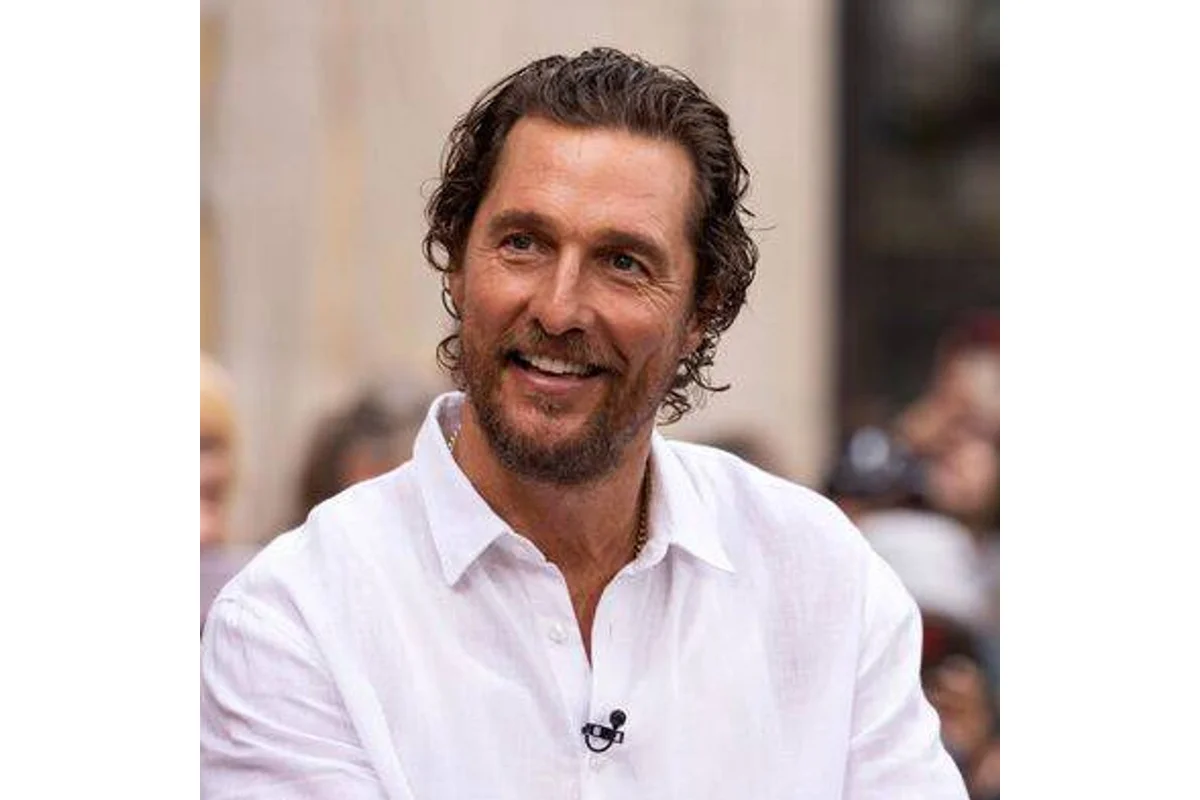
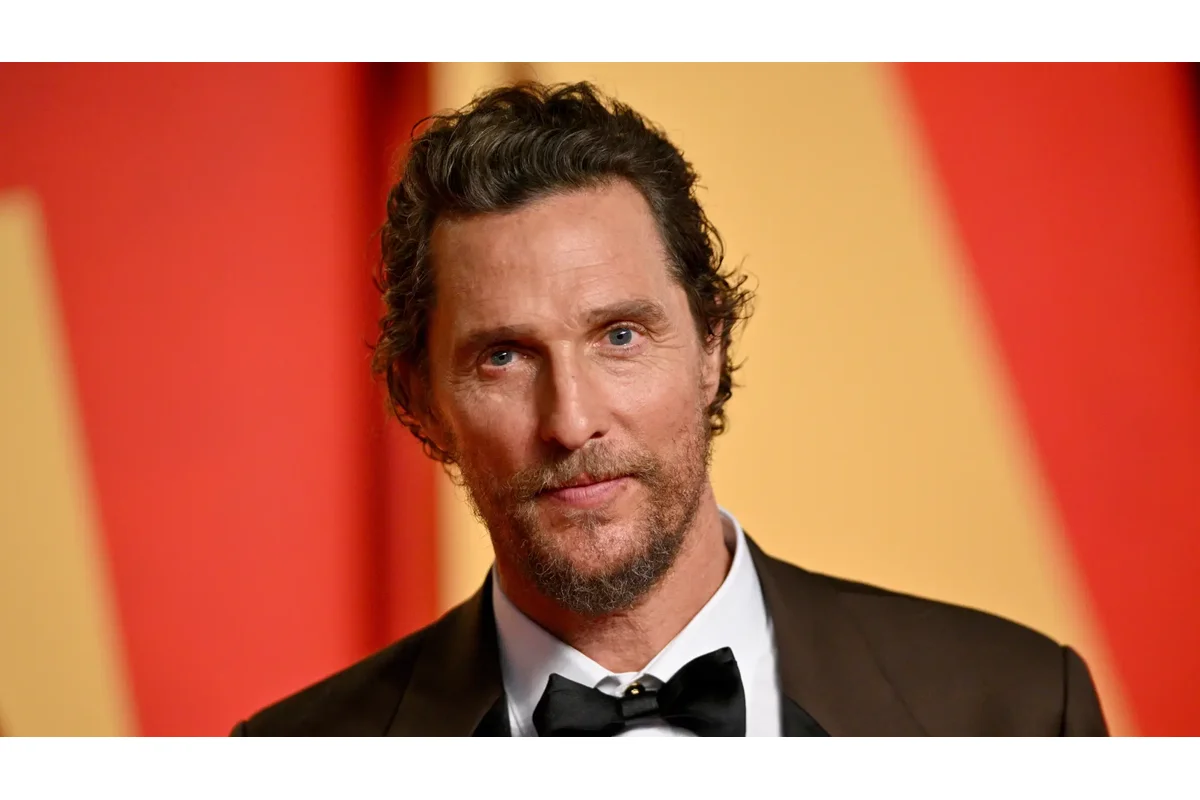
Matthew McConaughey warns future Oscars face AI actor challenges. [Image Source: THEMIRROR]
Matthew McConaughey and Timothée Chalamet recently urged young people to prepare for the transformative impact of artificial intelligence on the entertainment industry during a town hallevent at the University of Texas at Austin. The discussion, focused on McConaughey’s Oscar nomination for Marty Supreme, highlighted the growing significance of AI and the need for actors to protect their rights and identities as the technology advances.
Challenges and Opportunities in Embracing AI Technology
At the event hosted by Variety and CNN, McConaughey addressed questions about AI’s presence in Hollywood, emphasizing that ignoring this technology is no longer an option. He stated,
“Don’t deny it. It’s not going to be enough to sit on the sidelines and make the moral plea that, ‘No, this is wrong.’ It’s not gonna last. There’s too much money to be made, and it’s too productive. So I say: Own yourself. Voice, likeness, et cetera. Trademark it. Whatever you gotta do, so when it comes, no one can steal you.”
Matthew McConaughey, Actor
This caution comes alongside McConaughey’s recent decision to trademark his memorable phrase from Dazed and Confused, a move he described as necessary to maintain control over his persona in a rapidly evolving digital era. He warned that the entertainment landscape is on the brink of a revolution, driven by AI actors and digital likenesses capable of performing without their human counterparts.
AI’s Emerging Role in Film and Award Categories
McConaughey illustrated a future scenario where AI could replicate an actor’s presence for events or film performances. He gave an example during the discussion with Chalamet:
“They gotta come to you and go, ‘Timothée, I’d like you to be at my 50th birthday party in five months, and I’m gonna be in the Bahamas. I know you can’t be there in person, but I’m gonna halo you in and I want you as your character in ‘Marty Supreme,’”
he said.
“They can do that, but they’re gonna have to come to you to go, ‘Can I?’ Or they’re going to be in breach. And you’ll have the chance to be your own agency and go, ‘Yeah, for this amount.’ Or, ‘No.’”
Matthew McConaughey, Actor
He also raised the question of how AI-generated performances might influence award categories in the near future, speculating on new distinctions like “the best AI film” or “the best AI actor.”
Image of: Matthew McConaughey
“It’s damn sure going to infiltrate our category. Does it become another category? Will we be, in five years, having ‘the best AI film’? ‘The best AI actor?’”
“Maybe. I think that might be the thing; it becomes another category. It’s gonna be in front of us in ways that we don’t even see. It’s going to get so good we’re not going to know the difference. That’s one of the big questions right now: the question of reality. It’s more hazy than ever — in a very exciting way, I think, but also a scary way. Prep for it. Own your own lane, so you at least have agency when it starts to trespass.”
Matthew McConaughey, Actor
Generational Responsibilities and Industry Support
Timothée Chalamet emphasized the role Generation Z will play in integrating AI ethically into society and the industry, acknowledging that younger people will face the challenge head-on but require support from older generations. He noted,
“It’s going to be all of our war to wage — sounds confrontational, I don’t mean to say it like that — but it’s a dual responsibility,”
“Unfortunately for your generation, I think it’s going to be you guys that figure out how to integrate it. There’s a huge [responsibility for] people that are positions of power now, like myself, like Matthew, to safekeep so that doors stay open. Some of the roles I got that helped kickstart my career, I wouldn’t even know if they’re available today.”
Timothée Chalamet, Actor
Chalamet expressed a sense of inevitability regarding AI’s influence but encouraged the younger generation to grapple with its ethical dimensions.
“There’s a level of fatalism I feel,”
“It will be on your generation, and mine to an extent, to know how to ethically integrate it, if at all, or do away with it. But the fatalist in me feels like this stuff is coming. And the dreamer in me wants to go, ‘Hey, if it enables a 19-year-old to produce something they couldn’t otherwise because there’s gatekeepers standing in the way, then [good].’ But ultimately, it’s not my place to say.”
Timothée Chalamet, Actor
Reflections on Industry Negotiations and Historical Comparisons
During the town hall, Chalamet recalled the recent SAG-AFTRA strike, noting the struggle to secure protections against unregulated AI use in actors’ contracts. He compared the resistance to AI with past industry shifts such as the introduction of sound and color:
“In the last Screen Actors Guild negotiation that Fran Drescher tried to head off with the studios, it was a dicey. They didn’t really get the protections for the Screen Actors Guild that she was after. [AI is] a hard thing to advocate against. It would be like how [silent era filmmakers] said, ‘No, sound is fucked up, we can’t do that.’ Or when black-and-white went to color. ‘No, color’s fucked up.’ That would be [the studios’] argument.”
Timothée Chalamet, Actor
Despite these challenges, Chalamet stressed his commitment to protecting artists and keeping opportunities open for emerging talent. He concluded with a forward-looking message:
“I wanna keep the doors open for you guys. But someone’s gonna figure out how to do it all at once,”
“I’m fiercely protective of actors and artists in this industry. And equally, whatever tide is coming, it’s coming.”
Timothée Chalamet, Actor
Implications for the Future of Acting and AI Integration
The conversation between McConaughey and Chalamet highlighted the imminent changes AI will bring to Hollywood, urging actors to safeguard their identities and rights before the technology becomes ubiquitous. McConaughey’s call to trademark personal elements and retain control reflects a proactive strategy to navigate a landscape where digital replicas can perform without physical presence. Meanwhile, Chalamet’s emphasis on generational responsibility reinforces the need for ethical frameworks to guide AI’s assimilation into arts and culture.
As AI-generated performances gain sophistication, awards organizations and industry leaders may soon face difficult questions about categorization and authenticity. The dialogue underscores a pivotal moment for creatives to engage thoughtfully with new technology, balancing innovation with protection of human artistry. The entertainment industry’s response will likely shape how audiences experience film and television in the coming decade.