
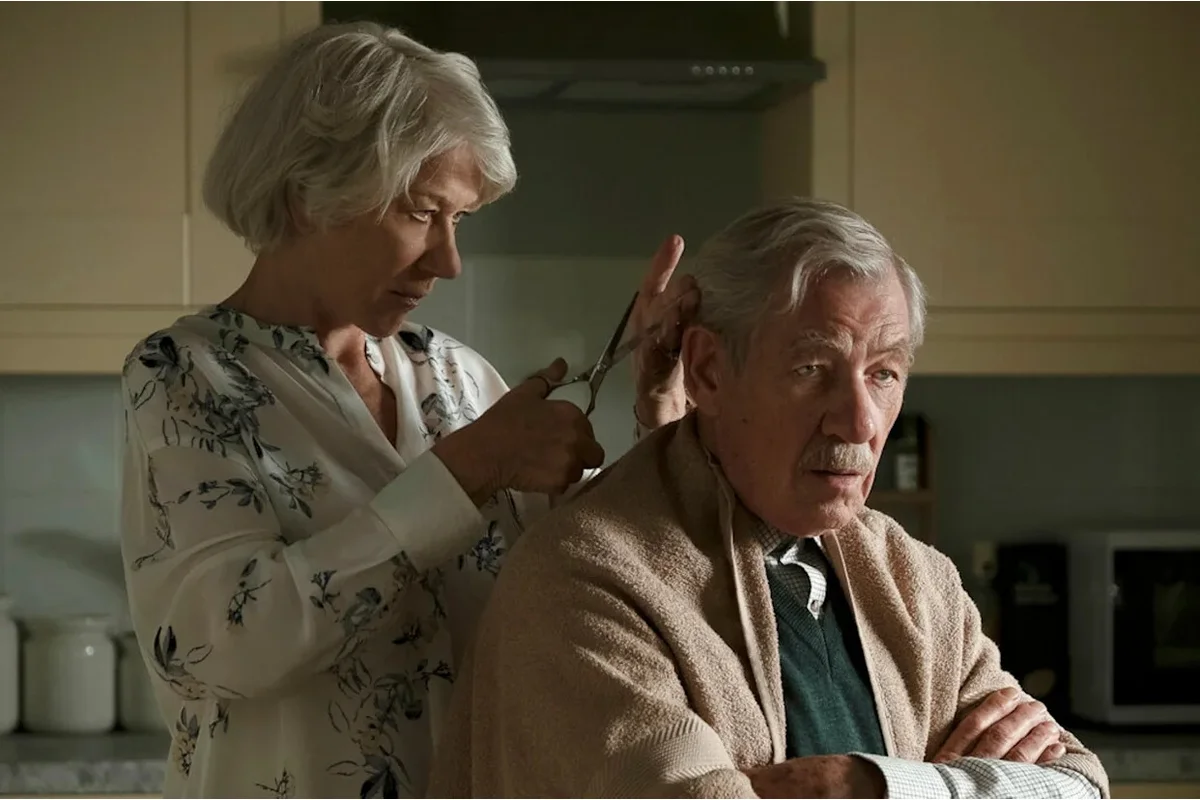
Sir Ian McKellen recently experienced a groundbreaking virtual reality film titled An Ark at the Shed, where he encountered lifelike three-dimensional images of himself and three other actors. This event marked McKellen’s first viewing of the film, showcasing his continued exploration of new artistic mediums beyond his iconic roles, including Gandalf. The interaction between the actor and technology highlights the evolving landscape of performance and storytelling.
Immersive Experience and Audience Interaction
During a recent screening of An Ark, viewers wearing VR headsets witnessed ghostly, hologram-like representations of performers, including McKellen himself. Interestingly, McKellen sat among the audience as a real person, simultaneously present to watch the virtual versions of the actors. After the screening, he engaged with an audience made up largely of schoolchildren who primarily recognized him for his performances as Gandalf and Magneto rather than his classical theater roles such as King Lear.
The schoolchildren asked questions about the show, with one boy curious why the actors frequently discussed death. McKellen responded thoughtfully, “We’re angels, really.” Another child asked if he had ever considered becoming a comedy actor. To this, McKellen replied,
“Have a look at ‘Extras,’ with Ricky Gervais,”
referencing the well-known comedy series that showcased his lighter side.
McKellen’s Reflection on Virtual Reality and Theater
After the live Q&A, McKellen retreated to a conference room where he nonchalantly surveyed a tray of snacks, selecting and eating from a bag of potato chips marked “Classic.” Despite the immersive realism of An Ark—which prompted him to instinctively try to touch one of the characters who encouraged audience interaction—he expressed relief that virtual reality would not replace traditional theater as an art form.
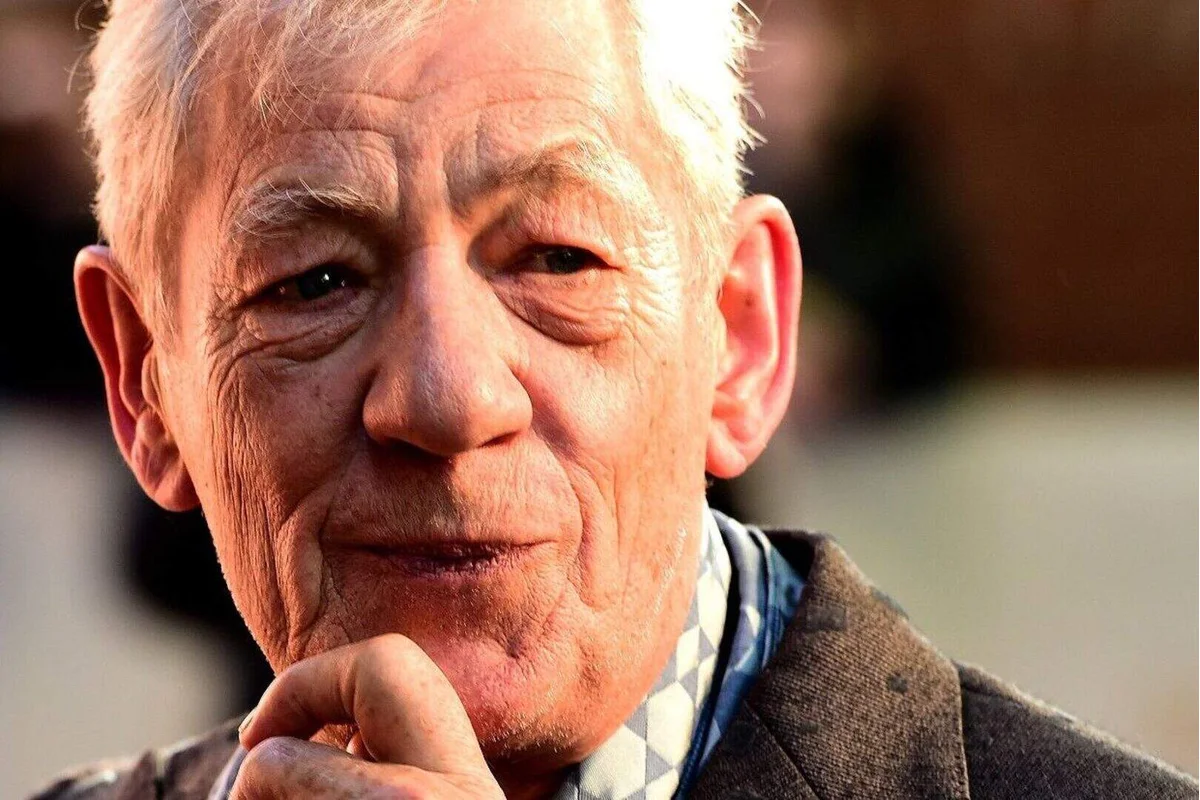
McKellen recalled his early struggles with technology during the filming of the CGI-intensive Lord of the Rings, particularly a challenging scene in which he was required to interact with actors represented only by photographs. Frustrated, he told director Peter Jackson,
“This isn’t why I became an actor,”
and even considered leaving the project. He said,
“I don’t think any actor could,”
but they eventually found an alternative approach to the scene.
The Personal and Philosophical Themes in An Ark
The VR film is crafted in the second person narrative, following the viewer’s journey from birth to the afterlife, a concept that resonates with McKellen’s contemplative nature. He described his fascination with the subject matter as an acceptance of his own mortality:
“It’s a fascination with, or an acceptance of, the fact that I am not immortal. It’ll be my turn soon.”
McKellen revealed a change in his final wishes, having initially planned for his funeral to close with the song One Singular Sensation from A Chorus Line, but later deciding to donate his body to science instead.
McKellen’s Recent Health Scare and Continued Creative Projects
In early 2024, while performing the role of Falstaff in London’s Noël Coward Theatre, McKellen suffered a fall from the stage, leading to a hospital visit for a chipped vertebra and fractured wrist. He humorously recounted the moment, saying,
“I shrieked out to a full house in the Noël Coward Theatre, ‘I’m sorry! I don’t do this!,’ and then, ‘Help me, I’m dying!’”
He described those as the thoughts running through his mind at the time.
Despite the injuries, McKellen has since tested his resilience by completing five films last year and returning to the stage multiple times. One of his upcoming projects is The Christophers, a film on art forgery directed by Steven Soderbergh, set for release in April. Additionally, he will soon portray Jacob Marley alongside Johnny Depp in a new film adaptation of Ebenezer Scrooge’s story.
Advocacy and Public Persona Beyond Acting
The day after watching An Ark, McKellen appeared on Stephen Colbert’s late-night show, where he delivered a powerful monologue from the Elizabethan play Sir Thomas More condemning anti-immigrant attitudes. The four-minute segment gained widespread attention and was shared extensively online.
Though McKellen is widely respected for his Shakespearean mastery, many also admire him for his long-standing activism in gay rights. He came out publicly in 1988 at age forty-nine, stating,
“I did it on my own behalf.”
He acknowledged that no one was surprised, noting the precedent of Simon Callow, who had to reveal his own sexuality through a biography due to media silence.
McKellen explained that being open about his homosexuality liberated his emotional expression, making powerful performances like Chekhov’s Uncle Vanya easier.
“And it freed up my emotions to no end. I’d always found strongly emotional scenes very difficult,”
he said. He recalled his newfound ability to cry in every performance, saying,
“That was all because I was honest. Everything was better.”
With a sense of humor, McKellen imagined a coming-out campaign akin to a revival tent tour featuring prominent figures like Elton John and the Pet Shop Boys.
“I used to think it would be fun to have a coming-out campaign like Billy Graham—that Elton and I and the Pet Shop Boys and whoever else wanted to, we’d get a big tent and when we arrived in your town we’d announce, ‘Now is your chance! You can stand up and come out!’”
As he finished the conversation, McKellen smiled and set down the nearly empty bag of chips, concluding,
“I used to think my gravestone would read, ‘Here lies Gandalf. He came out.’”
Related semantic context: related coverage · external reference.
