
Kevin Kline’s new MGM+ series, American Classic, premiered with a story centered around a Broadway star’s efforts to revive his hometown theater in Millsburg, Pennsylvania. The show explores themes of art, family, and community but fails to connect deeply with audiences despite its focus on theatrical passion and classic works like Shakespeare’s Hamlet and Thornton Wilder’s Our Town.
A Struggling Star Faces Career and Family Challenges
The series follows Richard Bean, a Tony-winning actor portrayed by Kevin Kline, whose recent performance as King Lear garners mixed reviews. His professional life unravels after an aggressive, martini-fueled confrontation with a critical New York Times reviewer goes viral, putting his career on hold. Meanwhile, Richard receives news of his mother’s death from his brother, Jon (Jon Tenney), prompting a return to his small hometown for the funeral. Richard’s self-centered nature is underscored when his first question about his mother is, “Did she read the review?”
Once back in Millsburg, Richard announces a plan to stage Our Town, aiming to save the local theater and revitalize the struggling community. The show positions this theatrical endeavor as a lifeline, attempting to show the redemptive power of art within a small, fading town.
Familiar Themes and a Nostalgic Yet Outdated Setting
American Classic leans heavily into old-fashioned storytelling, embracing clichés such as the narcissistic actor, the charming but declining village, and the theatrical production destined to save the day. The cultural references mostly feel dated, often reaching back over 40 years. Aside from Richard’s viral incident, the narrative could easily be transposed to the late 20th century with little adjustment.
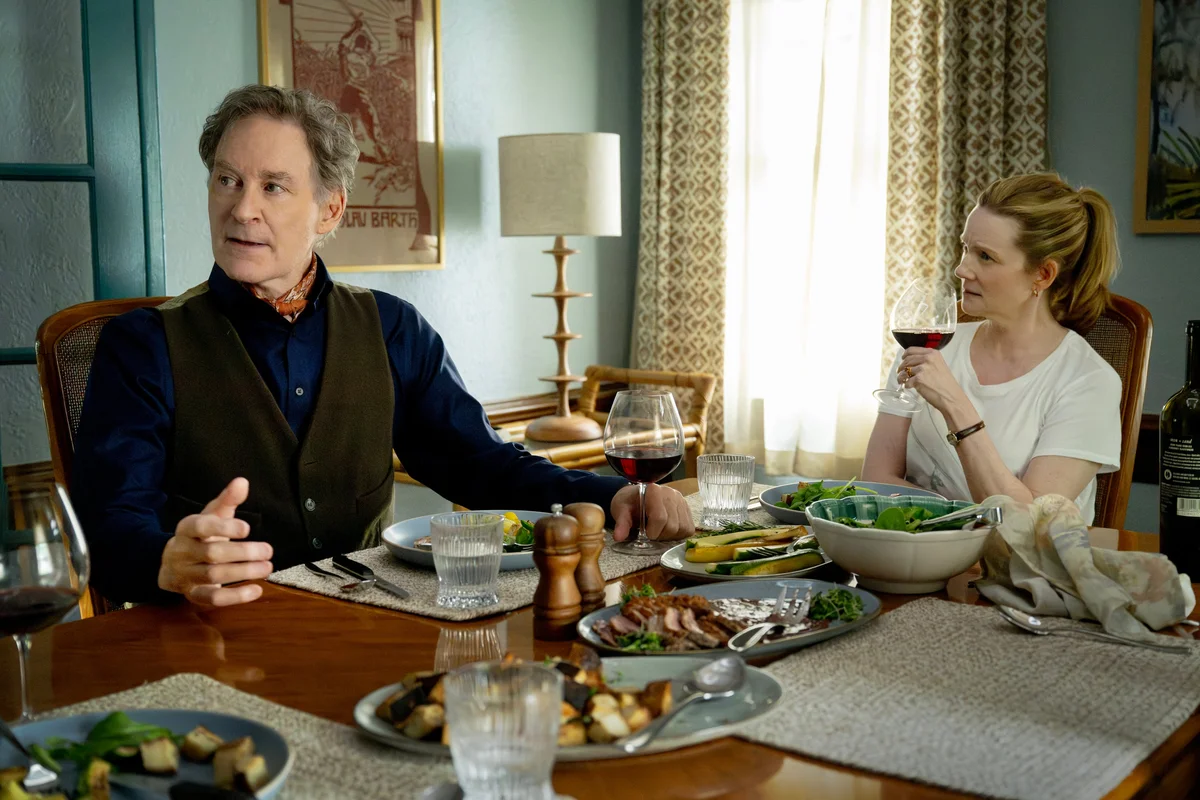
While the series’ genial tone prevents outright dislike, it suffers from an overall blandness lacking the depth and complexity to fully engage viewers. The production design reinforces this feeling, as much of the show unfolds in poorly differentiated interiors bathed in a uniformly bright and flat lighting. American Classic misses the opportunity to bring either visual creativity or a sharp, thoughtful exploration of its themes.
Limited Exploration of Community and Supporting Characters
Although the series frequently references the importance of saving the town’s cultural soul, it offers sparse insight into the life and struggles of Millsburg’s residents. Some supporting characters provide moments of charm, such as Len Cariou’s Linus, Richard’s father, an affable puppeteer dealing with dementia who reveals his sexuality to close ones daily, and Elise Kibler’s Nadia, a Russian émigré driven by a passion for acting despite her clear lack of talent.
However, key figures like Jon and Kristen—Richard’s brother and Kristen’s role as both Jon’s wife and mayor of Millsburg, played by Laura Linney, respectively—lack sufficient development. Their interpersonal dynamics and backstories remain underexplored, leaving their relationships and motivations feeling superficial.
The younger generation fares worse, symbolized by teenage Miranda (Nell Verlaque), who delivers lines that sound more like an adult’s interpretation of Gen Z concerns than authentic youth expression. Her lament to Richard that,
“Democracy is dying. People hate each other. The world is just falling apart. It’s different than when you guys were young,”
she says to her uncle, sounding less like a real young person than a Boomer trying to paraphrase what his Gen Z grandkid was ranting about last Thanksgiving, captures the stilted writing. Richard’s response, invoking the obscure Viet Rock, underscores the gap in genuine understanding between the generations.
Richard Bean: The Central Yet One-Dimensional Focus
Kevin Kline’s portrayal of Richard is imbued with a softness that prevents the character from becoming entirely unlikable, but the writing does little to avoid cliché. Richard remains a self-absorbed thespian archetype, lacking the layers that would create a more compelling and believable figure.
The show centers on Richard’s perspective almost exclusively, with few meaningful insights into other characters’ inner lives or the broader community, which limits viewer empathy and investment.
Theater as Lens and Limitation
American Classic’s most vivid moments arise when characters perform dramatic pieces from Shakespeare or Thornton Wilder, blurring the line between their real-life challenges and theatrical roles. This device highlights the creators’ deep admiration for theater but also reveals the show’s conceptual narrowness.
The reliance on quotations and scenes from celebrated playwrights serves as the main source of emotional resonance, suggesting that the show’s own storytelling falls short of fully capturing human complexity beyond these borrowed works.
Production and Creative Team
Created by Michael Hoffman and Bob Martin, American Classic features a supporting cast that includes Tony Shalhoub as Alvy, Richard’s agent, along with Jon Tenney, Laura Linney, Len Cariou, Nell Verlaque, Elise Kibler, and others. Despite a talented ensemble and experienced leadership, the series struggles to rise above its tired narrative and minimalistic production, diminishing its potential impact.
Why This Matters and What’s Next
American Classic represents a heartfelt yet ultimately uninspired tribute to the power of theater and the struggles of small-town America. While Kevin Kline’s American Classic attempts to marry stagecraft with family drama, it falls short both in character depth and visual appeal. The show’s dated tone and clichéd storytelling may leave theater fans and general audiences alike feeling unfulfilled.
Moving forward, series creators might consider a more contemporary approach that embraces complex, diverse perspectives and richer character development to better reflect today’s cultural and generational realities. As it stands, American Classic is a well-intentioned but forgettable entry in the landscape of theater-themed dramas.
Related semantic context: related coverage · external reference.