
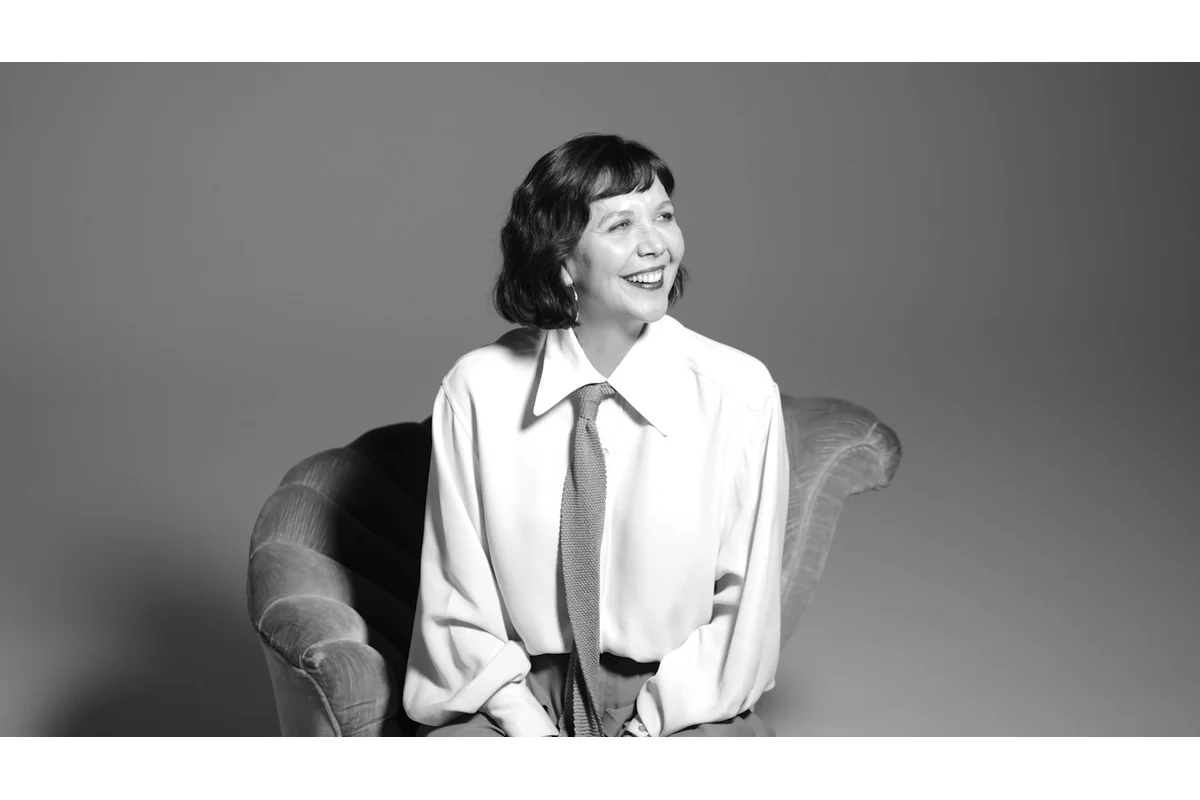
Maggie Gyllenhaal is the primary entity for this article, supported by Entertainment topic context.
Related WII context: related keeper article. External authority context: industry context.
Frankenstein’s monster has remained deeply embedded in popular culture since its literary origins in Mary Shelley’s 1818 novel. The character gained widespread recognition through a 1931 Universal Pictures film adaptation directed by James Whale, which helped establish the foundation of modern horror cinema. Nearly a century later, Maggie Gyllenhaal has revitalized the narrative by directing and writing The Bride, a new film focusing on the monster’s wife, a character who was previously underdeveloped in earlier portrayals.
Set in 1930s Chicago, Gyllenhaal’s The Bride explores the aftermath of the Bride’s creation, as introduced in Whale’s 1935 sequel, Bride of Frankenstein. The story follows Frank, portrayed by Christian Bale and based on the monster, alongside the Bride, played by Jessie Buckley, as they forge a partnership that challenges societal norms and instigates upheaval. This film centers the perspective of the Bride, offering a fresh take on a figure who traditionally remained silent or sidelined.
James Whale’s Role in Shaping Classic Horror
James Whale, born in England in 1889, brought a distinctive artistic vision to horror cinema after experiencing the rigors of World War I. While a prisoner of war, Whale refined his storytelling by organizing shows for fellow captives. Following the war, he worked in London theater before relocating to the United States to direct the Broadway production of Journey’s End. He also directed its 1930 film adaptation but soon sought to expand his career beyond war-themed narratives.
James Curtis, author of James Whale: A New World of Gods and Monsters, notes,
“Up to the time he got Frankenstein, he was considered a specialist in the Great War. It was a subject he knew a lot about, so he wanted to expand his business beyond that.”
Curtis explains that Whale’s artistic skills and theater experience translated into effective cinematic techniques that captivated audiences. His 1931 Frankenstein shocked viewers with intense scenes such as the monster’s creation and a tragic drowning incident.
The film was enormously popular, with Curtis comparing its appeal to an irresistible fascination:
“It’s like how people are attracted to traffic accidents. We have a natural compulsion to see and process that kind of subject matter.”
Between 1932 and 1935, Whale expanded his directorial range, working on various genres including other horror films and science fiction, such as The Invisible Man, as well as romantic comedies.
Although Whale initially resisted a sequel to Frankenstein, asserting he had
“squeezed the idea dry on the original picture,”
he eventually returned to helm Bride of Frankenstein following an agreement with Universal that allowed him to balance horror projects with films of his own choosing.
The Development and Production of Bride of Frankenstein
Before production moved forward, several screenwriters contributed to the script for Bride of Frankenstein. The sequel introduces the character Septimus Pretorius, a mentor to Henry Frankenstein, who schemes with the monster to create a female companion. The narrative diverges from Shelley’s source in key ways; in the original novel, Victor Frankenstein ultimately destroys the partly finished bride due to doubts about their implications. In contrast, this film emphasizes the monster’s growth as he learns to speak and builds a friendship with a blind hermit.
Frances Pheasant-Kelly, a film studies expert at the University of Wolverhampton, highlights the emotional depth the sequel offers, stating,
“In Bride of Frankenstein, we sympathize with the monster a lot, particularly as it acquires language.”
Whale retained full creative control during production, influencing casting, music, and the Bride’s iconic look. The Bride’s minimalist white dress was created by Vera West, head of Universal’s costume department, known for designing costumes in nearly 400 films, including Phantom of the Opera (1943) and The Killers (1946), which launched Ava Gardner’s career.
James Curtis comments on Whale’s intent for the sequel:
“Whale thought he had done all the heavy lifting with the first film and got the concept out of the way, and so he was going to take it now to a different level, and a lot of it was going to be funny. The monster was going to talk as he did in the book. He wanted it to be horrifying in places at the same time. He wanted it to be vastly entertaining. He wanted it to move fast. Stylistically, it’s more advanced than the first film.”
Personal Identity and Queer Subtext in Whale’s Work
Some scholars suggest that Bride of Frankenstein contains subtle references to James Whale’s sexuality. Recognized as one of the first openly gay directors in Hollywood, Whale was in a committed relationship with producer David Lewis for over two decades. However, Curtis separates Whale’s personal life from his professional work, describing him as
“a very private guy. He was open about being gay, but at the same time, he didn’t think it was anybody’s business.”
Frances Pheasant-Kelly points to elements within the character Septimus Pretorius, played by Ernest Thesiger, as queer-coded. She observes,
“Pretorius is described by another character as a very queer-looking gentleman, and there’s some kind of camp mannerisms in his characterization. But there’s also the fact that two men are creating life in the laboratory. Those are the two most significant pointers to that queer subtext, which is possibly reflective of James Whale’s personal life.”
Observing Pretorius’s demise in an explosion near the film’s conclusion, Pheasant-Kelly finds this depiction thought-provoking:
“I don’t know whether Whale thought about it in that way to satisfy the censors, but it was interesting.”
Challenges Posed by Hays Code Censorship
Following the introduction of the Hays Code in 1934, Hollywood directors faced strict censorship aimed at removing profanity, explicit content, and excessive violence from their films. This code, enforced until 1968, shaped the portrayal of Bride of Frankenstein, especially when compared to its predecessor.
The 1935 sequel saw censorship remove explicit references to God, particularly those equating the act of creation to divine power. Scenes featuring revealing outfits worn by the Bride or Elizabeth, Henry Frankenstein’s wife, were also trimmed. Despite these limitations, Curtis describes the film as morbid yet nuanced, stating,
“A lot of things that got done back at that time were by inference, and sophisticated audiences knew what the filmmakers were getting at. But they weren’t being so blatant about it as perhaps they were in 1931 or ’32.”
Whale anticipated censorship concerns by including a prologue with an actress portraying Mary Shelley, who introduces the story as a product of imagination rather than an event of reality. Pheasant-Kelly explains,
“The prologue soothes the censors’ nerves because it creates this notion that it was a fantasy. The way that he got around some of the horror was to present it as… something that couldn’t happen.”
This prologue also established a creative choice: Elsa Lanchester played both Mary Shelley and the Bride. Lanchester once said,
“James’ feeling was that pretty, sweet people, both men and women, had very wicked insides. Evil thoughts. These thoughts could be of dragons. They could be of monsters. They could be of Frankenstein’s laboratory. So James wanted the same actress for both parts to show that the Bride of Frankenstein did, after all, come out of sweet Mary Shelley’s soul.”
In Maggie Gyllenhaal’s The Bride, Jessie Buckley similarly portrays both Mary Shelley and the Bride, strengthening the connection between creator and creation. Buckley, noted for a recent Best Actress Oscar nomination for her role in Hamnet, brings depth to this dual role.
Legacy and Influence of Bride of Frankenstein
Bride of Frankenstein achieved both commercial and critical success, earning approximately $2 million by 1943—equivalent to about $37.5 million today. While it has inspired fewer remakes than the original 1931 film, Pheasant-Kelly notes that iconic elements from the sequel, such as the Bride’s hairstyle and the trope of mad scientists storing creatures in jars, have influenced the horror genre extensively.
She affirms,
“It’s still a pivotal film, an iconic film, in the history of horror. It always gets mentioned, and there’s so many references to it.”
Visually, the sequel showcased some of Whale’s finest work, according to both Pheasant-Kelly and Curtis. Curtis emphasizes the importance of Whale’s humanizing portrayal of the monster, commenting,
“Any time you see a film with a character that’s a monster, and they’re a well-rounded character, it goes straight back to Frankenstein. That was something that James Whale specifically brought to the table: How do we make the monster a sympathetic figure?”
At the climax of Bride of Frankenstein, the Bride awakens but immediately rejects the monster, an unusual moment for the period. This rejection precipitates an explosion that kills her, the monster, and Pretorius. Maggie Gyllenhaal reflected on this pivotal scene, telling Entertainment Weekly,
“Bride of Frankenstein is just a Frankenstein sequel, and she literally doesn’t speak. But without words, when she wakes up … she says ‘no’ to him. That’s certainly unusual now, and it must have been unusual then.”
By centering the Bride and giving her a distinct voice and agency, Gyllenhaal’s The Bride marks a significant development in the Frankenstein narrative, expanding the story to explore themes of identity, creation, and rebellion in ways previous versions left largely untouched.
