David Harbour is the primary entity for this article, supported by Entertainment topic context.
Related WII context: related keeper article. External authority context: industry context.
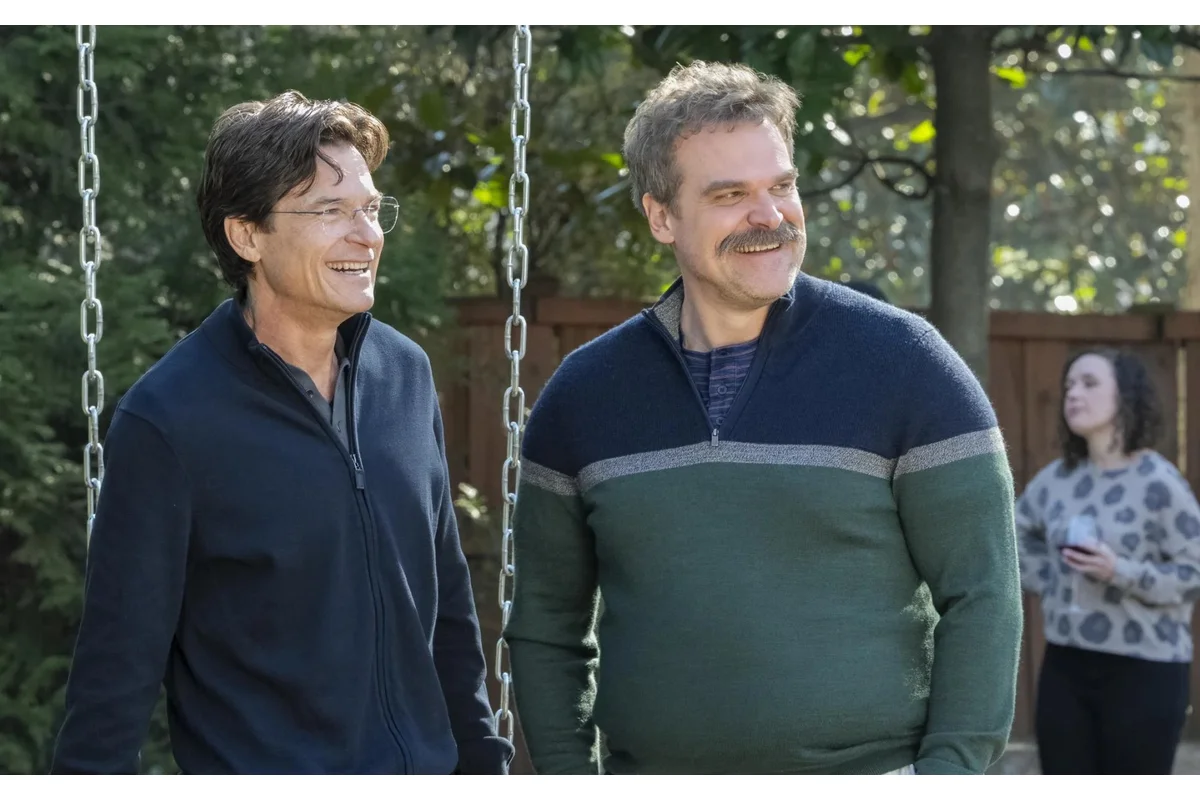
David Harbour leads the cast of the intense and morally complex series DTF: St. Louis, a dark comedy mini-series created by Steve Conrad that delves into the tangled lives of three middle-aged adults caught in a complicated love triangle. Set in 2018, the story unfolds in a St. Louis suburb where the characters navigate emotional turmoil, infidelity, and desperate choices amid the backdrop of a provocative app called “Down to Fuck” (DTF).
The show features Harbour as Floyd Smernitch, a sign language interpreter living with his wife Carol, played by Linda Cardellini, and her troubled teenage son Richard. The plot intensifies when Floyd unexpectedly forms a close bond with Clark Forrest, a meteorologist portrayed by Jason Bateman, following a harrowing event during a violent storm.
Intricacies of the Central Love Triangle and Characters
DTF: St. Louis revolves around a reluctant love triangle where Floyd remains unaware he is part of one, highlighting themes of secrecy and deception. Alongside Harbour, Bateman, and Cardellini, the story also includes performances by Richard Jenkins and Joy Sunday as local law enforcement figures, adding depth and complexity to the suspenseful seven-episode arc. Each episode shifts dramatically, keeping viewers uncertain of what unexpected turns may unfold next.
The series probes the emotional vulnerabilities and evolving dynamics of middle-aged adults confronting loneliness and dissatisfaction. Harbour’s character, Floyd, carries the unique history of being a former nude male model, adding layers to his cautious personality.
On-Screen Chemistry and Friendship Between Harbour and Bateman
The on-screen partnership between David Harbour and Jason Bateman, known respectively for Stranger Things and Ozark, brings a rare glimpse of male friendship portrayed with authenticity. Harbour reflects on their connection, saying,
“Right from the early discussions with Jason, I felt a camaraderie,”
David Harbour remarked.
“He’s such a smart guy and so silly on one hand, but yet earnestly cares about what he does on the other. I just felt a camaraderie and a kind of fun with him.”
Harbour admits the experience of building a new friendship in middle age resonates personally, stating,
“It’s hard as a 50-year-old heterosexual male to make new friends. I’ve found it hard. But I started to really just let my guard down.”
He further explains how their growing friendship enriched the performances:
“There was something on set where even that process of making a new friend in him or showing up or thinking, ‘I wonder what he thinks of me in the scene today?’ I would let those colours play on me as we played the scene. And it was a joy to do. I think the chemistry was very organic and I’m very pleased to see that it translates on screen so well.”
Jason Bateman reciprocates the praise, describing their rapport as stemming from genuine connection rather than scripted interaction. He says,
“I have a lot of similar feelings about David and about how effortless the chemistry was. It’s just simply people skills. In any occupation, any work environment, it is a choice to have a connection with the people that you’re working with and so, when you’ve got people that aren’t jerks, it’s not tough.”
Creator Steve Conrad’s Vision Behind the Series
Steve Conrad, known for creating Patriot and writing the film Wonder, shaped DTF: St. Louis over a four-year development period, seeking to merge suspense with the emotional landscape of middle-aged desperation. He explains how he and Harbour aimed to address themes missing in television by focusing on the vulnerabilities of suburban adults:
“We looked at some articles, and started to try to conceptualise something based on stuff that we had looked at together and then decided that we would have a stronger show, a more comprehensive set of things to say if we just started from scratch on it.”
Conrad envisioned a summer in which a group of adults, each facing emotional collapse, are drawn into a risky interplay with a hookup app promising excitement without consequences. As he says,
“And sites like this would promise all the excitement, none of the consequences. Married people could connect, cheat on their spouses and go home and resume their normal lives. And that promise just seemed not quite stable to me. So, I thought it would be a great place to start, and David and I agreed to make a series of suspenseful and tense events that might follow from grownups making mistakes and then trying to fix them, only to create greater mistakes, only to very serious desperation.”
Linda Cardellini’s Role as Carol Adds Depth and Mystery
Linda Cardellini’s portrayal of Carol, Floyd’s wife and the central female figure in the trio, highlights the complexity and layered nature of her character. Cardellini shares her reaction to the role, stating,
“When I read it, I just was so moved by it. And I had not read anything like it. It doesn’t move linearly.”
She praises Steve Conrad’s writing for its rhythmic and poetic quality, adding,
“Steve’s writing is so beautiful, but there’s a music to it. It was just so evident in reading it and loving his work and then loving David and Jason’s work I knew they were involved. And I thought, ‘well, you know, what a gift the role is’. I mean, she’s so complicated. I think you get to know the guys a little more easily than you get to know who Carol is – but there’s a lot to Carol that you only discover later.”
Cardellini also describes the experience as challenging and rewarding:
“It felt a little dangerous and brave for me compared to other things that I’ve done. And to be in the company of this cast was a real gift. And then being on set every day, I have to say it just was a joy. So, all of those things, I just am so grateful for the whole experience.”
The Show’s Intimate Scenes and Emotional Rawness
Given its title and subject, DTF naturally features multiple intimate scenes, which Jason Bateman approached with some apprehension. He credits Steve Conrad for making him feel comfortable in those moments, explaining,
“I haven’t done a ton of intimate scenes in my career, so I was definitely a little apprehensive about it all, but looking forward to the challenge.”
Bateman appreciates how the show portrays vulnerability through its central characters. He notes that his character is portrayed as uncomfortable with this new territory, which reflects the series’ theme of adult emotional struggles. He emphasizes the show’s unique emotional texture:
“The superpower of this show is just that Steve constructed these three characters at the center of it that are at these varying levels of emotional and spiritual nudity, and it’s infectious to watch because it’s something that I think every human goes through.”
He points out the contrast between the main trio’s awkwardness and the sharper, more guarded outlook of characters played by Richard Jenkins and Joy Sunday, who serve as a form of audience perspective:
“The characters that Richard and Joy play are the audience, the people that know how to hide these vulnerabilities. And that’s why they’re so damn funny in it because they’re commenting on these three neophytes … And it’s just so vulnerable and human and it’s uncomfortable to watch these people experiment with becoming more dynamic in their life and it’s awkward and it’s ugly and it’s not sexy.”
Bateman sums up the tone of the show as a blend of tragedy and humor, which keeps viewers engaged:
“It’s not a titillating show, but it’s equal parts tragic and humorous, and that’s what compels you to just keep watching minute after another minute after another episode, because these people are just so bravely diving off into the void.”
David Harbour’s Ambition for the Series’ Impact
David Harbour envisions DTF: St. Louis as an addictive experience for viewers, comparable to the binge-worthy nature of Stranger Things. He expresses his desire to create television that is both pleasurable and deeply engaging. Harbour says,
“I wanna make great television – just truly enjoyable, pleasurable television. There’s something about sitting with your laptop, is kind of how I do it, in your bed with a group of characters for eight hours and just bingeing the hell out of it. That can be a truly pleasurable experience.”
DTF: St. Louis is currently available for streaming on HBO Max, inviting audiences to explore its tangled web of relationships, emotion, and suspense set against the midwestern backdrop of St. Louis.