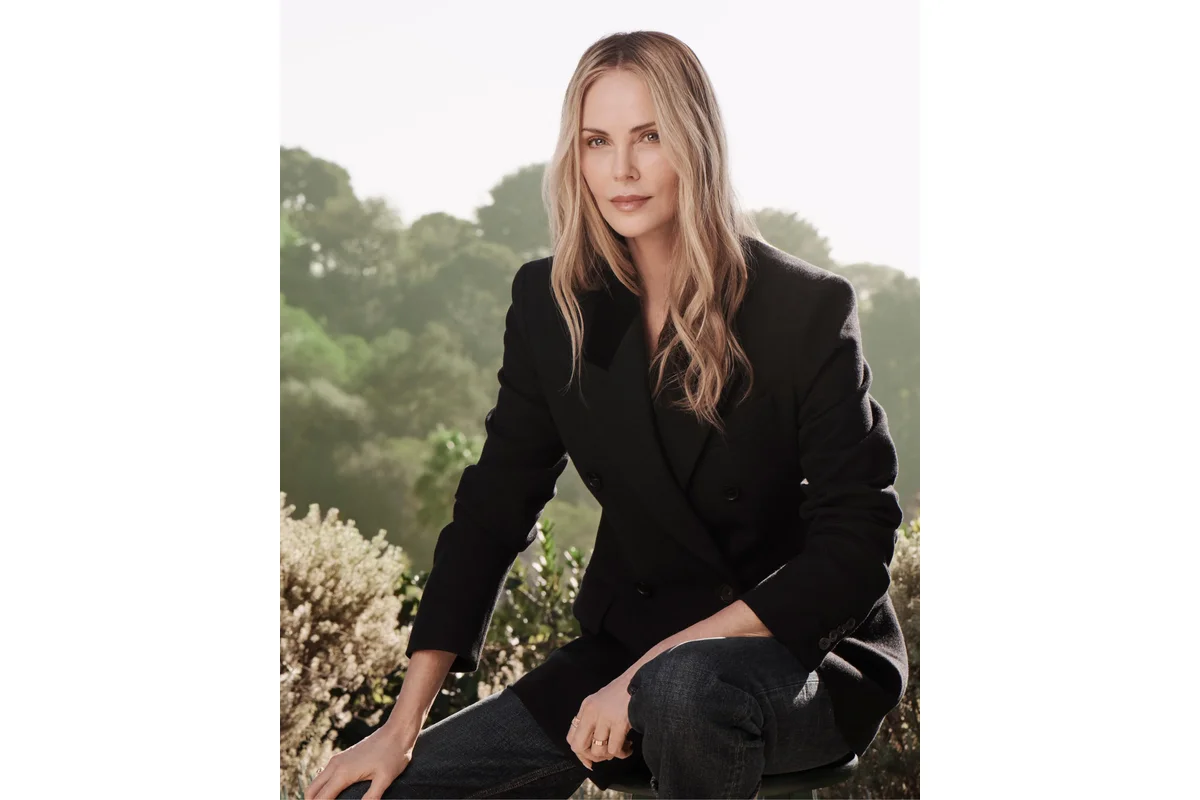
Charlize Theron, Academy Award-winning actress and Dior Beauty Ambassador, has long been dedicated to championing the marginalized communities of her native South Africa. With femicide rates five times above the global average and increasing gender-based violence, Theron’s advocacy work through the Charlize Theron Africa Outreach Project (CTAOP) is critically urgent and impactful.
Born and raised in South Africa, Theron understands the deep, systemic challenges that plague her country. In 2007, she founded CTAOP to leverage her public profile and resources to support grassroots initiatives focused on HIV/AIDS prevention, gender violence, and youth empowerment, engaging directly with communities on the ground.
The Roots and Evolution of the Charlize Theron Africa Outreach Project
CTAOP initially concentrated on combating HIV/AIDS, recognizing South Africa as an epicenter of the epidemic. Theron and her team aimed to address prevention efforts that were often overlooked despite the obvious need. As the initiative grew, CTAOP expanded its scope to include partnerships with local programs that address wider social issues. This includes funding, advocacy, and capacity building to empower community leaders to create sustainable change in their neighborhoods.
The program’s scholarship scheme, one of many CTAOP’s collaborations, supports young women at universities such as the University of Cape Town, helping them pursue their education free of financial stress. Theron expresses her profound belief in these young leaders, saying,
Image of: Charlize Theron
“because I have personally seen what powerful young people are capable of.”
Charlize Theron
Recipients of the scholarship, like student Onesimo, emphasize the relief and opportunity the program provides. Onesimo shares,
“I was always worried about school fees, and now throughout my studies, I’ve never had to worry about tuition, or whether I would go to bed hungry.”
Onesimo
Empowering Youth Through Leadership and Advocacy
The criteria for scholarship applicants focus on intellectual capacity, leadership potential, and a dedication to community service. Miché, another scholarship beneficiary, reflects on her upbringing in the midst of violence and poverty, writing,
“It said: I come from shootings in my neighborhood. I come from little girls and little kids running in the streets barefoot. I come from young mothers tirelessly working for their families. I come from hardworking black women.”
Miché
The stories from these young women underscore the transformational effect CTAOP scholarships provide, giving them room to grow beyond mere survival and envision meaningful futures. Onesimo hopes to establish a library offering educational alternatives to prevent youth crime, while also aspiring to work as a pathologist.
Siphosihle, whose story highlights the complex challenges faced by many in South Africantownships, recounts caring for their sister’s son who lacked a birth certificate—a document vital for accessing healthcare, education, and employment. They explain,
“One of my goals was to help the kids in the township, because my brother’s not the only one. I wanted to create a campaign to foster the process for these kids to get identification papers so that they can go to school. Otherwise, they end up on the street, being influenced by older kids, getting up to no good.”
Siphosihle
Now a student of African feminist studies, Siphosihle is working to create safe spaces for LGBTQIA+ youth, addressing the physical and emotional violence that queer individuals often endure in South Africa.
They share their vision:
“I want to go back to a school like the one I went to, and work with queer kids to equip them with skills. The killing of queer bodies and the stigma that surrounds them… people say things but the aggressions can also be very violent and physical. I want to create a space to give these kids tools to advocate for themselves… and also help them see that there’s nothing wrong with their identity.”
Siphosihle
Safe Spaces and Community Healing: The Work of Philisa Abafazi Bethu
Theron’s work also brought attention to Philisa Abafazi Bethu (PAB), a community center in a Cape Town township led by Lucinda Evans, who has developed innovative programs to counter violence and provide healing. Dior Beauty, Theron’s partner, was taken by the impact of the organization after visiting its vibrant facilities, which include a therapeutic Mandala garden where medicinal plants are grown. Evans explains,
“This is the Mandala garden. That inner ring, where the sitting area is, is where the medicinal plants grow. If you sit, one of the plants will touch your back, and that’s the beginning of medicine. This is what Philisa Abafazi Bethu means, literally: Heal Our Women.”
Lucinda Evans
During the COVID-19 pandemic, CTAOP worked closely with PAB to respond to aggravated domestic violence and food insecurity. Evans recounts,
“Women were locked up with their perpetrators, domestic violence was happening while the children were not in school. I thought that food would bring peace in the home, peace for families.”
Lucinda Evans
Over nineteen months, PAB served up to 3,000 meals daily with a large network of volunteers working in multiple kitchens. The center’s compound stands out in stark contrast to the surrounding area, featuring repurposed shipping containers painted vibrantly to create a welcoming environment for children and elders.
One lifesaving innovation at PAB is the Baby Box, designed to provide a secure option for mothers who cannot care for their newborns. When a baby is placed inside, an alarm alerts volunteers who promptly intervene to ensure the infant’s safety and hospital care. Despite resistance from local authorities, this initiative has already saved at least five children.
Holistic Support for Vulnerable Children and Elderly
PAB offers an after-school program for children, providing not only nutritional support but also safe playtime and group therapy that uses art and music to help kids process trauma and build resilience. Evans highlights the importance of such care, saying,
“When there is violence in the home of a small child, the child feels every emotion but doesn’t have the capacity to say what’s going on. And when the child starts school, no one understands why they are so violent. That’s why we have art therapy and music therapy, to help children self-regulate.”
Lucinda Evans
There is also an emergency refuge for LGBTQIA+ youth who face rejection and violence in their homes, offering vital sanctuary in an often conservative and patriarchal society. Theron describes the difficulty of growing up in South Africa, stating,
“It’s really hard to grow up in a place like South Africa, to see the unnecessary suffering around you and not feel like you have to try and do something.”
Charlize Theron
The center further supports approximately 140 elderly people daily, mostly women, providing a safe place to socialize and earn modest income through crafts or gardening. Evans explains the vulnerability of older adults to domestic abuse within families, saying,
“This makes them vulnerable to be abused. Domestic violence is rife, but the biggest problem is that they don’t report it because it’s either their child or their grandchild hurting them.”
Lucinda Evans
Theron adds context on the demographic impact of AIDS in South Africa:
“A whole generation was wiped out by AIDS. They were the mothers and fathers of those children who ended up being raised by their grandparents, older people who come from a different time and place and are not always equipped.”
Charlize Theron
The center creates community through activities like dance classes, and Evans remarks with pride,
“We are a nation of dance!”
Lucinda Evans
Theron’s Personal Drive and Long-Term Vision for South Africa
Interviewed by Marie Claire, Charlize Theron explained how CTAOP began in the HIV/AIDS prevention space, motivated by the lack of accessible prevention resources during her early career. She recalled a defining moment at a prevention class where a young boy confidently asked about female condoms used in gay sex, a question unimaginable just a few years prior in conservative South Africa. Theron reflected,
“If that’s what we were doing, building confidence in young people to take agency, then we were doing something real. That’s what our emblem stands for: the drop and the ripple effect.”
Charlize Theron
Despite skepticism often directed at celebrity activists, Theron embraces her platform to amplify local voices and struggles. She serves as a UN Messenger of Peace, emphasizing the importance of advocacy to support the difficult daily work of female community leaders. Theron remarked,
“There’s the work on the ground that these female leaders are accomplishing, and it’s really hard, so they need advocates.”
Charlize Theron
Theron’s early activism included participation in an anti-rape campaign in South Africa, which garnered international attention. She observes ongoing setbacks in the fight against gender violence, highlighting that femicide rates remain shockingly elevated and many cases go unreported. She attributes part of the country’s challenges to the aftermath of apartheid and insufficient sustained international support after Nelson Mandela’s presidency. Theron stated,
“We take four steps forward and then sometimes 10 steps back. And right now, we’re about 20 steps back.”
Charlize Theron
Investing in the Next Generation of Leaders
CTAOP’s Youth Leadership Program is a key initiative designed to empower young people with the skills and confidence to challenge entrenched societal problems. Theron explains,
“Great potential lies everywhere, but in the places where our partners work, that potential is not given opportunity. If you really want to change the cornerstone of a lot of the issues, you have to start with the people who are willing to fight. That’s the future.”
Charlize Theron
Theron also underscores the importance of creating visible safe spaces, which can have a deterrent effect on local crime by demonstrating community care and attention. Regarding PAB’s impact, she said,
“Yes, because it shows that people are caring. A lot of violence keeps happening because people think there are no consequences, which means nobody cares.”
Charlize Theron
Throughout her engagement with CTAOP, Theron acknowledges the emotional toll but finds hope in the tangible progress made by the organization. She reflects,
“CTAOP has given me a way to not feel that way, to feel like: sure, there’s a lot of shitty things happening in the world right now, but I can do something that I know is effective. To me that’s incredibly hopeful. Because I think we all need hope. Without hope, we die.”
Charlize Theron
Hope for South Africa’s Future and Community Healing
Looking forward, Theron envisions a South Africa where people fully realize their potential, emphasizing the country’s natural beauty and resilient spirit. She hopes the hard work of its people will be rewarded swiftly. Theron highlights the power of collective female leadership, noting,
“We’re the majority of the population. We’re incredibly powerful if we come together. I think it’s important for us to talk about it, because it can give a lot of women who have all the right intentions a direction.”
Charlize Theron
The CTAOP model serves as a blueprint, with Lucinda Evans expressing a wish for others to replicate the project’s success in their own communities. She states,
“I want somebody to come and take the blueprint and go do it in their own community. I want this project to be known as the organization that didn’t see colour or gender, and that helped a community heal, one household at a time.”
Lucinda Evans
Through Charlize Theron advocacy, the combined efforts of individuals, local leaders, and international partners create lasting change in South Africa’s fight against gender violence and social marginalization, offering pathways to empowerment across generations.