
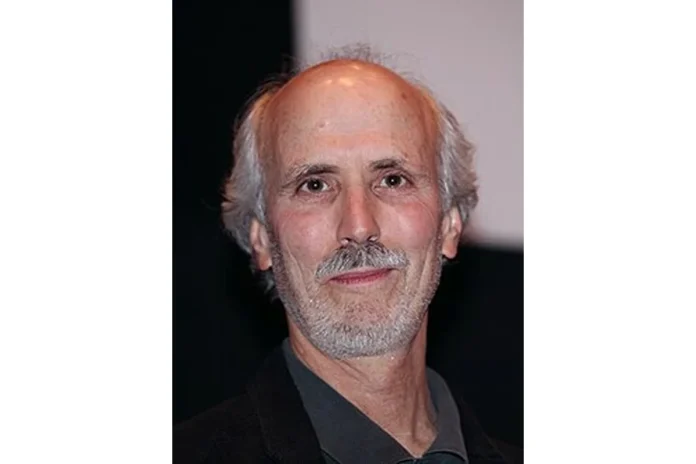
Alan Rudolph Bio
Alan Steven Rudolph (born December 18, 1943) is an American film director and screenwriter whose body of work is defined by intimate, character-driven stories that blend romance, humor, and noir. Over the course of a career stretching from the early 1970s to the present, he has built a reputation for ensemble films built around eccentric, isolated characters and their tangled relationships. He first gained recognition as a protégé of director Robert Altman before moving on to write and direct his own features, often collaborating with the same group of actors and composers.
Rudolph is known for his long working relationships with actor Keith Carradine, actress Geneviève Bujold, and composer Mark Isham, and for films including Choose Me (1984), Trouble in Mind (1985), The Moderns (1988), Love at Large (1990), Mrs. Parker and the Vicious Circle (1994), Breakfast of Champions (1999), and Ray Meets Helen (2017). He lives on Bainbridge Island, Washington, and has also exhibited his paintings.
Early Life and Background
Alan Steven Rudolph was born on December 18, 1943, in Los Angeles, California. He grew up in a household tied closely to the entertainment industry. His father, Oscar Rudolph (1911–1991), worked as a television director and actor, giving his son an early view of life on a working set and the practical rhythms of film production.
Rudolph came of age in mid-century Los Angeles during a period when the city was one of the world’s busiest centers for film and television. Watching his father’s career unfold helped shape his sense of storytelling and visual style. Although his early formal education is not widely documented, the daily presence of filmmaking in his family left a clear mark on his ambitions.
As a young man, Rudolph became interested in film and gravitated toward directors who valued character and atmosphere. That interest soon led him toward a mentor who would reshape his approach to directing, and it paved the way for his transition from observer to working filmmaker.
Path to Director
Rudolph’s path into directing ran through the set of Robert Altman, one of the most influential American filmmakers of the 1970s. He served as an assistant director on Altman’s film adaptation of Raymond Chandler’s The Long Goodbye, and later worked in the same capacity on Altman’s landmark ensemble film Nashville. These experiences placed him at the center of two landmark productions and gave him direct, hands-on training in handling large casts and improvised performances.
Working under Altman allowed Rudolph to develop a sensibility shaped by overlapping dialogue, ambiguous characters, and a loose, naturalistic style of filmmaking. By the time he moved on to writing and directing his own features, he had absorbed key lessons about ensemble storytelling, romance, and tonal mixing that would come to define his films.
His first directorial work followed shortly after his assistant-director years, and the early phase of his filmography laid the groundwork for the character-rich, romantic, and slightly off-kilter style that audiences would later come to associate with his name.
Alan Rudolph Career
Early Career (1972–1983)
Rudolph began his professional film career in 1972, working first as an assistant director on Robert Altman’s productions. His early duties on The Long Goodbye and Nashville gave him a practical education in the rhythms of large ensemble shoots and in the improvisational, character-first style Altman favored.
During this formative period, Rudolph also began developing his own projects, writing screenplays and preparing for the move into directing his own features. His early directing work laid the foundation for the recurring themes and ensemble textures that would emerge more clearly in the years ahead.
Breakthrough (1984–1994)
Rudolph came to prominence with Choose Me (1984), a story about the sexual and romantic relationships among a handful of lonely but charming people in Los Angeles. The film starred Lesley Ann Warren as an ex-prostitute bar owner, Geneviève Bujold as an emotionally repressed radio talk show hostess, and Keith Carradine as a disarmingly honest madman. Choose Me announced Rudolph’s signature mix of romance, melancholy, and offbeat humor.
He followed it with Trouble in Mind (1985), featuring Kris Kristofferson alongside Bujold, Carradine, and Divine in a rare, out-of-female-drag performance. The film was entered into the 36th Berlin International Film Festival, expanding Rudolph’s international profile. The Moderns (1988) was a fictional love story set in 1926 Paris among well-known American expatriates, with Carradine, Linda Fiorentino, and John Lone, while Love at Large (1990) was a private-eye love story written and directed by Rudolph and filmed in Portland, Oregon.
After the thriller Mortal Thoughts (1991) starring Demi Moore, he directed Equinox (1992), with Matthew Modine playing a pair of separated twins. His Mrs. Parker and the Vicious Circle (1994) was a biopic of writer Dorothy Parker, starring Jennifer Jason Leigh in the title role. This decade marked Rudolph at his most productive and visible.
Notable Works and Milestones
Among Rudolph’s signature works are Choose Me, Trouble in Mind, The Moderns, Love at Large, and Mrs. Parker and the Vicious Circle, each one reinforcing his interest in isolated, eccentric characters and romantic, slightly surreal storytelling. His collaborations with Keith Carradine, Geneviève Bujold, and composer Mark Isham became a defining part of his style.
Alan Rudolph Family
Rudolph was born into a family with deep roots in the entertainment industry. His father, Oscar Rudolph (1911–1991), was a television director and actor whose career gave Alan an early window into the world of professional filmmaking.
The household’s connection to Hollywood helped shape Rudolph’s ambition to direct, and he has spoken through his work about the influence of family and place on his storytelling.
Personal Life
Rudolph married Joyce, a photographer. A couple of years after the release of Trouble in Mind in 1985, he bought a house on Bainbridge Island, Washington, where he has lived and worked for many years. In April 2008, he presented a solo show of his paintings at Gallery Fraga on Bainbridge Island, reflecting another creative pursuit outside of filmmaking.