
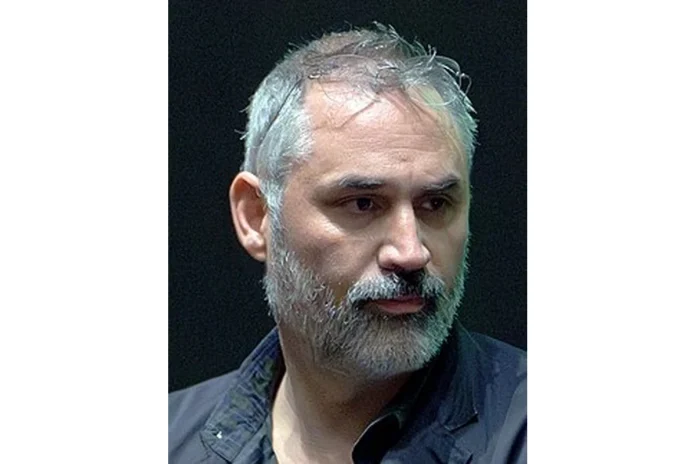
Alex Garland Bio
Alexander Medawar Garland (born 26 May 1970) is an English author, screenwriter, film director, and television director renowned for his inventive science-fiction storytelling. He rose to prominence with his debut novel The Beach (1996) and later wrote screenplays for genre-defining films such as 28 Days Later (2002) and Sunshine (2007). Garland wrote, directed, and produced Ex Machina (2014), earning an Academy Award nomination for Best Original Screenplay, and went on to adapt Annihilation (2018). He created and executive produced the FX miniseries Devs (2020) and has continued to work across film, television, and novels, exploring themes of technology, consciousness, and human ethics with a distinctive, speculative voice.
Early Life and Background
Alexander Medawar Garland was born in London, England, on 26 May 1970, to psychologist Caroline Medawar and political cartoonist Nicholas Garland. He grew up with a younger brother and two older paternal half-siblings. His maternal grandfather was Nobel Prize-winning biologist Peter Medawar, and his maternal grandmother was writer Jean Medawar, providing him with an intellectually rich family background. Garland was educated at University College School in Hampstead and graduated from the University of Manchester with an art history degree.
Path to Director
Garland began his career as a novelist with The Beach (1996), which drew from his travels across Europe and Thailand. The novel tells the story of a young English backpacker who discovers an unspoiled seashore occupied by a community of like-minded travelers. The Beach was initially met with positive reviews and grew in popularity through word of mouth, selling close to 700,000 copies by 1999 and being translated into 25 languages. It led some critics to regard Garland as a key voice of Generation X. The novel was adapted into a 2000 film starring Leonardo DiCaprio. Garland published his second novel, The Tesseract (1998), a non-linear narrative set in Manila characterized by a post-modernist structure, which was also adapted into a film.
Transitioning from literature to screenwriting, Garland wrote the screenplay for Danny Boyle’s 28 Days Later in 2002, starring Cillian Murphy. He has cited 1970s zombie films and English science fiction such as The Day of the Triffids as influences, along with the Resident Evil video game series. The script won a Best Screenplay honor at the 2004 Fangoria Chainsaw Awards. Garland subsequently wrote screenplays for Sunshine (2007), his second collaboration with Boyle and Murphy, as well as Never Let Me Go (2010) and Dredd (2012). He also co-wrote the video game Enslaved: Odyssey to the West and served as a story supervisor on DmC: Devil May Cry (2013).
Alex Garland Career
Early Career (1996–2012)
During the early phase of his career, Garland established himself as both a novelist and a sought-after screenwriter. Following the success of The Beach, he wrote several acclaimed screenplays while continuing to develop his literary career. His collaboration with Danny Boyle on 28 Days Later helped redefine the zombie genre for a new generation, combining horror elements with social commentary. The film’s critical and commercial success established Garland as one of the most distinctive voices in contemporary science-fiction screenwriting.
Breakthrough (2014–Present)
Garland made his directorial debut with Ex Machina (2014), a science-fiction thriller based on his own screenplay, starring Domhnall Gleeson, Alicia Vikander, and Oscar Isaac. The film earned him a nomination for the Academy Award for Best Original Screenplay at the 2016 Oscars. It also won three British Independent Film Awards, including Best Screenplay, Best Director, and Best British Independent Film, as well as a Jury Prize at the 2015 Gerardmer Film Festival.
Garland subsequently directed the films Annihilation (2018), based on the novel by Jeff VanderMeer, Men (2022), and Civil War (2024). He described his approach to Annihilation as capturing the dreamlike nature of his reading experience rather than making a direct adaptation. Civil War featured an ensemble cast including Kirsten Dunst, Wagner Moura, and previous collaborators Stephen McKinley Henderson and Cailee Spaeny. He also co-directed the war film Warfare (2025) with Ray Mendoza and reunited with Boyle to write 28 Years Later, the long-gestating sequel to 28 Days Later released in 2025.
Notable Works and Milestones
Garland’s signature works include Ex Machina, which received widespread acclaim for its exploration of artificial intelligence and earned him an Oscar nomination, as well as 28 Days Later, which is widely regarded as a modern classic in the zombie genre. His literary work The Beach established his reputation as a Generation X literary voice and spawned a successful film adaptation. He created and directed the FX miniseries Devs (2020), starring Sonoya Mizuno alongside Nick Offerman and Cailee Spaeny, exploring themes of quantum computing and determinism.
Alex Garland Award Nominations
Garland has received recognition from major award institutions throughout his career. His most prominent nomination came at the 2016 Academy Awards, where he was nominated for Best Original Screenplay for Ex Machina. He has also received multiple BAFTA nominations for his work, including Best Original Screenplay, Best Film, and Best British Film for Ex Machina.
Alex Garland Awards Won
Garland has accumulated several notable awards across his career. Ex Machina earned him multiple victories, including the Evening Standard British Film Award for Best Film and Best Director, along with three BAFTA wins for Outstanding British Film, Outstanding Debut, and Outstanding Special Visual Effects. The film also won Best Director and Best Screenplay at the British Independent Film Awards. He received recognition from the Fangoria Chainsaw Awards for his screenplay work on 28 Days Later, and he won a 2011 award from the Writers Guild of Great Britain for his collaboration on the video game Enslaved: Odyssey to the West.
Alex Garland Family
Garland is married to English-Mexican actress Paloma Baeza, with whom he has a son and a daughter. His family background includes notable figures in science and literature through his maternal grandparents.
Personal Life
Garland has described himself as an atheist and has characterized his political views as left-leaning. He has expressed concern over increasing political polarisation, particularly in America, citing this concern as a core inspiration for his film Civil War. He has collaborated extensively with director Danny Boyle across multiple projects and continues to work across novels, screenplays, video games, and television as a versatile storyteller in contemporary science-fiction.