
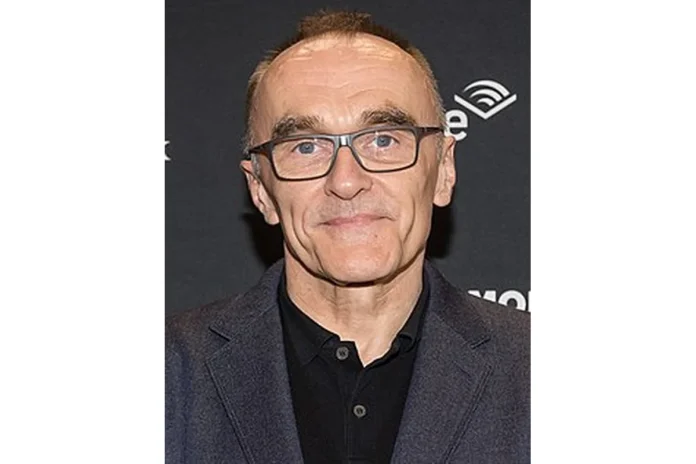
Daniel Francis Boyle Bio
Daniel Francis Boyle (born 20 October 1956) is a British director and producer who has been described by the British Film Institute as “one of the liveliest and most unpredictable of British directors, adept at shifting genres and bringing a personal quality to whatever he tackles.” His career spans theatre, television, and film, marked by his distinctive visual style and willingness to explore diverse genres. Boyle’s work has garnered international acclaim, including Academy Award and BAFTA recognition for his direction.
Early Life and Background
Daniel Francis Boyle was born on 20 October 1956 in Radcliffe, Lancashire, England, approximately six miles north of Manchester city centre. His father Francis “Frank” Boyle was from Manchester and traced his Irish Catholic heritage to County Mayo, while his mother Annie Boyle originated from County Galway. He grew up in a working-class Catholic family alongside his twin sister Marie and younger sister Bernadette, who both became teachers.
Boyle served as an altar boy for eight years during his childhood, and his mother originally envisioned him pursuing the priesthood. At age 14, however, a priest persuaded him against transferring to a seminary. Boyle later reflected on this turning point, noting the theatrical parallels between religious service and filmmaking, observing that several renowned directors including Martin Scorsese were also originally intended for the priesthood.
He attended Thornleigh Salesian College, a Catholic boys’ direct grant grammar school in Bolton, before pursuing studies in English and drama at University College of North Wales (now Bangor University). During his university years, Boyle directed several productions for the student drama society, marking his first experiences with theatrical direction.
Path to Director
After graduating from university, Boyle began his professional career at the Joint Stock Theatre Company before moving to the Royal Court Theatre in 1982. At the Royal Court, he directed notable productions including The Genius by Howard Brenton and Saved by Edward Bond. He subsequently directed five productions for the Royal Shakespeare Company, further developing his craft in the theatre world.
In 1987, Boyle transitioned to television, working as a producer for BBC Northern Ireland. There he produced Alan Clarke’s controversial film Elephant and directed episodes of various television programmes including Arise And Go Now, For The Greater Good, Scout, and two episodes of Inspector Morse. He created and produced the BBC Two series Mr. Wroe’s Virgins in 1993, demonstrating his versatility across different storytelling mediums before his eventual focus on feature filmmaking.
Daniel Francis Boyle Career
Early Career (1994–1996)
Boyle made his feature film directorial debut with Shallow Grave in 1994. The psychological thriller became the most commercially successful British film of 1995, won the BAFTA Award for Best British Film, and established Boyle’s collaboration with writer John Hodge and producer Andrew Macdonald. Critics credited the film with revitalising British cinema in the early 1990s. Boyle received the Best Newcomer Award from the London Film Critics Circle for his work on the project.
His follow-up, Trainspotting (1996), became a cultural phenomenon and cemented his reputation as a bold creative voice. The darkly comedic drama about Edinburgh heroin addicts received widespread critical acclaim and was later ranked by the British Film Institute as the 10th greatest British film of the 20th century. Working again with his established creative team, Boyle demonstrated his ability to tackle challenging material with both grit and humanity.
Breakthrough (1997–2010)
Boyle continued building his reputation with diverse projects including The Beach (2000), a film adaptation of Alex Garland’s cult novel shot in Thailand that starred Leonardo DiCaprio. He collaborated with Garland again on the post-apocalyptic horror film 28 Days Later (2002), which introduced a new wave of zombie cinema with its intense atmosphere and visceral imagery. Other projects during this period included Millions (2004) and Sunshine (2007), a science-fiction thriller exploring a mission to restart the dying sun.
The year 2008 brought Boyle international recognition with Slumdog Millionaire, the story of an impoverished Mumbai teenager competing on a quiz show. The film earned eight Academy Awards including Best Director for Boyle, along with seven BAFTA Awards and Golden Globe recognition. It became the most successful British film of the decade and transformed Boyle into a globally recognised filmmaker.
In 2010, Boyle directed 127 Hours, a survival drama depicting real events in which Aron Ralston trapped under a boulder for five days. The film received six Academy Award nominations including Best Picture and Best Adapted Screenplay, demonstrating Boyle’s continued growth as a filmmaker capable of intimate, character-driven storytelling.
Notable Works and Milestones
Following his Oscar success, Boyle directed Trance (2013), the biopic Steve Jobs (2015) which closed the BFI London Film Festival, and reunited with the original cast for T2 Trainspotting (2017). He served as artistic director for the 2012 Summer Olympics opening ceremony in London, presenting the Isles of Wonder spectacle that celebrated British culture and received international praise. Boyle was initially attached to direct the James Bond film No Time to Die but departed in 2018 over creative differences.
Daniel Francis Boyle Award Nominations
Throughout his career, Daniel Francis Boyle has received multiple prestigious award nominations recognizing his contributions to cinema. His nominations span the Academy Awards, BAFTA Awards, Golden Globes, and various other industry recognitions, reflecting his standing as one of Britain’s most accomplished contemporary directors.
Daniel Francis Boyle Awards Won
Boyle has accumulated significant accolades throughout his distinguished career. His debut feature Shallow Grave earned him the BAFTA Award for Best British Film and London Film Critics Circle Best Newcomer Award. His most celebrated achievement came with Slumdog Millionaire, winning the Academy Award for Best Director, BAFTA Award for Best Director, and Golden Globe for Best Director. He received additional recognition including the London Film Critics Circle Award for British Director of the Year. In 2012, Boyle was selected among British cultural icons by artist Peter Blake to appear on a new version of The Beatles’ Sgt. Pepper’s Lonely Hearts Club Band album cover celebrating influential British figures.
| Award | Wins | Year |
|---|---|---|
| Academy Award for Best Director (Slumdog Millionaire) | 1 | 2009 |
| BAFTA Award for Best British Film (Shallow Grave) | 1 | 1995 |
| BAFTA Award for Best Director (Slumdog Millionaire) | 1 | 2009 |
| Golden Globe for Best Director (Slumdog Millionaire) | 1 | 2009 |
| London Film Critics Circle Best Newcomer (Shallow Grave) | 1 | 1996 |
| London Film Critics Circle British Director of the Year | 1 | 2009 |
Daniel Francis Boyle Family
Daniel Francis Boyle was born to Francis “Frank” Boyle and Annie Boyle in Radcliffe, Lancashire. His father originated from Manchester with Irish Catholic roots tracing to County Mayo, while his mother came from County Galway in Ireland. He has a twin sister named Marie and a younger sister named Bernadette, both of whom pursued careers as teachers. Boyle grew up in a working-class Catholic household that valued faith and family.
Personal Life
As of 2010, Boyle has resided in Mile End, London. He has three children. While attending university, he dated actress Frances Barber. Boyle has publicly identified as a “spiritual atheist” and holds republican political views, having stated in 2013 that he believed the British monarchy would be abolished during his lifetime. In December 2012, it was reported that Boyle declined a knighthood in the New Year Honours list, later explaining his belief in “being an equal citizen rather than a preferred subject.”