
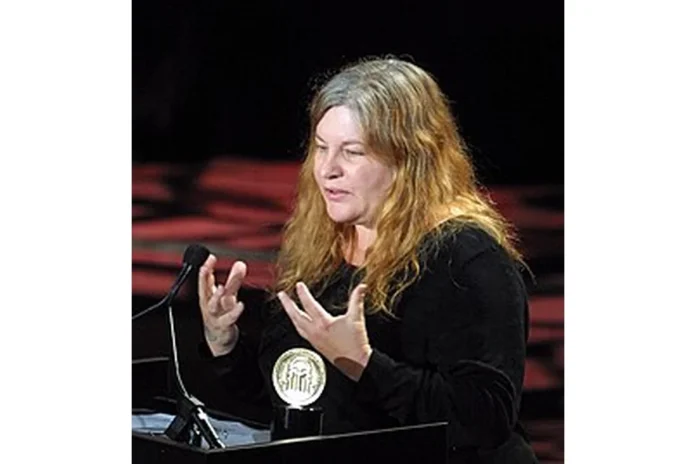
Allison Anders Bio
Mary Allison Anders, known professionally as Allison Anders, is an American independent film director and screenwriter whose work has shaped the landscape of character-driven American cinema. Born on November 16, 1954, in Ashland, Kentucky, she is widely recognized for feature films such as Gas Food Lodging, Mi Vida Loca, and Grace of My Heart. Her films often explore female experience, working-class communities, and urban subcultures, drawing heavily on personal history and the cultural landscapes of Southern California.
Anders has collaborated extensively with filmmaker Kurt Voss, a fellow graduate of the UCLA School of Theater, Film and Television, and her projects have screened at major festivals including Cannes and Sundance. In recognition of her contributions to independent film, she received a MacArthur Fellowship, often referred to as the Genius Grant, as well as a Peabody Award. Beyond directing, she has built an academic career as a Distinguished Professor at the University of California, Santa Barbara, where she teaches in the Film and Media Studies Department.
Early Life and Background
Allison Anders was born in Ashland, Kentucky, to Robert “Bob” Anders and Alberta “Rachel” Anders, née Steed. She has two sisters, one of whom is Luanna Anders, who would later appear in Anders’ first film. Her paternal ancestry traces back to the Hatfield family of the American South, with more distant connections to Caleb Brewster, a spy for George Washington. Her maternal side includes Abraham Woodhull, another figure connected to Washington’s intelligence network.
When Anders was four years old, her father abandoned the family, and her parents divorced shortly afterward. The family moved several times during her childhood, and at age 12, she experienced a traumatic event in Cape Canaveral, Florida, that later influenced themes in several of her films. After her mother relocated the family to Los Angeles, Anders suffered a mental breakdown at 15 and was briefly hospitalized. She ran away from foster care, hitchhiked across the country, and eventually returned to Kentucky before making her way back to California.
As a young adult, Anders attended Los Angeles Valley College while working a series of odd jobs. Because of frequent moves during her childhood, her formal education had been inconsistent, and she spent much of her early years watching television and attending movie theaters. Inspired by the films of Wim Wenders, whose 1974 work Alice in the Cities became a personal favorite, Anders applied to UCLA and earned a Bachelor of Arts in Motion Picture-Television in 1986.
Path to Directing
While at UCLA, Anders produced her first sound film, which was attended by Wim Wenders himself. During this period, she wrote a screenplay called Lost Highway, inspired by her relationship with her estranged father, and in 1986 she won a Samuel Goldwyn Writing Award for the script. That recognition helped establish her presence within the university’s film community, where she met collaborators who would shape her early career, including Kurt Voss and Dean Lent.
The trio pooled modest resources, including a small contribution from actor Vic Tayback and loans from Voss’s parents, to produce their first feature. Working on a shoestring budget and using local Los Angeles locations, they cast Anders’ sister Luanna, musician Chris D., and Anders’ own young daughter Devon. The resulting project, Border Radio, marked Anders’ directorial debut and set the tone for a career defined by resourceful storytelling and a deep investment in personal material.
Allison Anders Career
Early Career (1987-1991)
Border Radio, completed in 1987, was a punk-infused drama set amid the Los Angeles music scene of the 1980s. The film told the story of three musicians who steal money owed to them and flee to Mexico, blending personal narrative with the raw energy of the underground music community. It was nominated for Best First Feature by the Independent Feature Project in 1988 and, in 2007, received a special release as part of the Criterion Collection, cementing its reputation as a landmark of independent cinema.
Following the success of her debut, Anders continued to develop projects that reflected her interest in working-class characters and female protagonists. She drew on her years at UCLA and her early experiences in Los Angeles to craft screenplays that would later become her breakthrough features.
Breakthrough (1992-2001)
Anders’ second feature, Gas Food Lodging, premiered in 1992 and marked a major step forward in her career. Adapted from Richard Peck’s novel Don’t Look and It Won’t Hurt, the film follows a truck stop waitress and her two daughters in a small Western town. The film earned Anders a New York Film Critics Circle Award and a National Society of Film Critics honor for Best New Director, as well as Independent Spirit Award nominations for Best Director and Best Screenplay. Actress Fairuza Balk won a Spirit Award for her performance, and the film also took the Critics Award at the Deauville Film Festival while earning a Golden Bear nomination at the Berlin International Film Festival.
In 1994, Anders released Mi Vida Loca, a portrait of girl gangs in the Echo Park neighborhood of Los Angeles, where she had lived. The film premiered at Cannes in 1993 and offered a female perspective on growing up in the inner city. Her next project, Grace of My Heart, was a 1996 musical drama executive produced by Martin Scorsese, loosely inspired by the career of songwriter Carole King and the world of the Brill Building. The film featured a celebrated collaboration between Elvis Costello and Burt Bacharach on the song “God Give Me Strength,” which earned a Grammy nomination.
Anders continued her prolific output with Sugar Town in 1999, co-written and co-directed with Kurt Voss, which starred John Taylor of Duran Duran and received two Independent Spirit Award nominations. Her 2001 autobiographical drama Things Behind the Sun dealt with the long-term aftermath of rape and was partially shot in Cocoa Beach, Florida, near the location of an experience from Anders’ own adolescence. The film earned an Emmy nomination for Don Cheadle, three Independent Spirit Award nominations, an Edgar Award nomination for Anders and Voss, and a Peabody Award.
Notable Works and Milestones
Throughout the 1990s and early 2000s, Anders established herself as a defining voice in American independent cinema, with Gas Food Lodging, Mi Vida Loca, and Grace of My Heart serving as her signature works. Her films consistently premiered at Cannes and Sundance, and her honors include the MacArthur Fellowship, the Peabody Award, and multiple critics’ prizes.
Allison Anders Award Nominations
Over the course of her career, Allison Anders has received nominations from several major awards bodies in recognition of her directing and screenwriting. Her films have earned Independent Spirit Award nominations across categories including Best Director, Best Screenplay, and Best Film. Things Behind the Sun brought nominations from the Emmys, the Independent Spirit Awards, and the Edgar Awards, while her earlier work was recognized by the Golden Bear competition at Berlin and by the New York Film Critics Circle.
Allison Anders Awards Won
Anders has been honored with a MacArthur Fellowship, often referred to as the Genius Grant, and a Peabody Award for her contributions to film and television. Her debut feature Border Radio was preserved by the Criterion Collection, and her second feature Gas Food Lodging earned her a New York Film Critics Circle Award and a National Society of Film Critics Award for Best New Director, along with the Deauville Film Festival Critics Award. Sugar Town brought her and Voss the Fantasporto award for Best Screenplay, and Things Behind the Sun received the SHINE Award in addition to the Peabody.
| Award | Wins | Year |
|---|---|---|
| New York Film Critics Circle Award for Best New Director | 1 | 1992 |
| National Society of Film Critics Award for Best New Director | 1 | 1992 |
| Deauville Film Festival Critics Award | 1 | 1992 |
| Fantasporto Award for Best Screenplay | 1 | 1999 |
| SHINE Award | 1 | 2001 |
| Peabody Award | 1 | 2001 |
| MacArthur Fellowship | 1 |
Allison Anders Family
Allison Anders was raised in Ashland, Kentucky, by her mother, Alberta “Rachel” Anders, and her father, Robert “Bob” Anders, whose own family lineage connects her to the Hatfield family of the American South and to figures from George Washington’s intelligence network. She has two sisters, including Luanna Anders, who has appeared in several of her films. Anders is the mother of three children: daughters Tiffany Anders and Devon Anders, and son Ruben Goodbear Anders, who was fostered and later adopted by the family after the death of his mother, Nica Rogers.
Personal Life
Anders has built much of her life around film, music, and family. With her daughter Tiffany, a musician and music supervisor, she co-founded the Don’t Knock the Rock Film and Music Festival in Los Angeles in 2003. Wim Wenders, whose films inspired her to study cinema, has been a mentor and friend for more than three decades. Since 2003, she has served as a Distinguished Professor at the University of California, Santa Barbara, where she teaches courses on autobiographic writing, rock and roll films, and music supervision.