
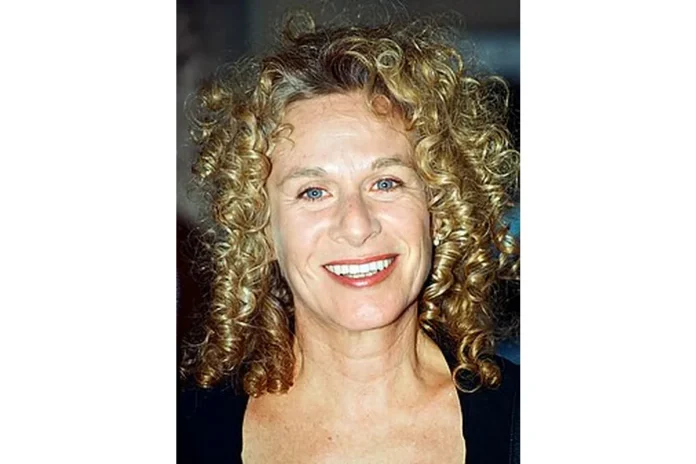
Carole King Bio
Carole King (born Carol Joan Klein; 9 February 1942) is an American singer-songwriter and musician whose songwriting and performing career has spanned more than six decades. In the 1960s, with lyricist Gerry Goffin, she wrote dozens of hit songs for other artists before launching a solo performing career. Her 1971 album Tapestry was a landmark release, spending 15 consecutive weeks at No. 1 on the Billboard 200, winning four Grammy Awards, and becoming one of the best-selling albums of its era. King has written or co-written 118 songs that charted on the Billboard Hot 100 and has sold over 75 million records worldwide.
Early Life and Background
Carole King was born Carol Joan Klein on February 9, 1942, in Manhattan, New York City, to Jewish parents Eugenia (née Cammer), a teacher, and Sidney N. Klein, a firefighter. Her parents had met in an elevator at Brooklyn College in 1936, marrying a year later during the Great Depression. After King was born, the family settled in Brooklyn, where her father worked as a firefighter and her mother raised her while running the household.
King’s mother had learned piano as a child, and when King developed an insatiable curiosity about music at age three, her mother began teaching her basic piano skills without giving her formal lessons. By the time she was four, King demonstrated absolute pitch, an ability that allowed her to identify notes simply by hearing them. Her mother soon began structured lessons, teaching music theory and elementary piano technique while King sat at the keyboard on a phone book to reach the keys.
King attended James Madison High School in the Midwood section of Brooklyn, where she formed a band called the Co-Sines, changed her name from Carol Klein to Carole King, and recorded demo records with friend Paul Simon. She later attended Queens College, where she met Gerry Goffin, her future songwriting partner. Her first official recording, the promotional single “The Right Girl,” was released by ABC-Paramount in 1958.
Path to Music
When King was 17, she married Gerry Goffin in a Jewish ceremony on Long Island in August 1959 after becoming pregnant with her first daughter, Louise. The young couple quit college and took day jobs, with Goffin working as an assistant chemist and King as a secretary, while writing songs together in the evenings. Their first major success came with the Shirelles’ 1960 Billboard No. 1 hit “Will You Love Me Tomorrow,” the first No. 1 by a Black girl group, after which they gave up their day jobs to write full time.
Writing at 1650 Broadway alongside other songwriters of the Brill Building sound, King and Goffin produced a string of classic songs for a variety of artists. Among their hits were “The Loco-Motion” and “Keep Your Hands off My Baby” for their babysitter Little Eva, “Take Good Care of My Baby” for Bobby Vee, “Up on the Roof” for the Drifters, “One Fine Day” for the Chiffons, “Pleasant Valley Sunday” for the Monkees, and the timeless “(You Make Me Feel Like) A Natural Woman” for Aretha Franklin. King also recorded her own early singles, including “It Might as Well Rain Until September,” which reached No. 22 in the United States and No. 3 in the United Kingdom in 1962.
Carole King Career
Early Career (1958–1969)
King’s career began with her 1958 single “The Right Girl” and quickly expanded through her Brill Building collaborations with Goffin. By 1966, her own sporadic recording career had been temporarily abandoned, but by 1968, after her divorce from Goffin, she had moved to Laurel Canyon, Los Angeles, with her two daughters and reactivated her career. She formed the trio The City with bassist Charles Larkey, her future second husband, and guitarist Danny Kortchmar. The group released one album, Now That Everything’s Been Said (1968), before disbanding in 1969.
During these early years, King established herself as one of the most prolific songwriters of the 1960s, writing hits that would become standards for decades. Her work with Goffin helped define the sound of the Brill Building era, and songs such as “Will You Love Me Tomorrow,” “Up on the Roof,” and “The Loco-Motion” ensured her lasting influence on popular music. The City album, though commercially unsuccessful at the time, was later rediscovered by Classic Rock radio in the early 1980s and became a sought-after collector’s item.
Breakthrough (1970–1979)
King released her debut solo album, Writer, in 1970 for Lou Adler’s Ode label, with James Taylor playing acoustic guitar and providing backing vocals. The album peaked at No. 84 on the Billboard Top 200, but it set the stage for her next release. Tapestry followed in 1971, featuring new songs as well as renewed versions of “Will You Love Me Tomorrow” and “(You Make Me Feel Like) A Natural Woman,” and it became an instant cultural phenomenon.
Tapestry held the No. 1 spot on the albums chart for 15 consecutive weeks, remained on the chart for nearly six years, and has sold over 30 million copies worldwide. The album won four Grammy Awards: Album of the Year, Best Pop Vocal Performance (Female), Record of the Year for “It’s Too Late” (with lyrics by Toni Stern), and Song of the Year for “You’ve Got a Friend,” making King the first woman to win the Song of the Year award. Subsequent releases Music (1971), Rhymes and Reasons (1972), Fantasy (1973), and Wrap Around Joy (1974) all achieved gold or platinum certification, with Wrap Around Joy becoming her third album to reach No. 1.
Notable Works and Milestones
Beyond Tapestry, King has released 25 solo albums and written or co-written hundreds of charting songs. She performed a free concert in New York City’s Central Park on May 26, 1973, for at least 100,000 people, which was recorded for the film Carole King: Home Again – Live in Central Park. Her signature song “(You Make Me Feel Like) A Natural Woman,” originally written for Aretha Franklin, and “You’ve Got a Friend,” later a No. 1 hit for James Taylor, remain enduring classics of American popular song.
Carole King Award Nominations
Across her career, Carole King has received multiple Grammy nominations in addition to her four wins. Her 1971 album Tapestry earned her four nominations, all of which she won, while her Christmas album A Holiday Carole (2011) received a Grammy nomination for Best Traditional Pop Album. Her song “Now and Forever,” featured in the opening credits of the 1992 film A League of Their Own, was also nominated for a Grammy Award.
Carole King Awards Won
Carole King has received four Grammy Awards, all won in 1972 for her work on Tapestry. Her honors also include induction into the Songwriters Hall of Fame, two inductions into the Rock and Roll Hall of Fame (as both a performer and a songwriter), the 2013 Library of Congress Gershwin Prize for Popular Song (as its first female recipient), the 2014 MusiCares Person of the Year award, the 2015 Kennedy Center Honors, and an Honorary Doctorate of Music from Berklee College of Music in 2013. In December 2012, she also received a star on the Hollywood Walk of Fame.
Carole King Family
Carole King has been married four times: to Gerry Goffin (1959–1968), Charles Larkey, Rick Evers (1977–1978), and Rick Sorenson. She has four children: daughters Louise Goffin and Sherry Goffin Kondor, daughter Molly Larkey, and son Levi Larkey. Her daughters Louise Goffin and Sherry Goffin Kondor are musicians, and Louise co-produced King’s 2011 album A Holiday Carole. King’s mother, Eugenia Gingold, died in December 2010 in Delray Beach, Florida, at the age of 94.
Personal Life
King has been a longtime resident of Idaho, where she relocated in 1977 and became involved in environmental activism. Since 1990, she has worked with the Alliance for the Wild Rockies and other groups toward the passage of the Northern Rockies Ecosystem Protection Act, testifying on Capitol Hill in 1994, 2007, and 2009. A supporter of the Democratic Party, she has campaigned for John Kerry, Barack Obama, and Kamala Harris over the years. In January 2017, she marched in the Women’s March in Stanley, Idaho, carrying a sign that read “One Small Voice.”