
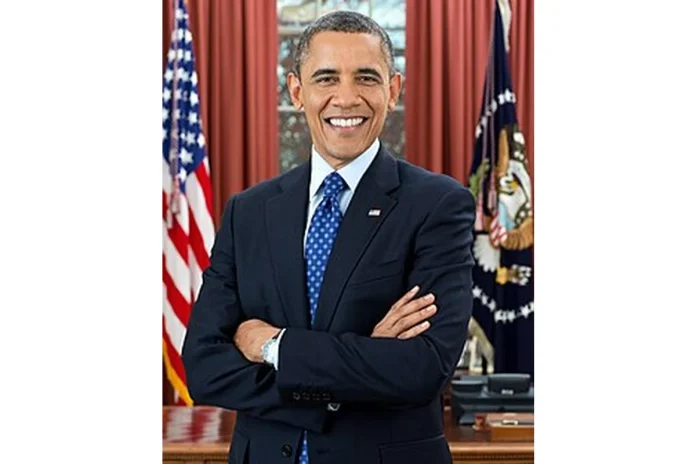
Barack Obama Bio
Barack Hussein Obama II (born August 4, 1961) is an American politician who served as the 44th president of the United States from 2009 to 2017. A member of the Democratic Party, he became the first African American to hold the presidency, a milestone that reshaped American political history. Before reaching the White House, Obama served as a United States Senator from Illinois from 2005 to 2008 and as an Illinois state senator from 1997 to 2004.
After leaving office, Obama continued to live in Washington, D.C., and remained engaged in public life, publishing books and supporting civic causes. Over the course of his career, he has also been recognized as a lawyer, academic, and author whose writings on race, identity, and democracy have reached a wide audience.
Early Life and Background
Barack Hussein Obama II was born on August 4, 1961, in Honolulu, Hawaii. His father, Barack Obama Sr., was a Kenyan economist, and his mother, Ann Dunham, was an American anthropologist. After his parents separated, his mother married Lolo Soetoro, an Indonesian student, and the family moved to Jakarta when Obama was six. He attended local Indonesian-language schools and learned to speak Indonesian fluently during those formative years.
In 1971, Obama returned to Honolulu to live with his maternal grandparents, Madelyn and Stanley Dunham, and enrolled at Punahou School, a private college preparatory institution, where he graduated in 1979. He later attended Occidental College in Los Angeles on a full scholarship before transferring to Columbia University in New York City. Obama graduated from Columbia in 1983 with a Bachelor of Arts degree in political science, with a specialty in international relations, and a strong academic record.
His early years in Hawaii and Indonesia, combined with the strong influence of his grandparents, helped shape his sense of identity and belonging. Obama has often credited the cultural diversity and openness of Hawaii as foundational to his worldview and his values of inclusion and mutual respect.
Path to US Politics
After graduating from Columbia, Obama worked briefly as a financial researcher and writer in New York before moving to Chicago in 1985 to serve as director of the Developing Communities Project, a faith-based community organization on the city’s South Side. There he helped establish job training programs, college preparatory tutoring, and a tenants’ rights organization, gaining firsthand experience in grassroots organizing.
In 1988, Obama enrolled at Harvard Law School, where his election as the first African American president of the Harvard Law Review brought him national media attention. He graduated from Harvard in 1991 with a Juris Doctor degree, magna cum laude, and went on to teach constitutional law at the University of Chicago Law School for twelve years. He also directed Illinois’s Project Vote in 1992, a voter registration drive that registered 150,000 African Americans in the state.
These experiences in community organizing, legal scholarship, and voter mobilization positioned Obama for a successful entry into electoral politics. In 1996, he was elected to the Illinois State Senate, representing the 13th district, launching the political career that would eventually carry him to the presidency.
Barack Obama Career
Early Career (1997-2004)
Obama served in the Illinois State Senate from 1997 to 2004, representing the 13th district on the South Side of Chicago. During his time in the state legislature, he worked on issues ranging from healthcare and ethics reform to early childhood education. His reputation for thoughtful, bipartisan work helped him build relationships that would prove valuable in his later campaigns.
In 2004, Obama ran for the United States Senate from Illinois and won both the Democratic primary and the general election in a landslide. His keynote address at the 2004 Democratic National Convention, in which he spoke of unity and shared American values, brought him to national prominence and set the stage for his run for the presidency.
Breakthrough (2005-2008)
Serving in the U.S. Senate from 2005 to 2008, Obama established himself as a rising star within the Democratic Party. He served on several committees, including those dealing with foreign relations, environment, and veterans’ affairs, and continued to author important legislation. In February 2007, he announced his candidacy for the Democratic nomination for president.
After a hard-fought primary campaign against Hillary Clinton, Obama secured the Democratic nomination in 2008 and selected Joe Biden of Delaware as his running mate. He went on to defeat Republican nominee John McCain, along with McCain’s running mate Sarah Palin, in the general election. On January 20, 2009, Barack Hussein Obama II was inaugurated as the 44th president of the United States, becoming the first African American to hold the office.
The 2008 election represented a historic breakthrough in American politics. Obama’s victory was powered by high voter turnout, strong support from young voters and minority communities, and a sophisticated grassroots organizing operation. His election was widely viewed as a defining moment in the country’s ongoing struggle for civil rights and equal opportunity.
Democratic Party Era (2009-2017)
As president, Obama pursued an ambitious domestic agenda. In his first hundred days, he signed the American Recovery and Reinvestment Act in response to the financial crisis, the Lilly Ledbetter Fair Pay Act, and the reauthorization of the State Children’s Health Insurance Program. In March 2010, he signed the Affordable Care Act, the most significant healthcare reform in the United States in decades, and later the Dodd-Frank Wall Street Reform and Consumer Protection Act, which imposed new regulations on the financial industry.
On the world stage, Obama ordered the military operation that killed Osama bin Laden in May 2011, ended the combat mission in Iraq, and oversaw the drawdown of U.S. forces in Afghanistan. He also approved the 2011 military intervention in Libya, signed the Paris Agreement on climate change, and negotiated the Joint Comprehensive Plan of Action with Iran to limit its nuclear program. In December 2014, he announced the restoration of diplomatic relations with Cuba, a major foreign policy achievement.
Domestically, Obama became the first sitting U.S. president to publicly support same-sex marriage. He appointed two women to the Supreme Court, Sonia Sotomayor and Elena Kagan, with Sotomayor becoming the first Hispanic American justice. He also signed executive orders and proposed legislation in response to mass shootings, including the Sandy Hook Elementary School shooting, and worked to expand rights and protections for LGBT Americans, women, and minority communities.
Obama won a second term in 2012, defeating Republican Mitt Romney and his running mate Paul Ryan. After leaving office in January 2017, he returned to private life in Washington, D.C., where he has remained politically active, supporting candidates and causes he believes in. In 2020, he campaigned for Joe Biden, who went on to win the presidency.
Notable Events and Milestones
One of the most memorable moments of Obama’s presidency came on May 1, 2011, when he announced that United States Navy SEALs had killed Osama bin Laden in a compound in Abbottabad, Pakistan, during Operation Neptune Spear. The successful mission was a defining achievement of his administration and led to brief but widespread celebrations across the country. Other signature milestones include the passage of the Affordable Care Act in 2010, the killing of bin Laden, the Cuban Thaw of 2014, the signing of the Paris Agreement, and the 2015 Iran nuclear deal.
Barack Obama Career Wins
Barack Obama achieved a number of notable victories during his time in electoral politics. He won election to the Illinois State Senate in 1996 and was re-elected in 1998, 2000, and 2002. In 2004, he won the U.S. Senate seat from Illinois by a wide margin, and in 2008, he won the presidency with 365 electoral votes. He was re-elected in 2012, again with 332 electoral votes.
U.S. Presidential Elections Highlights
Obama’s first presidential victory came in 2008, when he defeated John McCain and Sarah Palin in a campaign that emphasized hope, change, and unity. His victory made him the first African American president in the history of the United States. He won a second term in 2012, defeating the Republican ticket of Mitt Romney and Paul Ryan, and his second inauguration took place on January 21, 2013.
Other Wins and Achievements
Beyond elections, Obama earned recognition for his books, including Dreams from My Father (1995), The Audacity of Hope (2006), and A Promised Land (2020). He was named Time Person of the Year in 2008 and again in 2012, and in 2009 he was awarded the Nobel Peace Prize for his efforts in international diplomacy. He also received multiple Grammy Awards, Primetime Emmy Awards, the John F. Kennedy Profile in Courage Award, and the Sylvanus Thayer Award in 2024.
Barack Obama Family
Family Background and Political Lineage
Barack Obama Sr., Obama’s father, was a Kenyan economist who studied at the University of Hawaii, where he met Ann Dunham, Obama’s mother. Ann Dunham was an American anthropologist whose research took her to Indonesia, where she married Lolo Soetoro and raised Obama during part of his childhood. Obama’s half-sister, Maya Soetoro, was born from his mother’s second marriage and remains a part of his extended family.
Personal Life
Barack Obama married Michelle Robinson, an American lawyer, on October 3, 1992. The couple has two daughters: Malia Obama, born in 1998, and Natasha Sasha Obama, born in 2001. The family lived in Chicago before moving to the White House in 2009 and returned to Washington, D.C., after leaving office in 2017. Obama has often spoken of the central role his wife and daughters have played in his life, both as a source of personal support and as a reminder of the values that have guided his public service.