
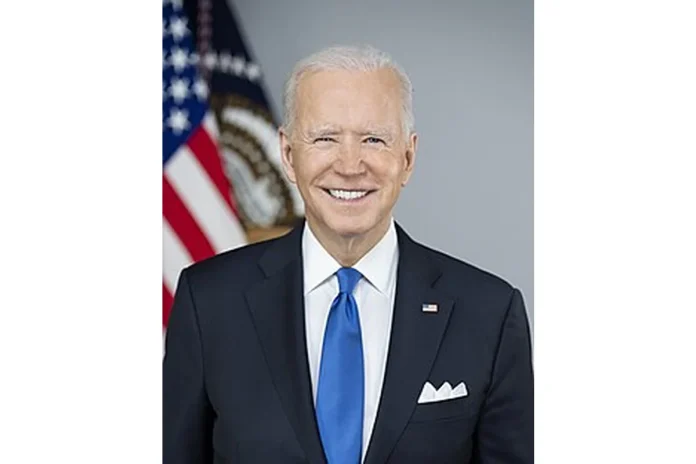
Joe Biden Bio
Joseph Robinette Biden Jr., known widely as Joe Biden, is an American politician, lawyer, and professor who served as the 46th president of the United States from 2021 to 2025. A member of the Democratic Party since 1969, he represented Delaware in the United States Senate from 1973 to 2009 and was the 47th vice president under President Barack Obama from 2009 to 2017. Over a political career spanning more than five decades, Biden became one of the longest-serving figures in modern American public life.
During his tenure in the Senate, Biden chaired the Judiciary and Foreign Relations Committees and was the lead sponsor of major legislation, including the Violence Against Women Act. As vice president, he served as a close counselor to President Obama on domestic and international matters. As president, he enacted significant pandemic relief, major infrastructure and climate initiatives, and rejoined international agreements such as the Paris Climate Agreement.
Early Life and Background
Joseph Robinette Biden Jr. was born on November 20, 1942, in Scranton, Pennsylvania. He is the son of Joseph Robinette Biden Sr. and Catherine Eugenia “Jean” Biden, née Finnegan. Biden grew up in a working-class family in Pennsylvania before his family relocated to Delaware during his childhood. His upbringing in a close, faith-centered household shaped his early views on community, perseverance, and public service.
Biden attended Archmere Academy, a private Catholic preparatory school in Claymont, Delaware, where he was a standout halfback in football and a member of the student government. His high school years helped him build confidence in public speaking and teamwork, skills that would later define his political career. He has often reflected on his school years as formative to his sense of discipline and empathy.
After high school, Biden earned a Bachelor of Arts from the University of Delaware in 1965. He then attended Syracuse University College of Law, where he earned his Juris Doctor in 1968. While in college and law school, he was known for his outgoing personality and a stutter he worked hard to overcome through determination and practice.
Path to US Politics
After law school, Biden returned to Delaware and briefly worked as a public defender in Wilmington, where most of his clients were African Americans from the city’s east side. He later joined a local law firm managed by the prominent Democrat Sid Balick and eventually established his own firm, Biden and Walsh. Although his legal career gave him a steady income, he found his calling in public service.
In 1970, Biden was elected to the New Castle County Council on a liberal platform that emphasized public housing in the suburbs and opposition to disruptive highway projects. His success at the local level provided the springboard for his run at national office. By the time he launched his Senate campaign in 1972, Biden had earned a reputation as a sharp legal mind and a passionate advocate for working families.
That same year, tragedy struck when his first wife, Neilia Hunter Biden, and their daughter Naomi Christina “Amy” Biden were killed in a car accident in December 1972. Despite this personal loss, Biden chose to continue his political career, taking the oath of office for the U.S. Senate from his sons Beau and Hunter’s hospital rooms. His determination to serve during such a difficult time became an enduring part of his public story.
Joe Biden Career
Early Career (1973-1986)
At age 29, Biden became one of the youngest people ever elected to the United States Senate. He was sworn in on January 3, 1973, and quickly established himself as a rising figure in the Democratic Party. During his early years in the Senate, he focused on consumer protection, environmental policy, and arms control, earning respect from colleagues on both sides of the aisle.
Biden served on several influential committees, including the Foreign Relations and Judiciary Committees, where his strong work ethic and willingness to engage in difficult negotiations stood out. He earned a reputation as a thoughtful legislator who could work across partisan lines. By the mid-1980s, he had become chairman of the Judiciary Committee, positioning him as a key voice on legal and constitutional issues in the United States.
Senate Leadership and Major Legislation (1987-2008)
As chairman of the Senate Judiciary Committee, Biden led six Supreme Court confirmation hearings, including the contentious proceedings for Robert Bork in 1987 and Clarence Thomas in 1991. These hearings, marked by intense national debate, helped define his public profile as a principled and determined leader. He also chaired the Senate Foreign Relations Committee, where he played an active role in shaping United States foreign policy.
One of Biden’s most significant legislative achievements was his lead sponsorship of the Violence Against Women Act, which was part of the larger Violent Crime Control and Law Enforcement Act of 1994. The legislation transformed how the United States responds to domestic violence and sexual assault, providing federal resources for prevention, prosecution, and victim support. The law remains one of the most consequential pieces of legislation of his career.
Biden also sought the Democratic presidential nomination in 1988 and again in 2008. Although both campaigns ended without success, the 2008 race proved transformative: it allowed him to build a strong working relationship with Senator Barack Obama, who would later select him as his running mate. After leaving the 2008 presidential race, Biden endorsed Obama and accepted the role of vice presidential nominee.
Vice Presidency Era (2009-2017)
As the 47th vice president of the United States, Biden served as a close adviser to President Obama on issues ranging from economic recovery to foreign policy. He led the administration’s efforts on the Recovery Act, helped oversee the implementation of the Affordable Care Act, and represented the United States in international diplomacy across dozens of countries.
Biden also continued his commitment to public service through academia. From 1991 to 2008, as an adjunct professor, he co-taught a seminar on constitutional law at Widener University School of Law, mentoring students who would go on to careers in law and government. His teaching role reflected his lifelong belief in the importance of education and civic engagement.
During his second term, Biden helped manage the United States response to international crises, including challenges in Ukraine, Syria, and Iraq. His decades of foreign policy experience made him a steady voice in the Obama administration’s decision-making process. He was also instrumental in rebuilding relationships with key allies in Europe, Asia, and Latin America.
Presidential Campaign and Election (2019-2021)
After sitting out the 2016 race, Biden launched his 2020 presidential campaign in 2019, focusing on restoring the soul of America, fighting climate change, and expanding access to affordable health care. Despite a slow start in early primaries, his strong performance in the South Carolina primary revitalized his campaign and led to a wave of Super Tuesday victories.
Biden secured the Democratic nomination in 2020 and selected Senator Kamala Harris of California as his running mate, making her the first African American and first South Asian American vice-presidential nominee on a major-party ticket. He went on to defeat Republican incumbents Donald Trump and Mike Pence in the 2020 presidential election, earning more than 81 million votes, the most ever for a presidential candidate at that time.
Biden was inaugurated as the 46th president of the United States on January 20, 2021. At age 78, he was the oldest person to assume the presidency at that point. His inauguration, scaled back due to COVID-19 precautions and heightened security following the January 6 attack on the United States Capitol, marked a historic transition of power.
Presidency Era (2021-2025)
In his early days as president, Biden signed 17 executive orders in his first two days, including measures to rejoin the Paris Climate Agreement, end the national emergency at the southern border, and revoke the permit for the Keystone XL pipeline. He also signed the American Rescue Plan Act of 2021, a 1.9 trillion dollar economic stimulus package designed to support the United States’ recovery from the COVID-19 pandemic.
On the legislative front, Biden signed the bipartisan Infrastructure Investment and Jobs Act and the Inflation Reduction Act of 2022, the latter representing the largest climate investment in American history. He also appointed Justice Ketanji Brown Jackson to the Supreme Court of the United States, fulfilling a campaign promise to diversify the nation’s highest court.
In foreign policy, Biden rejoined international agreements, ended United States support for the Saudi-led bombing campaign in Yemen, and approved a counterterrorism raid that killed the second leader of the Islamic State. He authorized drone strikes against senior Al-Qaeda figures and negotiated the 2024 Ankara prisoner exchange, the largest prisoner swap since the end of the Cold War.
Notable Events and Milestones
One of the most defining moments of Biden’s presidency was the complete withdrawal of United States troops from Afghanistan in August 2021, which ended America’s longest war. The withdrawal, marked by the rapid collapse of the Afghan government and a deadly suicide bombing at Kabul airport, drew bipartisan criticism and sparked a national debate about the consequences of two decades of military involvement in the region.
Biden also oversaw major responses to the COVID-19 pandemic, the Russian invasion of Ukraine, and the Gaza war. In response to Russia’s invasion, he imposed sweeping sanctions and authorized military aid to Ukraine. During the Gaza war, he condemned the actions of Hamas, supported Israel’s right to defend itself, and worked to broker a temporary ceasefire before leaving office.
Joe Biden Career Wins
Over a political career spanning more than five decades, Joe Biden achieved a series of historic firsts and signature legislative victories. From his early election to the United States Senate in 1972 to his election as the 46th president of the United States in 2020, Biden built a record of endurance, persuasion, and policy achievement that few American politicians have matched.
Presidential and Senate Career Highlights
Biden’s most significant career win came in 2020, when he was elected the 46th president of the United States, defeating incumbent Donald Trump in a hard-fought general election. He was reelected to the United States Senate seven times from Delaware, a testament to his enduring popularity in his home state. He also served two terms as vice president under President Obama, helping the administration pass landmark legislation like the Affordable Care Act.
Other Wins & Achievements
Among Biden’s other notable achievements is his lead sponsorship of the Violence Against Women Act, a transformative law that reshaped the United States’ response to domestic violence and sexual assault. He also led six Supreme Court confirmation hearings as chairman of the Senate Judiciary Committee and was instrumental in shaping American foreign policy through his role as chairman of the Senate Foreign Relations Committee. Additionally, Biden was the first president elected from the state of Delaware and the first person since George H. W. Bush to have served as both vice president and president.
Joe Biden Family
Family Background and Political Lineage
Joseph Robinette Biden Jr. was born to Joseph Robinette Biden Sr. and Catherine Eugenia “Jean” Biden, née Finnegan. The Biden family has been rooted in Scranton, Pennsylvania, and later Wilmington, Delaware, where Joe Biden has spent most of his life. His parents emphasized education, hard work, and Catholic faith, values that shaped his character and lifelong commitment to public service.
Personal Life
B Biden was first married to Neilia Hunter Biden in 1966. The couple had three children together: Joseph R. “Beau” Biden III, born in 1969; Robert Hunter Biden, born in 1970; and Naomi Christina “Amy” Biden, born in 1971. In December 1972, Neilia and Naomi tragically died in a car accident, an event that deeply influenced Biden’s life and career.
In 1977, Biden married Jill Tracy Jacobs Biden, an educator who went on to become the First Lady of the United States. The couple had a daughter, Ashley Biden, born in 1981. After the death of his first wife, Biden raised his two surviving sons, Beau and Hunter, with the help of his family. The Biden family has remained central to his public identity, with several members, including his grandchildren, often appearing alongside him at public events.