
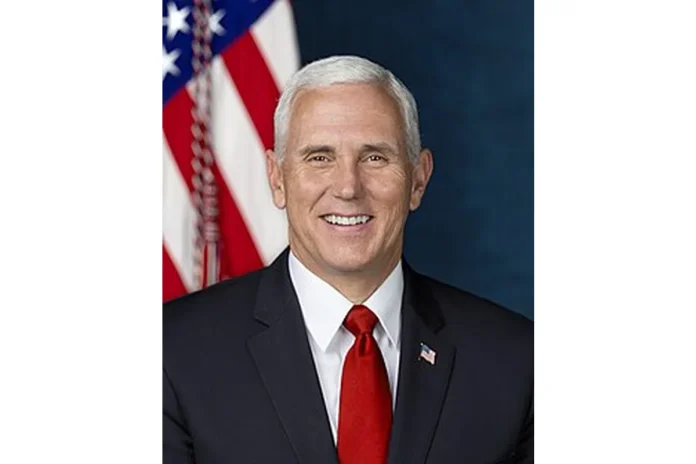
Mike Pence Bio
Michael Richard Pence (born June 7, 1959) is an American politician and lawyer who served as the 48th vice president of the United States from 2017 to 2021 under President Donald Trump. A member of the Republican Party, he previously served as the 50th governor of Indiana from 2013 to 2017, and represented Indiana in the U.S. House of Representatives from 2001 to 2013.
Born in Columbus, Indiana, and raised in a family of Irish and German descent, Pence built his career in state and national politics over more than three decades. Known for his social conservatism and evangelical Christian faith, he chaired House Republican leadership before winning the governorship and later chaired the National Space Council and the White House Coronavirus Task Force.
Early Life and Background
Michael Richard Pence was born on June 7, 1959, in Columbus, Indiana, to Edward Joseph Pence Jr. and Ann Jane “Nancy” Cawley. His father ran a group of gas stations, and the family lived in a middle-class neighborhood in Bartholomew County. Pence grew up alongside his older brother Greg and several other siblings in a household shaped by his parents’ strong work ethic.
He attended Columbus North High School, where he developed an early interest in public speaking and student government. Raised in a Catholic household, Pence later became a born-again Christian during his college years and has described himself as “a Christian, a conservative and a Republican, in that order.” His faith has remained a defining element of his public identity throughout his career in politics.
Pence went on to earn a Bachelor of Arts degree from Hanover College, a small liberal arts school in southern Indiana, before attending the Robert H. McKinney School of Law at Indiana University–Purdue University Indianapolis, where he received his Juris Doctor degree. His education in Indiana politics and law laid the foundation for his eventual entry into public service.
Path to US Politics
After law school, Mike Pence returned to Columbus, Indiana, and tried unsuccessfully to win a seat in the U.S. House of Representatives in 1988 and again in 1990. These early defeats pushed him toward media work, and from 1994 to 1999, he built a profile as a conservative radio and television talk show host. He also led the Indiana Republican Party for a period during the 1990s.
In 2000, Pence won a seat in the U.S. House of Representatives, representing Indiana’s 2nd congressional district before redistricting moved him to the 6th district. He quickly rose through the ranks of House Republicans, chairing the Republican Study Committee from 2005 to 2007 and later the House Republican Conference from 2009 to 2011, positions that placed him in the national spotlight.
Mike Pence Career
Early Career (1988-2000)
Mike Pence’s first major political efforts came in the late 1980s, when he challenged Democratic incumbent Philip Sharp for Indiana’s 2nd congressional district in 1988 and again in 1990, losing both times. These campaigns helped him build a network of conservative supporters in Indiana and across the country, and they gave him valuable experience in organizing voters and raising campaign funds.
Following his second defeat, Pence shifted to conservative media. From 1994 to 1999, he hosted a radio and television talk show that reached audiences across Indiana, using the platform to discuss national issues, social policy, and his Christian faith. He also served as president of the Indiana Republican Party, strengthening his ties to the state party apparatus before returning to electoral politics in 2000.
U.S. House of Representatives Breakthrough (2001-2013)
In 2000, Mike Pence won Indiana’s 2nd congressional district, and after redistricting he represented the 6th district from 2003 to 2013. During his time in Congress, he built a reputation as a reliable conservative voice, particularly on issues such as taxation, abortion, and religious liberty. He voted consistently for lower federal spending and for restrictions on federal funding for abortion.
Pence’s leadership rose quickly within the House Republican caucus. He chaired the Republican Study Committee from 2005 to 2007, guiding a bloc of conservative lawmakers, and later chaired the House Republican Conference from 2009 to 2011, a period that included major battles over the Affordable Care Act and federal spending. These roles positioned him as a serious national figure in the conservative movement.
Indiana Governorship (2013-2017)
Elected governor of Indiana in 2012, Mike Pence served as the 50th governor from 2013 to 2017. He enacted what was described as the largest tax cut in Indiana history and pushed for more funding for private and charter school education, including a major preschool pilot program. He also signed into law several bills restricting abortion access, including a measure that banned abortion based on the race, gender, or disability of a fetus, which a federal court later ruled unconstitutional.
His governorship also drew attention for the Religious Freedom Restoration Act, a state law that sparked national debate. After facing significant pushback from business leaders and LGBT advocates, Pence approved changes to the law that prohibited discrimination based on sexual orientation and gender identity. He also navigated a major HIV outbreak in southern Indiana, eventually authorizing limited needle-exchange programs after initially opposing them.
Vice Presidency Era (2017-2021)
Mike Pence became the 48th vice president of the United States on January 20, 2017, joining the ticket of Donald Trump. In that role, he cast 13 tie-breaking votes in the U.S. Senate, including the first-ever tie-breaking vote to confirm a Cabinet member, Betsy DeVos, and the first-ever tie-breaking vote to confirm a judicial nominee. He also chaired the National Space Council after President Trump reestablished it by executive order in 2017.
On the international stage, Pence represented the United States in visits to Asia, Europe, and the Middle East, engaging with leaders on issues such as North Korea’s nuclear program, trade with China, and the fight against ISIS. In February 2020, President Trump named him chairman of the White House Coronavirus Task Force, coordinating the federal response to the COVID-19 pandemic. He also received the Pfizer-BioNTech COVID-19 vaccine on live television in December 2020 to promote public confidence in the shots.
Post-Vice Presidency and 2024 Campaign (2021-2025)
After leaving office in January 2021, Mike Pence distanced himself from Donald Trump following the events of January 6, 2021, and the attack on the U.S. Capitol. Despite Trump’s pressure to overturn the 2020 election results, Pence fulfilled his constitutional duty and oversaw the certification of Joe Biden and Kamala Harris as the winners of the election. He later endorsed candidates in Republican primary elections who opposed Trump-backed rivals and publicly criticized Trump’s conduct on January 6.
In June 2023, Pence launched a campaign for the 2024 Republican presidential nomination, campaigning on his conservative record and his experience in Congress and as governor. He withdrew from the race in October 2023 and declined to endorse Trump for the 2024 general election. On May 4, 2025, he was awarded the JFK Profile in Courage Award for his conduct during the certification of the 2020 election.
Notable Events and Milestones
One of the most defining moments of Mike Pence’s vice presidency came on January 6, 2021, when he presided over the joint session of Congress to certify the 2020 electoral results. Despite intense pressure from President Trump and his supporters, Pence refused to use his role to overturn the election, a decision that earned him both lasting criticism from some Trump allies and recognition from others as an act of constitutional courage. The event remains the central milestone of his later public life.
Mike Pence Career Wins
Mike Pence’s career includes major electoral wins at the state and federal level, most notably his 2000 election to the U.S. House of Representatives, his 2012 election as governor of Indiana, and his 2016 election as vice president on the ticket with Donald Trump. He served six terms in Congress, four years as governor, and four years as vice president, building a long record of public service in Indiana and Washington, D.C.
U.S. House of Representatives Highlights
Mike Pence served in the U.S. House of Representatives from 2001 to 2013, representing Indiana’s 2nd district from 2001 to 2003 and the 6th district from 2003 to 2013. He won election to Congress six times, beginning with his first victory in 2000, and became a leading voice in the House Republican caucus, chairing both the Republican Study Committee and the House Republican Conference.
Other Wins and Achievements
Beyond his congressional career, Mike Pence won the Indiana gubernatorial election in 2012, defeating Democrat John R. Gregg, and went on to win the vice presidency in 2016 as part of the Trump-Pence ticket. In 2025, he was awarded the JFK Profile in Courage Award in recognition of his actions on January 6, 2021.
Mike Pence Family
Family Background and Political Lineage
Michael Richard Pence was born into a close-knit family in Columbus, Indiana, the son of Edward Joseph Pence Jr. and Ann Jane “Nancy” Cawley. His older brother, Greg Pence, followed in his footsteps by winning Indiana’s 6th congressional district seat in 2018, the same seat Mike had held before becoming governor. Greg and Mike share a strong physical resemblance, and Greg once served as a decoy to help his brother avoid the press during the 2016 vice-presidential vetting process.
Personal Life
Mike Pence married Karen Pence, née Batten, in 1985, after meeting her while he was in law school at Indiana University. The couple has three children: Michael, Charlotte, and Audrey. Their son Michael is a pilot in the United States Marine Corps. During his time in Congress, the family lived in Arlington, Virginia, while in session, and in Columbus, Indiana, during recesses. The family later settled in Carmel, Indiana, where they have been active in their local community and evangelical church. The Pences are known for their close family ties and their shared commitment to their Christian faith.