
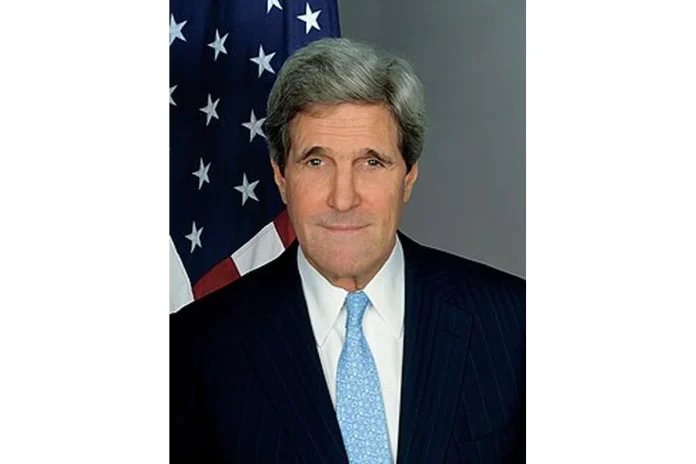
John Kerry Bio
John Forbes Kerry, born December 11, 1943, is an American attorney, politician, diplomat, and former naval officer. A member of the Democratic Party, he served as the 68th United States Secretary of State from 2013 to 2017 under President Barack Obama and represented Massachusetts in the U.S. Senate from 1985 to 2013. Kerry was the Democratic nominee for president in 2004, when he lost to George W. Bush, and later served as the first U.S. Special Presidential Envoy for Climate under President Joe Biden from 2021 until 2024.
Decorated for his service in the Vietnam War, Kerry is the recipient of the Silver Star, the Bronze Star with Valor, and three Purple Hearts. He has been a prominent voice on foreign policy, climate change, and veterans’ issues throughout his decades in public life.
Early Life and Background
John Forbes Kerry was born on December 11, 1943, in Aurora, Colorado. He is the son of Richard John Kerry, a diplomat and lawyer, and Rosemary Forbes, a member of the prominent Forbes family. Kerry was raised in Massachusetts and later Washington, D.C., where his father worked in the State Department. His paternal grandparents, Frederick A. Kerry and Ida Löwe, were Jewish immigrants from the Austro-Hungarian Empire who converted to Catholicism in 1901, while his maternal ancestors were of Scottish and English descent.
Kerry attended St. Paul’s School, a boarding school in Concord, New Hampshire, before enrolling at Yale University, where he earned his Bachelor of Arts degree in 1966. At Yale, he was active in student politics and athletics, and his exposure to public service and international affairs helped shape his future career. He would later earn his Juris Doctor from Boston College Law School in 1976.
Through his mother, Kerry is connected to several notable American lineages, including the Forbes family of publishers and the Dudley-Winthrop family, descendants of early Massachusetts Bay Colony governors. He is a first cousin of French politician Brice Lalonde. His family’s blend of immigrant roots, public service, and wealth gave him early exposure to diplomacy and political life.
Path to US Politics
After graduating from Yale in 1966, Kerry enlisted in the U.S. Naval Reserve, motivated in part by the military tradition in his family. He requested duty in South Vietnam and was assigned to command a Swift Boat, a small aluminum-hulled patrol craft used in coastal and river operations. His combat service earned him multiple decorations, and he returned to the United States in 1970 deeply affected by the war.
Kerry became a leading anti-war activist after his return, joining the Vietnam Veterans Against the War and gaining national attention for his testimony before the Senate Foreign Relations Committee in 1971. In that testimony, he described American policy in Vietnam in stark terms, helping to galvanize public opposition to the war. His political profile grew throughout the early 1970s as he balanced activism with legal studies.
Kerry’s first political campaign came in 1972, when he ran unsuccessfully for the U.S. House of Representatives in Massachusetts’s 5th congressional district. He spent the next decade in legal practice, public service, and advocacy before returning to electoral politics in 1982 as the elected Lieutenant Governor of Massachusetts, the first Democrat to hold that office in more than a decade.
John Kerry Career
Early Career (1972–1984)
Following his 1972 congressional defeat, Kerry spent the years that followed rebuilding his public profile. He attended Boston College Law School, graduating with his J.D. in 1976, and was admitted to the Massachusetts bar the same year. He joined the office of the District Attorney of Middlesex County as a prosecutor and was promoted to First Assistant District Attorney in 1977.
During his years in the district attorney’s office, Kerry tried cases that included a high-profile rape conviction and a murder case, while also helping to create specialized units addressing white-collar and organized crime. He left that role in 1979 to open a private law practice and worked as a commentator for WCVB-TV. His persistence in Massachusetts politics paid off in 1982, when he was elected the 66th Lieutenant Governor of the Commonwealth.
Senate Era (1985–2013)
Kerry was elected to the United States Senate in 1984, representing Massachusetts, and was re-elected in 1990, 1996, 2002, and 2008, serving nearly three decades. He chaired the Democratic Senatorial Campaign Committee from 1987 to 1989, and later led the Senate Select Committee on POW/MIA Affairs from 1991 to 1993, producing a report on American servicemen missing in Southeast Asia. In 2009, he became chairman of the Senate Foreign Relations Committee.
Kerry’s profile and experience made him a leading voice on foreign affairs in the Senate. He worked alongside Senator John McCain to end the trade embargo against Vietnam, which contributed to the normalization of diplomatic relations in 1995. He also engaged deeply on issues including arms control, the environment, and trade.
In 2004, Kerry secured the Democratic presidential nomination and chose Senator John Edwards of North Carolina as his running mate. He lost the general election to incumbent President George W. Bush, winning 251 electoral votes to Bush’s 286 and 48.3 percent of the popular vote to Bush’s 50.7 percent. Despite the loss, his performance in debates and the campaign elevated his national standing.
Secretary of State Era (2013–2017)
President Barack Obama nominated Kerry as Secretary of State in January 2013, and he was confirmed by his Senate colleagues, taking office on February 1, 2013. As the 68th Secretary of State, he pursued an ambitious diplomatic agenda, including the negotiation of the 2015 Joint Comprehensive Plan of Action limiting Iran’s nuclear program and the launch of the 2013–2014 Israeli-Palestinian peace talks.
Kerry played a central role in the international response to the August 2013 chemical weapons attack in Ghouta, Syria. A remark he made about Syria’s ability to surrender its chemical weapons helped initiate a process that led to the elimination of Syria’s declared chemical weapons stockpile by mid-2014. In April 2016, he signed the Paris Climate Accords on behalf of the United States, and in November 2016 he became the first Secretary of State to visit Antarctica.
Climate Envoy Era (2021–2024)
In January 2021, President Joe Biden appointed Kerry as the first U.S. Special Presidential Envoy for Climate, a newly created position focused on international climate cooperation and finance. In this role, he represented the United States in global climate negotiations and worked to encourage major economies to adopt stronger emissions targets.
Kerry announced in early 2024 that he would step down from the position by spring. He officially resigned on March 6, 2024, to assist with Biden’s 2024 presidential campaign. President Biden awarded him the Presidential Medal of Freedom in May 2024 in recognition of his decades of public service.
Notable Events and Milestones
One of the defining moments of Kerry’s career came during his 1971 testimony before the Senate Foreign Relations Committee, when he detailed American war crimes in Vietnam and helped shift public sentiment against the war. His three Purple Hearts, Silver Star, and Bronze Star with Valor, earned during his Swift Boat service, made him one of the most highly decorated senators of his era. His 2004 presidential run, though ultimately unsuccessful, made him the first Democratic nominee from Massachusetts since John F. Kennedy.
John Kerry Career Wins
Kerry’s career includes multiple electoral victories, diplomatic breakthroughs, and recognition for public service. He won five statewide elections in Massachusetts, including his U.S. Senate victories in 1984, 1990, 1996, 2002, and 2008, and his 1982 election as Lieutenant Governor.
Senate Highlights
Kerry’s most significant Senate victories include his 1996 re-election against Republican Governor William Weld, and his leadership of the Senate Foreign Relations Committee from 2009 onward. He authored or co-authored major legislation on veterans’ affairs, trade, and foreign policy, and was instrumental in the eventual normalization of U.S.-Vietnam relations in 1995.
Other Wins and Achievements
Beyond electoral politics, Kerry helped negotiate the Iran nuclear agreement, the 2013-2014 Israeli-Palestinian peace talks, and the framework for the elimination of Syria’s declared chemical weapons program. He received the Presidential Medal of Freedom from President Joe Biden in May 2024. In 2011, the Millennium Campus Network honored him with a Global Generation Award for his advocacy on global development.
John Kerry Family
Family Background and Political Lineage
Kerry was born into a prominent and politically active family. His father, Richard John Kerry, was a Foreign Service officer and lawyer who served in posts across Europe and the Middle East, while his mother, Rosemary Forbes Kerry, came from the Forbes publishing family and was active in civic and charitable causes. His maternal grandparents, James Grant Forbes II and Margaret Tyndal Winthrop, linked him to a long line of American political figures, including colonial-era governors of Massachusetts.
Through his father’s side, Kerry’s grandparents were Jewish immigrants from the Austro-Hungarian Empire who converted to Catholicism in 1901, taking the surname Kerry. His Jewish ancestry became public during his 2004 presidential campaign. He is also a first cousin of French politician Brice Lalonde, reflecting the family’s international reach.
Personal Life
Kerry was first married to Julia Thorne from 1970 to 1988, with whom he had two daughters, Alexandra and Vanessa. He married Teresa Heinz, the widow of Senator John Heinz III, in 1995, and the couple has maintained homes in Massachusetts, including a property in Chilmark. Kerry is an avid cyclist and sportsman, a Roman Catholic, and a public advocate for environmental causes and veterans’ issues.