
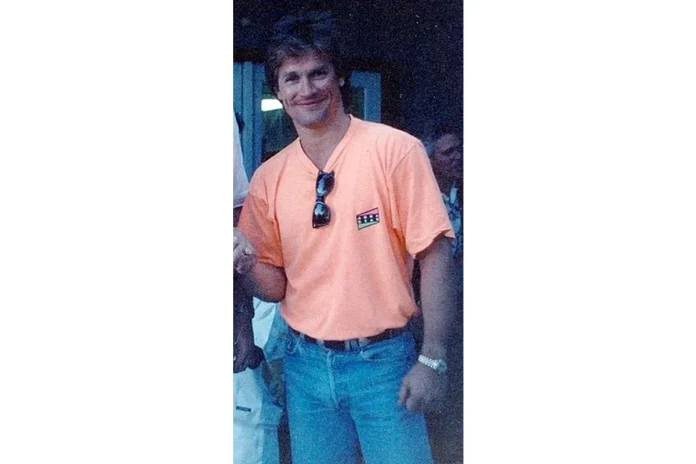
Andrew Stevens Bio
Herman Andrew Stevens, known professionally as Andrew Stevens, is an American entertainment executive, film producer, director, and actor whose career spans more than six decades. Born in Memphis, Tennessee, he began as a screen actor in the early 1960s before expanding into writing, directing, and studio leadership. He first gained wide attention as President and Chief Executive Officer of Franchise Pictures, the company that delivered films for Warner Bros. such as The Whole Nine Yards (2000) and The Whole Ten Yards (2004). Over the years he has also written and directed numerous projects and authored the screenwriting guide Screenwriting for Profit.
Stevens is the only child of actress Stella Stevens and grew up around the entertainment industry, an upbringing that shaped his early path into film. His work bridges on-screen performance and behind-the-scenes production, making him a long-standing figure in independent Hollywood.
Early Life and Background
Andrew Stevens was born Herman Andrew Stephens on June 10, 1955, in Memphis, Tennessee. He is the only child of actress Stella Stevens and her former husband, Noble Herman Stephens. His parents divorced in 1957, when Stevens was still a young child, and he was raised largely in the orbit of his mother’s acting career. Stella Stevens was only sixteen at the time of his birth, and the family soon moved west so she could pursue film opportunities in Hollywood.
Growing up on film sets and in audition rooms gave Stevens an unusually early view of the entertainment industry. By the time he was a pre-teen, he had already begun appearing in commercials and small television parts. This early access to working productions shaped his sense of pacing, performance, and storytelling, and it laid the groundwork for his later move from in front of the camera to executive producing and directing.
Path to Acting
Stevens made his uncredited film debut as a child in Vincente Minnelli’s The Courtship of Eddie’s Father in 1963, when he was about eight years old. Throughout the late 1960s and early 1970s, he built a résumé of television guest roles and small film parts while still attending school. He later earned a bit role in Hal Ashby’s Shampoo (1975), a notable credit that introduced him to larger ensemble productions.
He continued to land steady work in television, including appearances on the NBC Western series The Oregon Trail and the miniseries Once an Eagle in 1976. These early assignments helped him transition from juvenile parts to adult leading roles in feature films, setting the stage for the breakthrough projects that followed.
Andrew Stevens Career
Early Career (1962-1977)
Stevens launched his professional career in 1962 with television appearances while still in his early teens. His first significant screen credit came with The Courtship of Eddie’s Father in 1963, and he later picked up a small part in Shampoo in 1975. During the mid-1970s he took on a string of genre roles, including Massacre at Central High (1976), Vigilante Force (1976), and Day of the Animals (1977), which established his presence in cult thriller and horror productions.
He also worked steadily in television during this period, starring as seventeen-year-old Andrew Thorpe on the NBC Western The Oregon Trail and appearing in the miniseries Once an Eagle. These credits gave him a steady platform as he moved toward higher-profile feature work at the close of the 1970s.
Breakthrough (1978-1989)
Stevens achieved his breakthrough with the supernatural thriller The Fury (1978), directed by Brian De Palma and starring Kirk Douglas. The same year, his performance in The Boys in Company C earned him a Golden Globe Award nomination, validating his range as a dramatic actor. He followed this with starring roles in the television adaptations The Bastard (1978) and The Rebels (1979), both based on John Jakes novels.
He went on to star opposite Charles Bronson in two action films, Death Hunt (1981) and 10 to Midnight (1983), and played Ted Rorchek on the 1981-1982 series Code Red. Other notable credits during this period include the short-lived drama Emerald Point N.A.S., a guest appearance on Columbo: Murder in Malibu, a recurring role as Casey Denault on Dallas beginning in 1987, and the miniseries Hollywood Wives (1985). He also wrote and starred in the erotic thriller Night Eyes (1990) and its sequels.
Notable Works and Milestones
Signature works from this era include The Fury, 10 to Midnight, and the Night Eyes series, each of which cemented his reputation across horror, action, and thriller genres. His Golden Globe nomination for The Boys in Company C stands as a career-defining dramatic recognition, while his recurring role on Dallas gave him some of his widest television exposure.
Andrew Stevens Award Nominations
Andrew Stevens received a Golden Globe Award nomination for his performance in the war drama The Boys in Company C (1978), a milestone that highlighted his transition from juvenile and bit parts to leading-man status.
Andrew Stevens Awards Won
No verified major award wins are recorded for Andrew Stevens in the supplied sources, so this section is limited to his documented Golden Globe nomination rather than confirmed victories.
Andrew Stevens Family
Andrew Stevens is the son of actress Stella Stevens and her former husband, Noble Herman Stephens. His parents married when his mother was sixteen and divorced in 1957, leaving Stevens as an only child raised largely around the film industry. He is a father of three children from his marriage to Robyn Suzanne Scott.
Personal Life
Stevens married actress Kate Jackson in 1978, and the couple divorced in 1982. He later married Robyn Suzanne Scott, with whom he had three children before their divorce in 2010. In 2016 he married Diana Phillips Hoogland; the marriage ended in divorce in 2017. Beyond his family life, he has built a parallel career as a publishing executive and the head of Andrew Stevens Entertainment and Stevens Entertainment Group.