
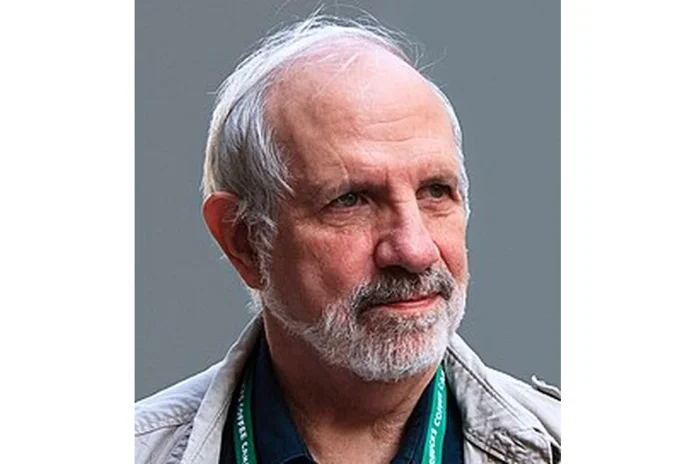
Brian De Palma Bio
Brian Russell De Palma (born September 11, 1940) is an American film director, screenwriter, and producer whose career has spanned more than five decades. A leading figure of the New Hollywood generation, De Palma is best known for suspense, crime, and psychological thrillers marked by technical daring and references to classic cinema. His most recognized works include Carrie (1976), Scarface (1983), The Untouchables (1987), and Mission: Impossible (1996). He is widely regarded as one of the most influential American filmmakers of his era.
Throughout his career, De Palma has built a reputation for stylistic innovation, often employing split-screen, slow motion, and elaborate long takes. He has been praised by critics such as Roger Ebert and Pauline Kael, even as his films have sparked debate over violence and gender representation. De Palma continues to live and work in New York City.
Early Life and Background
Brian Russell De Palma was born on September 11, 1940, in Newark, New Jersey, the youngest of three boys. His Italian-American parents were Vivienne DePalma, née Muti, and Anthony F. De Palma, an orthopedic surgeon. The family later relocated, and De Palma was raised in Philadelphia, Pennsylvania, and New Hampshire, attending various Protestant and Quaker schools. He eventually graduated from Friends’ Central School, where he built computers and won a regional science-fair prize for a project titled “An Analog Computer to Solve Differential Equations.”
De Palma’s relationship with his father was strained during his teenage years, and he once secretly followed his father to record instances of infidelity. Those experiences later informed the teenage character in his film Dressed to Kill (1980). After high school, he enrolled at Columbia University as a physics student, where his interest in filmmaking deepened after watching Orson Welles’s Citizen Kane (1941) and Alfred Hitchcock’s Vertigo (1958). He graduated from Columbia in 1962 with a bachelor’s degree.
After completing his undergraduate studies, De Palma enrolled at the newly coed Sarah Lawrence College as a graduate student in the theater department. In 1964, he earned a Master of Arts degree as one of the first male students in a predominantly female school. During this period, mentors and influences such as Wilford Leach, the Maysles brothers, Michelangelo Antonioni, Andy Warhol, and Jean-Luc Godard shaped his artistic direction.
Path to Directing
De Palma’s first significant directorial effort was The Wedding Party, co-written and co-directed with Wilford Leach in 1963, though the film remained unreleased until 1969. Its cast included a young Robert De Niro. During the 1960s, De Palma supported himself by producing documentaries, including The Responsive Eye (1966) and Dionysus in ’69 (1969), the latter of which showcased his innovative use of split-screen techniques to capture live performance.
His breakthrough as a feature filmmaker came with the comedy Greetings (1968), starring Robert De Niro, which won a Silver Bear award at the 19th Berlin International Film Festival. He followed it with the satirical Hi, Mom! (1970) and the slasher comedy Murder a la Mod (1968). De Palma then relocated to Hollywood, where he directed the studio comedy Get to Know Your Rabbit (1972) and the horror film Sisters (1972), which established his reputation for stylish suspense.
By the mid-1970s, De Palma had directed the cult rock musical Phantom of the Paradise (1974) and the Hitchcock-inspired thriller Obsession (1976). These projects cemented his identity as a visually inventive director willing to challenge audience expectations and pay tribute to the masters who shaped his craft.
Brian De Palma Career
Early Career (1963–1975)
De Palma’s early career was defined by experimentation and countercultural energy. Working in the Greenwich Village film scene, he produced documentaries, short films, and low-budget features that explored narrative structure and political themes. His collaborations with Robert De Niro and his inventive use of split-screen drew critical attention and laid the groundwork for his later work in suspense.
Films such as Sisters (1972) and Phantom of the Paradise (1974) brought De Palma his first cult following. Although these films received limited commercial success, they demonstrated his ability to merge genre filmmaking with avant-garde technique.
Breakthrough (1976–1987)
De Palma’s first major breakthrough came with Carrie (1976), an adaptation of Stephen King’s novel starring Sissy Spacek and Piper Laurie. The film earned Academy Award nominations for Spacek and Laurie and became De Palma’s first genuine box-office success. Its use of split-screen, split-diopter shots, and slow motion influenced a generation of filmmakers.
Building on this success, De Palma directed the science fiction thriller The Fury (1978) and the erotic thriller Dressed to Kill (1980), both of which received critical acclaim despite controversy. His 1981 thriller Blow Out, starring John Travolta, was hailed by Pauline Kael as a defining moment in his career. In 1983, De Palma released Scarface, starring Al Pacino, which has since become a cult classic despite initial mixed reviews.
De Palma continued to push boundaries with Body Double (1984) before reaching new heights with The Untouchables (1987). Starring Kevin Costner, Andy Garcia, Robert De Niro, and Sean Connery, the crime drama received critical acclaim and commercial success. Sean Connery won the Academy Award for Best Supporting Actor for his performance.
Notable Works and Milestones
De Palma’s signature works include Carrie, Scarface, The Untouchables, and Mission: Impossible (1996), the last of which became his highest-grossing film and launched a successful franchise. He has also directed acclaimed films such as Blow Out, Dressed to Kill, and Carlito’s Way (1993).
Brian De Palma Award Nominations
While De Palma himself has not been a frequent recipient of major Hollywood awards, several actors under his direction have earned Academy Award nominations for their performances. Sissy Spacek and Piper Laurie both received Best Actress and Best Supporting Actress nominations, respectively, for Carrie (1976). Sean Connery won the Academy Award for Best Supporting Actor for his role in The Untouchables (1987).
Brian De Palma Awards Won
De Palma’s film Greetings (1968) won a Silver Bear award at the 19th Berlin International Film Festival. Under his direction, Sean Connery earned the Academy Award for Best Supporting Actor for The Untouchables (1987). His film Carrie has been inducted into the National Film Registry by the Library of Congress. The French magazine Cahiers du Cinéma placed Redacted at the top of its 2008 annual list and named Carlito’s Way the greatest film of the 1990s.
Brian De Palma Family
Brian De Palma is the son of Anthony F. De Palma, an orthopedic surgeon, and Vivienne DePalma, née Muti. He grew up alongside two older brothers in a household shaped by Italian-American heritage and his father’s medical career. De Palma has two daughters: one from his marriage to producer Gale Anne Hurd, and one from his marriage to Darnell Gregorio. His daughter from his marriage to Gregorio is actress Piper De Palma.
Personal Life
De Palma has been married and divorced three times. He was married to actress Nancy Allen from 1979 to 1984, to producer Gale Anne Hurd from 1991 to 1993, and to Darnell Gregorio from 1995 to 1997. He resides in Manhattan, New York. In 2018, De Palma published his debut novel, Les serpents sont-ils nécessaires? (translated as Are Snakes Necessary?), co-written with Susan Lehman, followed by a U.S. edition in 2020. His life and career were explored in the 2015 documentary De Palma, directed by Noah Baumbach and Jake Paltrow.