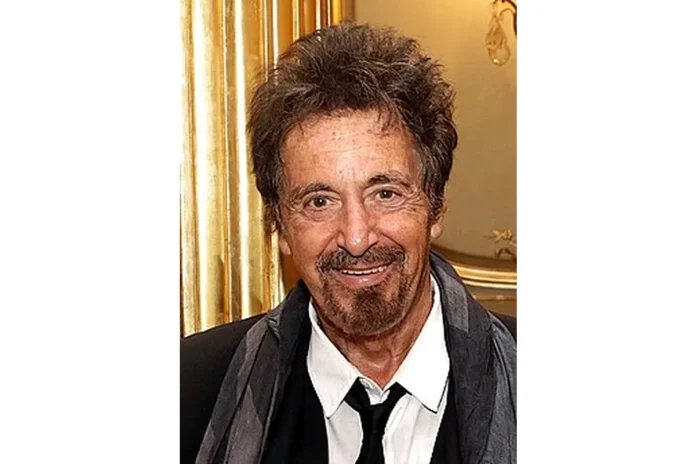
Al Pacino Bio
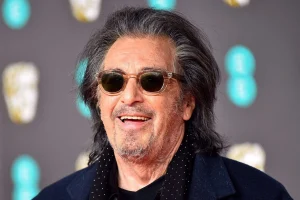
Alfredo James Pacino, known professionally as Al Pacino, is an American actor widely regarded as one of the greatest performers in the history of cinema and theater. Born on April 25, 1940, in New York City, New York, USA, Pacino has built a career spanning more than five decades, earning recognition for his intense, method-driven performances on stage and screen. He is one of the few entertainers to have completed the Triple Crown of Acting, securing an Academy Award, two Tony Awards, and two Primetime Emmy Awards.
Throughout his career, Pacino has starred in some of the most influential films ever made, including The Godfather, The Godfather Part II, Scarface, and Scent of a Woman. He has also become a celebrated theater actor and director, contributing to the preservation of Shakespearean works and American stage classics. He was honored with the Cecil B. DeMille Award in 2001, the AFI Life Achievement Award in 2007, the National Medal of Arts in 2011, and the Kennedy Center Honors in 2016.
Early Life and Background
Alfredo James Pacino was born on April 25, 1940, in the East Harlem neighborhood of Manhattan, New York City, the only child of Sicilian Italian-American parents Rose and Salvatore Pacino. His parents divorced when he was two years old, after which his mother took him to the South Bronx, where they lived with his maternal grandparents, Kate and James Gerardi, who had emigrated from Corleone, Italy. His father moved to California, where he worked as an insurance salesman and restaurateur in Covina, California.
From the age of three or four, Pacino’s mother took him to the movies, where he would run the characters’ lines through his head. She nicknamed him “Sonny Boy,” a name taken from a popular song by Al Jolson, and that nickname would later inspire the title of his 2024 memoir. As a teenager, he was also called “Sonny” and “Pistachio” by his friends, and he had ambitions to become a baseball player before his interests shifted to acting. His early years in the South Bronx were marked by financial hardship, and he was sometimes unemployed or homeless, occasionally sleeping on the street, in theaters, or at a friend’s home.
He attended Herman Ridder Junior High School, where his teacher Blanche Rothstein recognized his acting potential and cast him in school plays. She told his family that he was “made to do this,” an event Pacino has called a turning point in his life. He later gained admission by audition to the High School of Performing Arts in New York City, though his mother disagreed with his decision, believing that “poor people don’t do acting.” To support himself, Pacino took low-paying jobs as a messenger, busboy, janitor, switchboard operator, and postal clerk while pursuing his dream.
Path to Acting
Pacino joined HB Studio in New York, where he met acting teacher Charlie Laughton, who became his mentor and best friend. The studio allowed him to attend classes for free in exchange for cleaning the hallways and dance studios. At night, Pacino practiced Shakespeare soliloquies while wandering the streets. As a teenager, he was rejected when he first tried to join the Actors Studio, but he returned four years later and successfully auditioned, studying method acting under Lee Strasberg.
Pacino credited both Laughton and the Actors Studio as the foundation of his career. In 1967, he spent a season at the Charles Playhouse in Boston, performing in Clifford Odets’ Awake and Sing! and Jean-Claude Van Itallie’s America Hurrah. In 1968, he starred in Israel Horovitz’s The Indian Wants the Bronx at the Astor Place Theatre, winning an Obie Award for Best Actor. The performance caught the eye of manager Martin Bregman, who would guide him toward The Godfather, Serpico, and Dog Day Afternoon.
On February 25, 1969, Pacino made his Broadway debut in Don Petersen’s Does a Tiger Wear a Necktie? at the Belasco Theater. The production closed after 39 performances, but Pacino received rave reviews and won the Tony Award for Best Featured Actor in a Play. He made his film debut in 1969 with a brief appearance in Me, Natalie, an independent film starring Patty Duke, and followed that with his feature film debut as a heroin addict in The Panic in Needle Park (1971).
Al Pacino Career
Early Career (1967-1971)
Between 1967 and 1971, Al Pacino built his reputation in the New York theater world, performing in underground, off-Broadway, and out-of-town productions. His first major paycheck came in 1967, earning US$125 a week at the Charles Playhouse in Boston. He won an Obie Award for Best Actor for The Indian Wants the Bronx in 1968, and took the production to the Festival dei Due Mondi in Spoleto, Italy, marking his first journey to the country of his father’s ancestors.
Pacino won his first Tony Award in 1969 for Does a Tiger Wear a Necktie? and made his film debut the same year. In 1971, he starred in The Panic in Needle Park, which was his first feature film role and led directly to his casting in The Godfather.
Breakthrough (1972-1999)
Francis Ford Coppola cast Pacino as Michael Corleone in The Godfather (1972), a role that made him a star and earned him his first Academy Award nomination. He was nominated for Best Supporting Actor, a category that surprised him, since he believed his performance was a lead role. In 1973, he co-starred in Scarecrow with Gene Hackman, which won the Palme d’Or at the Cannes Film Festival, and was nominated for Best Actor for his role as Frank Serpico in Serpico.
He continued his iconic portrayal of Michael Corleone in The Godfather Part II (1974), which was the first sequel to win the Best Picture Oscar, and earned another Best Actor nomination. In 1975, he starred in Dog Day Afternoon, earning a fourth Oscar nomination, and in 1977 he won his second Tony Award for The Basic Training of Pavlo Hummel. In 1983, he starred as Tony Montana in Brian De Palma’s Scarface, a performance that initially received mixed reviews but became one of his most defining roles, grossing over US$45 million domestically.
After a four-year film hiatus following the commercial failure of Revolution (1985), Pacino returned with Sea of Love (1989) and The Godfather Part III (1990). In 1992, he won the Academy Award for Best Actor for his role as blind Lieutenant Colonel Frank Slade in Scent of a Woman, and was also nominated for Best Supporting Actor for Glengarry Glen Ross in the same year, making him the first male actor to receive two acting nominations for two movies in a single year. He went on to star in Carlito’s Way (1993), Heat (1995), and Donnie Brasco (1997), continuing to deliver powerful performances that cemented his place in Hollywood history.
Notable Works and Milestones
Al Pacino’s most celebrated works include The Godfather (1972), The Godfather Part II (1974), Dog Day Afternoon (1975), Scarface (1983), and Scent of a Woman (1992). Four of his films — The Godfather, The Godfather Part II, Dog Day Afternoon, and Scarface — have been selected for preservation in the U.S. National Film Registry of the Library of Congress. His portrayal of Michael Corleone in The Godfather Part II has been described by Newsweek as “arguably cinema’s greatest portrayal of the hardening of a heart.” In 2024, Pacino published his memoir, Sonny Boy, with Penguin Press, becoming a bestselling reflection on his life and career.
Al Pacino Award Nominations
Al Pacino has received nine Academy Award nominations, five BAFTA nominations, 19 Golden Globe nominations, seven Screen Actors Guild Award nominations, three Primetime Emmy Award nominations, and three Tony Award nominations across his career. His Oscar nominations include Best Supporting Actor for The Godfather (1972), and Best Actor for Serpico (1973), The Godfather Part II (1974), Dog Day Afternoon (1975), …And Justice for All (1979), Dick Tracy (1990), Scent of a Woman (1992), Glengarry Glen Ross (1992), and The Irishman (2019). He was also nominated for a Tony Award for Best Leading Actor in a Play for The Merchant of Venice in 2010.
Al Pacino Awards Won
Al Pacino has won numerous awards throughout his career, including one Academy Award for Best Actor for Scent of a Woman (1992), two Tony Awards for Does a Tiger Wear a Necktie? (1969) and The Basic Training of Pavlo Hummel (1977), two Primetime Emmy Awards for Angels in America (2003) and You Don’t Know Jack (2010), and four Golden Globe Awards. He also received the Cecil B. DeMille Award in 2001, the AFI Life Achievement Award in 2007, the National Medal of Arts in 2011, the Kennedy Center Honors in 2016, and the Sam Wanamaker Award in 2026. In 1996, he won a Directors Guild of America Award for his documentary Looking for Richard.
Al Pacino Family
Al Pacino was born to Salvatore Pacino, an insurance salesman and restaurateur who emigrated from San Fratello, Italy, and Rose Gerardi, both of Sicilian Italian-American heritage. His parents divorced when he was two years old, and he was raised in the South Bronx by his mother and his maternal grandparents, Kate and James Gerardi, who had emigrated from Corleone, Italy. His mother died in 1962 at the age of 43, an event Pacino has described as the lowest point of his life.
Personal Life
Al Pacino has never been married. He had a long on-again, off-again relationship with actress Diane Keaton, his co-star in The Godfather Trilogy, that ended after the filming of The Godfather Part III (1990). He has had relationships with actress Jill Clayburgh, Lyndall Hobbs (1989-1996), Beverly D’Angelo (1997-2003), Lucila Polak (2008-2018), and producer Noor Alfallah (2022-2024). He has four children: daughter Julie Marie (born 1989) with acting coach Jan Tarrant, twins Anton James and Olivia Rose (born 2001) with Beverly D’Angelo, conceived through IVF, and son Roman (born 2023) with Noor Alfallah. Pacino achieved sobriety in 1977 after struggling with alcohol and pills earlier in his career, and in 2020 he nearly died of COVID-19.