
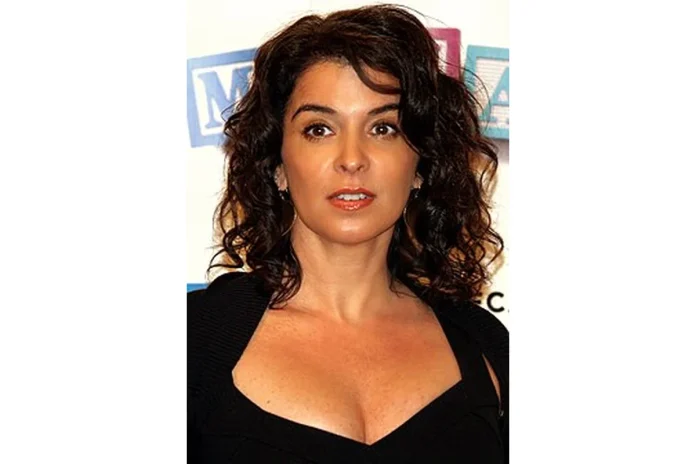
Annabella Sciorra Bio
Annabella Gloria Philomena Sciorra (born March 29, 1960) is an American actress whose career spans film, television, and stage. She first drew critical attention with her film debut in True Love (1989) and went on to build a steady body of work throughout the 1990s in films such as Jungle Fever (1991), The Hard Way (1991), The Hand That Rocks the Cradle (1992), Cop Land (1997), and What Dreams May Come (1998). Her portrayal of Gloria Trillo on The Sopranos earned her a Primetime Emmy Award nomination in 2001, and she has continued to take on memorable roles across prestige dramas, network series, and streaming projects.
Beyond her on-screen work, Sciorra became widely recognized as a key figure of the #MeToo movement. After speaking publicly about her experience with film producer Harvey Weinstein, she testified at his 2020 sexual assault trial, contributing to a verdict that marked a turning point in the broader cultural conversation around accountability in the entertainment industry.
Early Life and Background
Annabella Gloria Philomena Sciorra was born on March 29, 1960, in the Brooklyn borough of New York City to Italian immigrant parents. Her mother worked as a fashion stylist and was originally from Formia, in the Lazio region of Italy, while her father was a veterinarian from Carunchio, in the Abruzzo region. Growing up in a tight-knit Italian-American household in Brooklyn helped shape her sense of identity and grounded her in the working-class New York settings that would later inform many of her roles.
As a child, Sciorra studied dance, an early discipline that helped develop her comfort with performance and physical expression. She later took drama lessons at the Herbert Berghof Studio, commonly known as HB Studio, and at the American Academy of Dramatic Arts, two of New York’s respected training grounds for actors. These formative years gave her the technical foundation she would carry into a professional career that officially began in 1988.
Path to Acting
Sciorra made her professional debut in 1988 with a small part in the television miniseries The Fortunate Pilgrim. The following year she landed her first major film role, starring as Donna in the romantic comedy-drama True Love (1989). The film won the Grand Jury Prize at the Sundance Film Festival, and her performance drew strong reviews, including praise from The New York Times for capturing the mood of the film with both gentleness and toughness.
That early recognition was followed by supporting roles in Internal Affairs, Cadillac Man, and the courtroom drama Reversal of Fortune (all 1990), the last of which received three Academy Award nominations. Working alongside established actors and directors during this period helped Sciorra move quickly from newcomer to a recognizable presence in both independent and studio filmmaking.
Annabella Sciorra Career
Early Career (1989–1990)
True Love served as Sciorra’s launchpad, earning her a nomination for the Independent Spirit Award for Best Female Lead the following year. The combination of festival recognition and critical praise positioned her as a promising new voice in American film. Her subsequent work in 1990 films, including Reversal of Fortune, gave her exposure to high-profile projects early in her career.
During this stretch she also built relationships with filmmakers who would shape her trajectory, including Spike Lee, whose Jungle Fever would soon bring her wider acclaim. These early projects helped establish her range across genres, from romantic comedy and courtroom drama to character-driven independent work.
Breakthrough (1991–2000)
In 1991, Sciorra co-starred in the buddy-cop comedy The Hard Way and then delivered a widely praised performance as Angie Tucci in Spike Lee’s Jungle Fever, a film shortlisted for the Palme d’Or at the Cannes Film Festival. Critics highlighted her presence, vulnerability, and comic timing, with The New York Times noting that she may have been just a little more equal than the rest of an already strong ensemble.
The following year she headlined the psychological thriller The Hand That Rocks the Cradle (1992), which sat atop the U.S. box office for four consecutive weeks. Her performance as Claire Bartel drew acclaim from outlets including Entertainment Weekly and Variety, and the film has since been cited as one of the defining thrillers of the 1990s. She continued working steadily across the decade, with romantic leads in The Night We Never Met, the noir thriller Romeo Is Bleeding, and the romantic comedy Mr. Wonderful (all 1993), followed by her first collaboration with cult filmmaker Abel Ferrara on The Addiction (1995), James Mangold’s Cop Land (1997), and the fantasy drama What Dreams May Come (1998). Roger Ebert described her work in the latter as heartbreakingly effective.
Notable Works and Milestones
Across the 1990s, Sciorra became known for pairing grounded emotional realism with a willingness to take on darker, more challenging material. Her collaborations with directors such as Spike Lee, Abel Ferrara, Curtis Hanson, and James Mangold produced a body of work that ranged from intimate independent drama to major studio thrillers. Her signature performances in Jungle Fever, The Hand That Rocks the Cradle, Cop Land, and What Dreams May Come cemented her reputation as one of the most versatile actresses of her generation.
Annabella Sciorra Award Nominations
Over the course of her career, Sciorra has earned recognition from peers and critics across film, television, and the independent sector. She received an Independent Spirit Award nomination for Best Female Lead for her work in True Love, and later earned a Primetime Emmy Award nomination for Outstanding Guest Actress in a Drama Series for her portrayal of Gloria Trillo on The Sopranos in 2001.
Annabella Sciorra Awards Won
Verified award totals for Sciorra are limited in the available record. Rather than summarize uncertain figures, this section is presented conservatively to reflect only what can be confirmed from reliable sources.
Annabella Sciorra Family
Sciorra was born into an Italian-American family in Brooklyn, New York. Her mother was a fashion stylist originally from Formia, in Italy’s Lazio region, and her father was a veterinarian from Carunchio, in the Abruzzo region. Their immigrant background and New York roots have remained a meaningful part of her personal identity throughout her life and career.
Personal Life
Sciorra was married to actor Joe Petruzzi from 1989 until their divorce in 1993. She later began a relationship with actor Bobby Cannavale in 2004, with the pair dating for three years before parting ways in 2007. In October 2017, she publicly alleged that film producer Harvey Weinstein had raped her in the mid-1990s, and she went on to serve as a key witness addressing the predatory sexual assault charges during Weinstein’s 2020 trial, contributing to his conviction.