
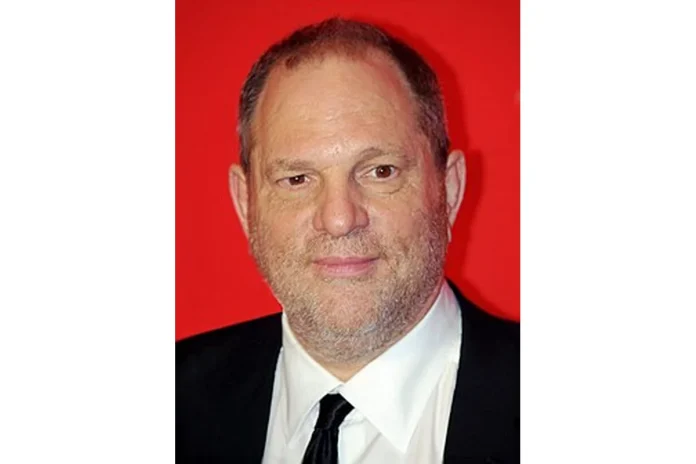
Harvey Weinstein Bio
Harvey Weinstein (born March 19, 1952) is an American former film producer. With his brother Bob, he co-founded the entertainment company Miramax in 1979 and later co-founded The Weinstein Company in 2005. During his decades in Hollywood, he helped bring independent films such as Sex, Lies, and Videotape, Pulp Fiction, and Shakespeare in Love to wide audiences, and he received multiple Academy Awards for producing work. His later years have been defined by widespread sexual misconduct allegations, criminal convictions, and imprisonment.
Weinstein’s arrest in 2018 and subsequent trials reshaped public conversations about power and accountability in the entertainment industry. The allegations against him are widely credited with helping launch the global MeToo movement. His legal cases have produced convictions in both New York and California, along with appeals and a retrial in New York that produced additional verdicts.
Early Life and Background
Harvey Weinstein was born on March 19, 1952, in Flushing, Queens, in New York City. He was raised in a Jewish family by his father, Max Weinstein, a diamond cutter who died in 1976, and his mother, Miriam (née Postel), who died in 2016. His maternal grandparents had immigrated to the United States from Poland. He grew up alongside his younger brother, Bob Weinstein, in the Electchester housing cooperative in New York City.
Weinstein attended John Bowne High School before enrolling at the State University of New York at Buffalo, where he studied from 1969 to 1973 without earning a degree. During his time in Buffalo, he and his brother Bob, along with friend Corky Burger, formed Harvey & Corky Productions, a concert promotion outfit that brought major acts such as Frank Sinatra, the Who, and the Rolling Stones to the area through most of the 1970s.
That early concert business gave Weinstein practical experience in promotion, negotiation, and entertainment deal-making. The profits from those live events would later provide the financial foundation for his move into film.
Path to Producing
Using the earnings from their concert promotion company, Harvey and Bob Weinstein entered the film business in the late 1970s by founding the independent distribution company Miramax, which they named by combining their parents’ first names, Miriam and Max. Miramax’s earliest releases were music-oriented concert films, including Paul McCartney’s Rockshow, before the brothers moved into dramatic and documentary features.
Throughout the 1980s, Miramax built its reputation with arthouse and independent titles. The 1988 release of Errol Morris’s documentary The Thin Blue Line brought national attention to the company, and the 1989 release of Steven Soderbergh’s Sex, Lies, and Videotape turned Miramax into the most successful independent studio in America. The studio also clashed with the MPAA rating system over releases such as Tie Me Up! Tie Me Down! and The Cook, the Thief, His Wife & Her Lover, a dispute that helped lead to the creation of the NC-17 rating.
In 1993, following the success of The Crying Game, the Walt Disney Company paid the Weinsteins $80 million to acquire Miramax, an arrangement that allowed the brothers to remain in charge while gaining a much larger platform. The next year, Miramax released Quentin Tarantino’s Pulp Fiction, further cementing the company’s reputation for championing bold independent filmmaking.
Harvey Weinstein Career
Early Career (1979–1988)
Harvey Weinstein’s first notable work in film came through Miramax’s early distribution of music and concert films, followed by edited compilations such as The Secret Policeman’s Other Ball in 1982, which raised money for Amnesty International and gave the company its first commercial hit. Through the mid-1980s, Miramax steadily grew its catalog of arthouse films, earning critical attention and modest box-office returns.
By the end of the 1980s, the studio’s release of The Thin Blue Line had generated both national headlines and the eventual release of a wrongly convicted inmate, and Sex, Lies, and Videotape had launched Miramax into the top tier of American independent studios.
Breakthrough (1989–2004)
After Miramax joined the Disney family in 1993, Harvey Weinstein oversaw an ambitious slate that included the company’s first Best Picture Academy Award win for The English Patient in 1997. The studio also released popular titles such as Good Will Hunting and Clerks, building a reputation for combining prestige projects with commercial reach.
In 1998, Miramax released Shakespeare in Love, a critical and awards-season favorite. The film earned multiple Academy Awards, including Best Picture and Best Original Screenplay, and the honor was shared by producers. The win was also reflected in a 1999 BAFTA nomination for Best Film. Across the 1990s and early 2000s, Weinstein also produced fashion-related projects such as Robert Altman’s Prêt-à-Porter and the reality series Project Runway, which helped popularize designers such as Michael Kors and Heidi Klum.
An analysis of Academy Award acceptance speeches from 1966 to 2016 found that Weinstein was thanked or praised in 34 speeches, placing him second only to Steven Spielberg, a sign of how often his productions intersected with Oscar-winning talent.
Notable Works and Milestones
Harvey Weinstein’s signature projects include Sex, Lies, and Videotape (1989), Pulp Fiction (1994), and Shakespeare in Love (1998), as well as the Best Picture win for The English Patient in 1997. In 2005, he and his brother left Miramax to form The Weinstein Company, where he served as co-chairman from 2005 to 2017 and continued producing theatrical releases and Broadway shows such as The Producers, Billy Elliot the Musical, and August: Osage County, which collectively earned him seven Tony Awards.
Harvey Weinstein Award Nominations
Harvey Weinstein’s producing career brought him a number of major nominations in addition to his wins. Among the verified nominations, the film Shakespeare in Love received a BAFTA Award nomination for Best Film in 1999, alongside the Academy Awards recognition that same year. Pulp Fiction also earned a Best Picture nomination at the Academy Awards in 1995, with the prize that year going to Forrest Gump.
Harvey Weinstein Awards Won
As a producer, Harvey Weinstein won several of the most prominent awards in the film industry. His verified Academy Award wins include Best Picture for The English Patient in 1997 and both Best Picture and Best Original Screenplay for Shakespeare in Love in 1999. He also won seven Tony Awards for theatrical productions, including The Producers, Billy Elliot the Musical, and August: Osage County. Honorary honors that were later revoked included a Doctor of Humane Letters degree from the University at Buffalo, a French Legion of Honour, and an honorary Commander of the Order of the British Empire.
| Award | Wins | Year |
|---|---|---|
| Academy Award for Best Picture (The English Patient) | 1 | 1997 |
| Academy Award for Best Picture (Shakespeare in Love) | 1 | 1999 |
| Academy Award for Best Original Screenplay (Shakespeare in Love) | 1 | 1999 |
Harvey Weinstein Family
Harvey Weinstein was the son of diamond cutter Max Weinstein and Miriam (née Postel) Weinstein. He had one sibling, his younger brother Bob Weinstein, who became his longtime business partner in the film industry.
Family was central to his business identity as well. The brothers named Miramax by combining their parents’ first names, a decision that tied the family’s story to the studio that defined their early careers.
Personal Life
Harvey Weinstein has been married twice. His first marriage was to his assistant Eve Chilton, with whom he was married from 1987 until their divorce in 2004. Together they had three daughters. In 2007, he married English fashion designer and actress Georgina Chapman, with whom he had a daughter and a son. Following the public sexual misconduct allegations in October 2017, Chapman announced that she was leaving Weinstein; the couple reached a settlement in January 2018 and their divorce was finalized in July 2021.
Weinstein has also faced serious health issues in recent years. In 1999, he underwent surgery for Fournier gangrene, and in 2024 he was hospitalized with COVID-19, double pneumonia, and chronic myeloid leukemia, followed by emergency heart surgery in September 2024.