
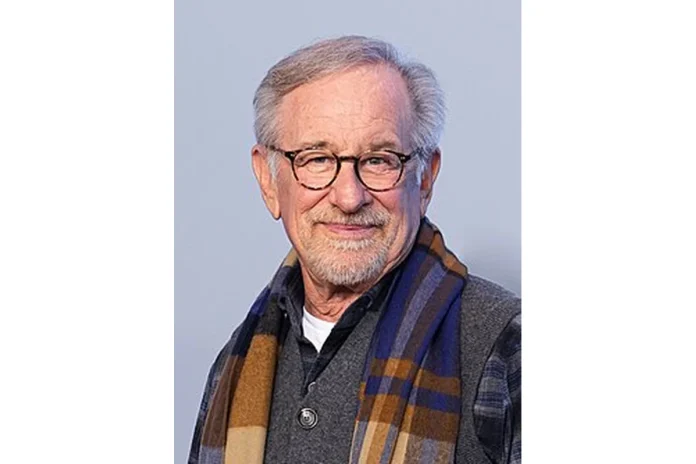
Steven Spielberg Bio
Steven Allan Spielberg (born December 18, 1946) is an American filmmaker widely regarded as one of the most influential and commercially successful directors in the history of cinema. A leading figure of the New Hollywood era and a pioneer of the modern blockbuster, he is celebrated for his versatility across genres, including adventure, science fiction, drama, and historical epics. Spielberg has directed some of the most acclaimed and highest-grossing films ever made, including Jaws, E.T. the Extra-Terrestrial, Jurassic Park, Schindler’s List, and Saving Private Ryan. Beyond directing, he has built a prolific career as a producer through Amblin Entertainment and DreamWorks, and he has received multiple Academy Awards, Golden Globe Awards, BAFTA Awards, and Emmy Awards over more than six decades in film.
Early Life and Background
Steven Allan Spielberg was born on December 18, 1946, in Cincinnati, Ohio, the eldest child and only son of four children. His mother, Leah Adler, was a concert pianist who ran a kosher dairy restaurant, and his father, Arnold Spielberg, was an electrical engineer involved in the development of computers. His immediate family were Reform Jewish, and his paternal grandparents were Jews from Ukraine. He has three younger sisters: Anne, Sue, and Nancy.
Spielberg’s family moved several times during his childhood, first to Haddon Township, New Jersey, in 1952, and then to Phoenix, Arizona, in early 1957. He attended Hebrew school from 1953 to 1957 and had a bar mitzvah ceremony at age thirteen. His grandmother taught English to Holocaust survivors at their Cincinnati home, and Spielberg later said his parents spoke about the Holocaust often. His father lost between sixteen and twenty relatives in the Holocaust, and these stories shaped the young filmmaker’s awareness of the war and its human cost.
A formative childhood experience came when his parents took him to see Cecil B. DeMille’s The Greatest Show on Earth (1952). Terrified by the train crash sequence, he recreated it at home with his Lionel trains and an 8 mm camera, producing his first home movie. In 1958, he became a Boy Scout and later earned the rank of Eagle Scout, fulfilling a photography merit badge requirement by making a nine-minute 8 mm Western called The Last Gunfight. Throughout his early teens, he made roughly fifteen to twenty 8 mm adventure films, and at age thirteen he directed a 40-minute war film, Escape to Nowhere, which won first prize in a statewide competition.
Path to Directing
Spielberg attended Arcadia High School in 1961 for three years and later transferred to Saratoga High School in California after his family relocated. He applied to the University of Southern California’s film school but was turned down because of his mediocre grades. He then enrolled at California State University, Long Beach, where he became a brother of Theta Chi fraternity.
After taking a tour bus to Universal Studios, a chance conversation with an executive led to a three-day pass, and he continued visiting unofficially for about two months. In 1968, Universal gave him the chance to write and direct a short film for theatrical release, the 26-minute 35 mm Amblin’. Studio vice president Sidney Sheinberg was impressed and offered Spielberg a seven-year directing contract. Spielberg dropped out of college to begin directing television productions for Universal, making him the youngest director to be signed to a long-term plan with a major Hollywood studio. He returned to Long Beach in 2002 to present Schindler’s List and complete his Bachelor of Arts in Film and Electronic Media.
Steven Spielberg Career
Early Career (1969–1974)
Spielberg made his professional directorial debut with the segment “Eyes” of Night Gallery (1969), scripted by Rod Serling and starring Joan Crawford. In the early 1970s, he directed teleplays for Marcus Welby, M.D., The Name of the Game, Columbo, Owen Marshall, Counselor at Law, and The Psychiatrist, using the work to experiment with his techniques and learn the craft.
Impressed by his television work, Universal signed Spielberg to direct four television films, beginning with Duel (1971), adapted from Richard Matheson’s short story and starring Dennis Weaver. Duel was later released theatrically in international markets and was praised as one of the medium’s most compelling works of suspense. His official theatrical debut came with The Sugarland Express (1974), starring Goldie Hawn and William Atherton, which won Best Screenplay at the 1974 Cannes Film Festival and marked the first of his many collaborations with composer John Williams.
Breakthrough (1975–1992)
Spielberg’s summer blockbuster Jaws (1975) became the first movie shot on open ocean, and although production overran by a hundred days, the thriller became a massive box-office success and made him a household name. The film won Academy Awards for Best Film Editing, Best Original Dramatic Score, and Best Sound. He reunited with Richard Dreyfuss for Close Encounters of the Third Kind (1977), a science fiction film that won Academy Awards for Best Cinematography and Best Sound Effects Editing.
In 1981, Spielberg directed Raiders of the Lost Ark, with a screenplay by Lawrence Kasdan based on a story by George Lucas and Philip Kaufman, and starring Harrison Ford as Indiana Jones. The film won five Academy Awards and launched the Indiana Jones franchise. He returned to science fiction with E.T. the Extra-Terrestrial (1982), which grossed $700 million worldwide and won four Academy Awards. He also co-wrote and produced Poltergeist (1982) and co-produced the anthology film Twilight Zone: The Movie (1983).
Spielberg’s other major works of this period included the Indiana Jones prequel Indiana Jones and the Temple of Doom (1984), the adaptation of Alice Walker’s novel The Color Purple (1985), and the World War II drama Empire of the Sun (1987). He completed the original Indiana Jones trilogy with Indiana Jones and the Last Crusade (1989), reuniting with Lucas and Ford and casting Sean Connery as Indiana’s father. Between 1984 and 1990, he served as producer or executive producer on nineteen feature films for Amblin Entertainment, including Gremlins (1984), Back to the Future (1985), and Who Framed Roger Rabbit (1988).
Notable Works and Milestones
In 1993, Spielberg released both Jurassic Park, which became the highest-grossing film of all time at that point, and Schindler’s List, a black-and-white historical drama about Oskar Schindler, a businessman who saved 1,100 Jews from the Holocaust. Schindler’s List won seven Academy Awards, including Best Picture and Best Director, and Spielberg used his share of the profits to establish the Shoah Foundation. He then directed Saving Private Ryan (1998), a World War II epic that earned him his second Academy Award for Best Director. He has also directed science fiction films such as A.I. Artificial Intelligence (2001), Minority Report (2002), and War of the Worlds (2005), historical dramas such as Amistad (1997), Munich (2005), War Horse (2011), Lincoln (2012), Bridge of Spies (2015), and The Post (2017), the musicals The Adventures of Tintin (2011) and West Side Story (2021), and the semi-autobiographical The Fabelmans (2022).
Steven Spielberg Award Nominations
Steven Spielberg has received numerous award nominations across his career, including nine Academy Award nominations for Best Director, twelve Academy Award nominations for Best Picture as a producer or director, and multiple nominations from the Golden Globe Awards, the Directors Guild of America, and the British Academy of Film and Television Arts. He is the only director to receive an Academy Award nomination for Best Director in six different decades.
Steven Spielberg Awards Won
Spielberg has won three Academy Awards, including Best Director for Schindler’s List (1993) and Saving Private Ryan (1998), and Best Picture for Schindler’s List. He has also received four Golden Globe Awards, four BAFTA Awards, twelve Emmy Awards, a Tony Award for Best Musical as a co-producer of A Strange Loop (2022), and a Grammy Award for Best Music Film for Music by John Williams (2026), making him one of only 22 people to achieve EGOT status.
| Award | Wins | Year |
|---|---|---|
| Academy Award for Best Director (Schindler’s List) | 1 | 1994 |
| Academy Award for Best Director (Saving Private Ryan) | 1 | 1999 |
| Academy Award for Best Picture (Schindler’s List) | 1 | 1994 |
Steven Spielberg Family
Spielberg is the son of Leah Adler, a concert pianist and restaurateur, and Arnold Spielberg, an electrical engineer involved in the development of computers. He has three younger sisters, Anne, Sue, and Nancy. His sister Anne Spielberg is a screenwriter, and his sister Nancy Spielberg is a filmmaker.
Personal Life
Spielberg married actress Amy Irving in 1985, and the couple divorced in 1989. He then married actress Kate Capshaw on October 12, 1991, after meeting her on the set of Indiana Jones and the Temple of Doom in 1984. Capshaw converted to Judaism before their marriage. With Capshaw, Spielberg has five children: Sasha Rebecca Spielberg, Sawyer Avery Spielberg, Destry Allyn Spielberg, and two adopted children, Theo Spielberg and Mikaela George Spielberg. He also has a son, Max, from his marriage to Irving, and a stepdaughter, Jessica Capshaw. The family lives in Pacific Palisades, California, and East Hampton, New York.