
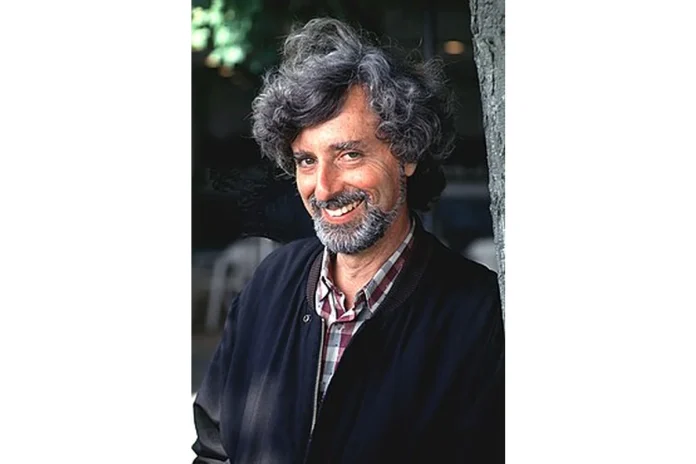
Philip Kaufman Bio
Philip Kaufman (born October 23, 1936) is an American film director and screenwriter whose career has spanned nearly five decades. Known for his independent, eclectic style, he has worked across genres including realism, horror, erotica, western, satire, and thriller. Often described as a maverick, iconoclast, and auteur, Kaufman has shaped a personal filmography marked by provocative subject matter and a strong sense of authorship.
Born in Chicago, Illinois, Kaufman studied history at the University of Chicago and briefly attended Harvard Law School before choosing filmmaking. He has directed fifteen feature films, earned a BAFTA Award, and received nominations for an Academy Award and a Primetime Emmy Award. His best-known works include The Right Stuff (1983), The Unbearable Lightness of Being (1988), Henry & June (1990), Rising Sun (1993), and Quills (2000).
Early Life and Background
Philip Kaufman was born in Chicago, Illinois, on October 23, 1936, the only son of Elizabeth Brandau, a housewife, and Nathan Kaufman, a produce businessman. He was the grandson of German Jewish immigrants and grew up in a household where movies became a defining passion of his youth. During his early years he often attended double features, fueling the love of cinema that would shape his future career.
Among his grammar school and high school friends was William Friedkin, who would also become a noted director. Kaufman went on to attend the University of Chicago, where he earned a degree in history. Following his undergraduate studies, he enrolled at Harvard Law School, where he spent a year before returning to Chicago to pursue a postgraduate degree, hoping to become a history professor.
Before finishing those graduate studies, Kaufman became involved in the counterculture movement and, in 1960, moved to San Francisco. He took various jobs, including working as a postal worker, and befriended a number of influential figures in the arts, including writer Henry Miller. He and his wife later traveled to Europe, where he taught English and mathematics and worked on a kibbutz in Israel, experiences that would later inform his artistic voice.
Path to Filmmaking
While living in Europe, Kaufman and his wife wandered into small movie theaters that showcased the work of experimental filmmakers such as John Cassavetes and Shirley Clarke. He has described this exposure as the start of something new, a turning point that inspired the European flavor of many of his later films. Returning to Chicago in 1962, he immersed himself in foreign cinema and set his sights on becoming a filmmaker.
In 1964, Kaufman made his directorial debut with Goldstein, co-written and co-directed with Benjamin Manaster. Inspired by a story from Martin Buber’s Tales of the Hasidim, the film was shot on location in Chicago with actors from The Second City comedy troupe. It won the Prix de la Nouvelle Critique at the 1964 Cannes Film Festival, with French director Jean Renoir calling it the best American film he had seen in twenty years. This early success established Kaufman as a distinctive new voice in American independent cinema.
Two years later, he directed Fearless Frank (1967), a comic-book counterculture fable starring Jon Voight in his film debut. Although the picture struggled to find a distributor and underperformed at the box office, it earned Kaufman a contract with Universal Studios’ Young Directors Program in 1969, opening the door to larger studio productions.
Philip Kaufman Career
Early Career (1964–1977)
After signing with Universal, Kaufman wrote and directed The Great Northfield Minnesota Raid (1972), a western starring Robert Duvall as Jesse James. The film drew praise for its research and for Kaufman’s amused, detached approach to the legend. He followed it with The White Dawn (1974), a documentary-style Arctic drama based on the novel by James Houston, featuring Warren Oates, Louis Gossett Jr., and Timothy Bottoms.
In 1975, Kaufman began work on The Outlaw Josey Wales, writing the screenplay and beginning direction before being fired amid artistic differences with star Clint Eastwood. The dismissal, complicated by a personal rivalry, led Eastwood to complete the film himself. Despite this setback, Kaufman’s early career laid the groundwork for his later breakthroughs in the late 1970s and 1980s.
Breakthrough (1978–1983)
Kaufman’s first major box-office success came with Invasion of the Body Snatchers (1978), a science-fiction remake relocated to San Francisco. Critic Pauline Kael called it possibly the best movie of its kind ever made, and the film cemented his reputation for reinvigorating established genres. He followed it with The Wanderers (1979), a Bronx-set coming-of-age story based on Richard Price’s novel, which became a cult favorite and introduced Ken Wahl in his debut.
In 1981, Kaufman contributed to the story of Raiders of the Lost Ark, creating the MacGuffin of the Ark of the Covenant alongside George Lucas’s original character concepts. He received story credit on the film, the first entry in the Indiana Jones franchise. Two years later, in 1983, he wrote and directed The Right Stuff, an adaptation of Tom Wolfe’s book about the original Mercury astronauts and test pilot Chuck Yeager. The film earned eight Academy Award nominations and won four, and it helped launch or elevate the careers of Ed Harris, Scott Glenn, Fred Ward, and Dennis Quaid.
Notable Works and Milestones
During the 1980s and 1990s, Kaufman consolidated his standing as an auteur with The Unbearable Lightness of Being (1988), Henry & June (1990), and Rising Sun (1993). The Unbearable Lightness of Being brought him a BAFTA Award for Best Adapted Screenplay and an Academy Award nomination for Best Adapted Screenplay, while Henry & June became the first film to receive an NC-17 rating from the MPAA. In 2000, he directed Quills, starring Geoffrey Rush, Joaquin Phoenix, Kate Winslet, and Michael Caine, completing a signature run of mature, literary, and provocative films.
Later Career (1988–2012)
After Quills, Kaufman directed Twisted (2003), a thriller starring Ashley Judd, Samuel L. Jackson, and Andy Garcia. Eight years later, in 2012, he returned to television with Hemingway & Gellhorn, an HBO biopic about Ernest Hemingway and Martha Gellhorn, starring Clive Owen and Nicole Kidman. The film earned fifteen Primetime Emmy Award nominations, including one for Kaufman for Outstanding Directing for a Miniseries, Movie, or Dramatic Special, marking his return to work after a long period caring for his ailing wife.
Philip Kaufman Award Nominations
Philip Kaufman has received several major award nominations across his career in directing and writing. He earned a nomination for the Academy Award for Best Adapted Screenplay for The Unbearable Lightness of Being (1988), and the same film led to additional recognition from the Writers Guild and Directors Guild. He was also nominated for the Primetime Emmy Award for Outstanding Directing for a Miniseries, Movie, or Dramatic Special for his work on Hemingway & Gellhorn (2012), a project that received a remarkable fifteen Primetime Emmy nominations in total.
Philip Kaufman Awards Won
Philip Kaufman won the BAFTA Award for Best Adapted Screenplay for The Unbearable Lightness of Being (1988), one of the most celebrated adaptations of his career. His debut film, Goldstein (1964), won the Prix de la Nouvelle Critique at the Cannes Film Festival, an early international honor that helped establish his reputation. Together these awards reflect a career marked by both critical respect abroad and recognition within the American film industry.
Philip Kaufman Family
Philip Kaufman married Rose Fisher in 1958 or 1959, after meeting her while both were undergraduates at the University of Chicago. Rose Kaufman was also a screenwriter and appeared in small roles in Invasion of the Body Snatchers and Henry & June. She co-wrote the screenplays for The Wanderers and Henry & June and died of cancer in 2009 at the age of 70.
The couple had one son, Peter Kaufman, born in March 1960. Peter became a producer and worked on Henry & June, Rising Sun, Quills, Twisted, and Hemingway & Gellhorn. He is married to Christine Pelosi, daughter of Paul and Nancy Pelosi, and the couple has a daughter, Isabella, born in 2009. Kaufman lives in San Francisco, where he also runs his production company, Walrus and Associates.
Personal Life
Kaufman has spent much of his adult life in San Francisco, the city where he settled in 1960 and which later featured prominently in Invasion of the Body Snatchers. His residence and production base remain in the San Francisco Bay Area, where he continues to be associated with a circle of writers, directors, and cultural figures. He has been described by critics as a filmmaker whose personal vision is consistently expressed across his body of work.