
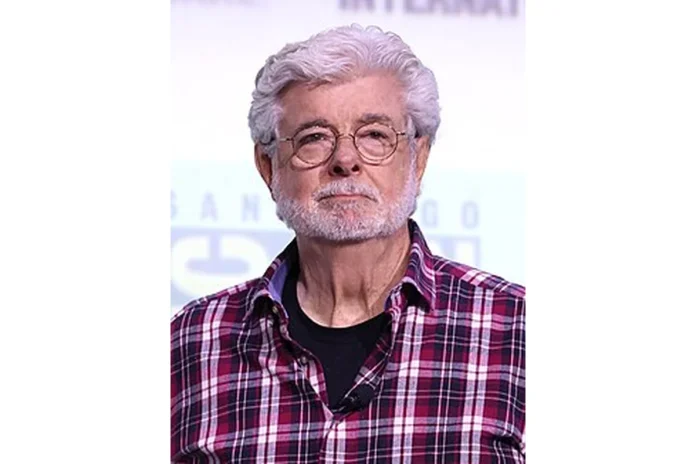
George Lucas Bio
George Walton Lucas Jr. (born May 14, 1944) is an American filmmaker, screenwriter, producer, and entrepreneur who created the Star Wars and Indiana Jones franchises. He founded Lucasfilm, Industrial Light & Magic, THX, and LucasArts, and served as chairman of Lucasfilm before selling the company to The Walt Disney Company in 2012. A central figure of the New Hollywood movement and a pioneer of the modern blockbuster, Lucas helped shape modern visual effects through Industrial Light & Magic and developed a long-running creative partnership with composer John Williams. Beyond film, he has directed significant philanthropic efforts in education and the arts.
Lucas resides in Marin County, California, with his wife, Mellody Hobson. He is widely regarded as one of the most influential filmmakers of the 20th century and remains active through foundations such as the George Lucas Educational Foundation and the forthcoming Lucas Museum of Narrative Art in Los Angeles.
Early Life and Background
George Walton Lucas Jr. was born on May 14, 1944, in Modesto, California, a small agricultural city in the Central Valley. He is the son of Dorothy Ellinore Lucas (née Bomberger) and George Walton Lucas Sr., and grew up alongside his siblings in a Methodist household. As a young man, Lucas was passionate about car racing and spent most of his high school years competing on the underground circuit at local fairgrounds. On June 12, 1962, just days before graduation, he was involved in a serious crash that damaged his lungs and ended his dream of becoming a professional racecar driver.
While recovering, Lucas turned toward filmmaking and enrolled at Modesto Junior College, where he studied anthropology, sociology, and literature and began shooting with an 8 mm camera. He discovered underground and avant-garde cinema through Canyon Cinema screenings and developed an eye for visual storytelling. At the recommendation of his childhood friend John Plummer, Lucas transferred to the University of Southern California School of Cinematic Arts, where he earned a bachelor of fine arts in film in 1967.
At USC, Lucas joined a tight circle of film students known as The Dirty Dozen and formed friendships with Steven Spielberg, Martin Scorsese, Walter Murch, and Caleb Deschanel. Influenced by courses taught by Lester Novros and Slavko Vorkapich, he developed a deep appreciation for the non-narrative elements of cinema, including color, light, movement, and rhythm.
Path to Director
Lucas began his filmmaking career in the mid-1960s with experimental short films and student work. His short Electronic Labyrinth: THX 1138 4EB won first prize at the 1967–68 National Student Film Festival and earned him a student scholarship from Warner Bros. He used the scholarship to observe the production of Francis Ford Coppola’s Finian’s Rainbow, an experience that led to a lasting mentorship. In 1969, Lucas co-founded the independent studio American Zoetrope with Coppola, hoping to create a freer environment for filmmakers outside the Hollywood system.
His first feature, THX 1138 (1971), was adapted from his student short but failed at the box office. He responded with American Graffiti (1973), a nostalgic look at early-1960s Modesto car culture. The film was both a critical and commercial success, earning five Academy Award nominations, including Best Director and Best Picture. Its profits gave Lucas the leverage to pursue his next idea, a space adventure inspired by Flash Gordon serials, samurai films, and classic mythology, that would become Star Wars.
George Lucas Career
Early Career (1965–1973)
During his time at USC and immediately afterward, Lucas produced a prolific series of student shorts and documentaries that established his skills in cinematography and editing. Working under Saul Bass and film editor Verna Fields for the United States Information Agency, he met his future wife, film editor Marcia Griffin. Lucas also worked as a camera operator on the Rolling Stones concert documentary Gimme Shelter.
His first two features, THX 1138 and American Graffiti, demonstrated his range and ambition. While THX 1138 struggled commercially, American Graffiti confirmed his talent for blending popular culture with rich character storytelling and set the stage for the monumental success of Star Wars.
Breakthrough (1977–1983)
Star Wars was released in 1977 and quickly became the highest-grossing film of all time, a record it held until 1982. The film won six Academy Awards and launched a sweeping cultural phenomenon. Lucas served as writer and director, and in an unusually far-sighted deal, retained control of licensing, merchandising, and sequel rights. Lucasfilm subsequently earned hundreds of millions of dollars from toys, games, and collectibles tied to the franchise.
Lucas acted as executive producer and story co-writer on the original sequels, The Empire Strikes Back (1980) and Return of the Jedi (1983), commissioning Irvin Kershner and Richard Marquand to direct. With Steven Spielberg, he co-created the Indiana Jones franchise, writing the story for Raiders of the Lost Ark (1981) and producing the film. He founded Industrial Light & Magic in 1975, Skywalker Sound, and THX in 1983, building an integrated ecosystem of production companies that influenced Hollywood for decades.
Return to Directing and the Prequels (1993–2005)
After a long hiatus from directing, Lucas returned with the Star Wars prequel trilogy. The Phantom Menace (1999), Attack of the Clones (2002), and Revenge of the Sith (2005) traced the fall of Anakin Skywalker and completed the nine-part saga Lucas had originally envisioned. Although critical reception was mixed, all three films were major box-office successes and relied heavily on digital production methods pioneered at Industrial Light & Magic.
During this period Lucas also expanded his philanthropic work, founding the George Lucas Educational Foundation in 1991 and supporting the creation of the federal E-Rate program to expand broadband access in schools and libraries.
Later Career and the Disney Era (2012–Present)
In 2012, Lucas sold Lucasfilm to The Walt Disney Company for a reported $4.05 billion and announced his retirement from producing large blockbusters, pledging to direct the majority of the proceeds to philanthropic causes. He retained a role as creative consultant on the sequel trilogy’s first film, The Force Awakens (2015), and wrote the animated film Strange Magic (2015).
Lucas has remained active in philanthropy, education, and the development of the Lucas Museum of Narrative Art, scheduled to open in Los Angeles in 2026. In May 2024, he received the Honorary Palme d’Or at the Cannes Film Festival, recognizing his enduring impact on cinema.
Notable Works and Milestones
Lucas’s signature works include Star Wars (1977), The Empire Strikes Back (1980), Raiders of the Lost Ark (1981), Return of the Jedi (1983), the prequel trilogy, and the founding of Industrial Light & Magic and THX. His decision to retain merchandising rights to Star Wars helped invent the modern franchise model, while Industrial Light & Magic set new standards for visual effects across the industry.
George Lucas Award Nominations
George Lucas has received four Academy Award nominations across his career. He was nominated for Best Directing and Best Writing for both American Graffiti (1973) and Star Wars (1977), although he never won a competitive Academy Award.
George Lucas Awards Won
Lucas has been honored with several of the most prestigious recognitions in film and the arts. He received the Irving G. Thalberg Memorial Award from the Academy in 1991, the American Film Institute Life Achievement Award in 2005, the National Medal of Arts in 2013, and the Kennedy Center Honors in 2015. In 2024, he was awarded the Honorary Palme d’Or at the Cannes Film Festival.
| Award | Year | Title |
|---|---|---|
| Inkpot Award | 1977 | — |
| Academy Awards | 1991 | Irving G. Thalberg Memorial Award |
| American Film Institute | 2005 | Life Achievement Award |
| National Medal of Arts | 2013 | — |
| Kennedy Center Honors | 2015 | — |
| Disney Legend | 2015 | — |
| Honorary Palme d’Or | 2024 | — |
George Lucas Family
George Walton Lucas Jr. is the son of Dorothy Ellinore Lucas (née Bomberger) and George Walton Lucas Sr., who owned a stationery store in Modesto, California. His father had hoped he would join the family business, but Lucas instead pursued filmmaking and promised to become a millionaire by age 30. He later became one of the most financially successful filmmakers in history.
Lucas has four children: Amanda Lucas, adopted with his first wife; Katie Lucas and Jett Lucas, both adopted after his divorce; and a daughter born via surrogate in August 2013 with his current wife, Mellody Hobson. Several of his children appeared in the Star Wars prequel trilogy.
Personal Life
Lucas married film editor Marcia Lou Griffin in 1969, and the couple divorced in 1983. In the 1980s, he was in a relationship with singer Linda Ronstadt. He began dating Mellody Hobson, president of Ariel Investments and chairwoman of Starbucks, in 2006, and the couple married on June 22, 2013, at Skywalker Ranch in Marin County, California.
A longtime collector of American illustrator Norman Rockwell, Lucas has described his religion as Buddhist Methodist. He resides in Marin County, California, and continues to support education, narrative art, and philanthropy through his foundations.