
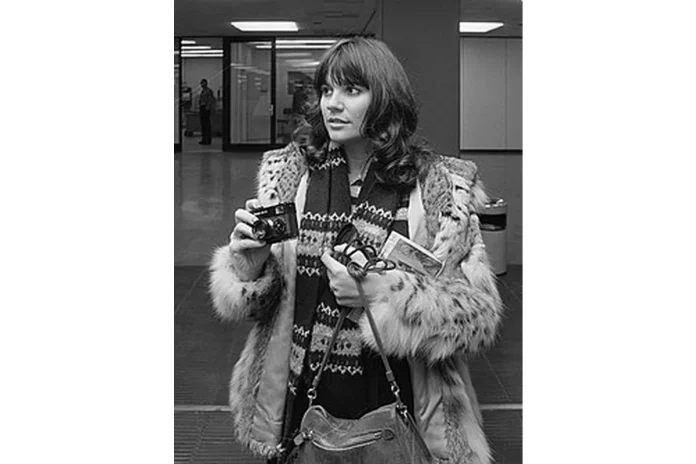
Linda Ronstadt Bio
Linda Maria Ronstadt, born on July 15, 1946, in Tucson, Arizona, is an American former singer and musician who helped redefine the role of women in rock and popular music. Over a career that began in the mid-1960s and stretched across rock, folk, pop, country, soul, jazz, and traditional Mexican music, she became one of the best-selling female recording artists in United States history, with worldwide sales of more than 100 million records. Her 11 Grammy Awards, multiple platinum certifications, and trailblazing genre crossings place her among the most influential vocalists of her generation.
Ronstadt retired in 2011 after a degenerative neurological condition left her unable to sing. The illness, originally identified as Parkinson’s disease, was later reclassified as progressive supranuclear palsy. She was inducted into the Rock and Roll Hall of Fame in 2014, received a Kennedy Center Honor in 2019, and was honored in 2022 when the Tucson Music Hall was renamed The Linda Ronstadt Music Hall in her hometown.
Early Life and Background
Linda Maria Ronstadt was born in Tucson, Arizona, on July 15, 1946, the third of four children of Gilbert Ronstadt, a prosperous machinery merchant who ran the F. Ronstadt Co., and Ruth Mary Ronstadt, a homemaker. Her father’s family had deep roots in the Arizona region, descending from German immigrants who had settled in Sonora, Mexico, in the 1840s before moving north to Tucson. Her mother’s family traced its roots to German, English, and Dutch ancestry, with her maternal grandfather, Lloyd Groff Copeman, holding nearly 700 patents and inventing early versions of the electric toaster and microwave oven.
Ronstadt grew up in a Roman Catholic household on a 10-acre family ranch, where she and her siblings Peter, Michael, and Gretchen absorbed a remarkably eclectic mix of music. Her father’s side of the family introduced her to traditional Mexican folk songs, mariachi, and ranchera music, while her mother filled the home with Gilbert and Sullivan and Broadway show tunes. The household sound also included classical and operatic works, which she credits for shaping her wide vocal range. At age 14, she formed a folk trio with her brother Peter and sister Gretchen, performing under names such as the Union City Ramblers and the Three Ronstadts at coffeehouses and fraternity houses around Tucson.
After a semester at the University of Arizona, Ronstadt decided in 1964 to leave college and move to Los Angeles to pursue music professionally. She arrived with little more than her guitar and an early repertoire rooted in the folk, country, bluegrass, and Mexican music she had grown up hearing at home.
Path to Music
Once in Los Angeles, Ronstadt linked up with her Tucson friend Bobby Kimmel and guitarist-songwriter Kenny Edwards, and the three were signed to Capitol Records in 1966 as the Stone Poneys. The folk-rock trio released three albums in a 15-month period and earned a top-20 Billboard Hot 100 single with Michael Nesmith’s Different Drum. Although the group soon dissolved, the exposure gave Ronstadt the experience and visibility she needed to launch a solo career.
Her 1969 solo debut, Hand Sown … Home Grown, has been called the first alternative country record by a female recording artist. She followed it with Silk Purse in 1970, recorded in Nashville with producer Elliot Mazer, which produced her first solo hit, Long Long Time, and her first Grammy nomination. Her early backing band in this period included members who would later form the pioneering country-rock group Swampwater, and a subsequent group of sidemen went on to form the Eagles, lending crucial momentum to Ronstadt’s growing reputation in California’s emerging country-rock scene.
By 1973, Ronstadt had signed with Asylum Records and begun working with producer Peter Asher, who would guide her through her most commercially triumphant years. Her 1973 release Don’t Cry Now sold 300,000 copies by the end of 1974, setting the stage for a breakthrough that would transform her into the first female arena-class rock star.
Linda Ronstadt Career
Early Career (1965-1974)
The years from the Stone Poneys through her first Asylum albums established Ronstadt as a singular interpreter of other people’s songs. Her early Capitol recordings, including Hand Sown … Home Grown and Silk Purse, earned critical respect and a first Grammy nomination for Best Contemporary Vocal Performance/Female, but commercial success on her own terms remained elusive. She toured relentlessly, opening for Neil Young on his Time Fades Away tour and appearing on national television with artists such as Johnny Cash, broadening an audience that would later turn her solo albums into major events.
The release of Heart Like a Wheel in 1974 changed everything. The album topped the Billboard 200, was certified double-platinum, and produced the number one single You’re No Good along with the country chart number one When Will I Be Loved. It also won Ronstadt her first Grammy Award, Best Country Vocal Performance/Female, for her rendition of Hank Williams’s I Can’t Help It (If I’m Still in Love with You). Rolling Stone put her on its cover in March 1975, the first of six Leibovitz-shot covers, and the album’s success cemented her reputation as the leading female rock artist of the era.
Breakthrough (1974-1983)
Ronstadt built on Heart Like a Wheel with a remarkable run of platinum albums, including Prisoner in Disguise (1975), Hasten Down the Wind (1976), and Simple Dreams (1977), the last of which sold more than 3.5 million copies in the United States in less than a year, a record for a female artist at the time. Simple Dreams generated the hit singles Blue Bayou, It’s So Easy, Tumbling Dice, and Poor Poor Pitiful Me, and made Ronstadt the first woman to place two songs simultaneously in the Billboard Hot 100 Top Ten. She followed with Living in the USA in 1978, which became the first album in music history to ship double-platinum in advance orders and reached number one on the Billboard chart.
By the end of the 1970s, she had become what Billboard called the highest-paid woman in rock, headlining arenas and stadiums across the United States, Europe, Australia, and Japan. In 1978 alone, she earned more than $12 million. Her 1979 Rolling Stone cover described her as Rock’s Venus, and a string of awards from Billboard, Cashbox, and Us Weekly reinforced her position as the top-selling female artist of the decade.
In 1980, Ronstadt shifted into musical theater, taking the lead in Joseph Papp’s New York Shakespeare Festival production of Gilbert and Sullivan’s The Pirates of Penzance, which moved to Broadway and ran from January 1981 to November 1982. The performance earned her a Tony Award nomination for Best Leading Actress in a Musical, and her role in the 1983 film version brought a Golden Globe nomination. In 1983, she partnered with conductor Nelson Riddle to record What’s New, a stately collection of Great American Songbook standards that spent 81 weeks on the Billboard album chart, peaked at number three, and was certified triple-platinum. The album’s success introduced the standards repertoire to a new generation and led to two follow-up records with Riddle, Lush Life (1984) and For Sentimental Reasons (1986).
Notable Works and Milestones
Among Ronstadt’s signature recordings are Heart Like a Wheel, Simple Dreams, Living in the USA, What’s New, and the all-Spanish Canciones de Mi Padre, the best-selling non-English-language album in United States history, certified double-platinum in 2001. She became the first woman to earn three consecutive platinum albums and ultimately accumulated eight consecutive platinum releases, while also being the first female artist to sell out arenas and stadiums on a national scale.
Linda Ronstadt Award Nominations
Across a career that touched rock, pop, country, jazz, and Latin music, Linda Maria Ronstadt received nominations for the Grammy Award, the Tony Award, the Golden Globe Award, the Academy Award for Best Original Song, and the Lo Nuestro Award, among others. Her Grammy nominations alone, 27 in total, span categories as varied as Best Rock Vocal Performance, Best Country Vocal Performance, Best Traditional Tropical Latin Album, and Best Musical Album for Children. She also earned a Tony Award nomination for her Broadway debut in The Pirates of Penzance, a Golden Globe nomination for the 1983 film version, and an Academy Award nomination for her duet Somewhere Out There, featured in the animated film An American Tail.
Linda Ronstadt Awards Won
Linda Maria Ronstadt has won 11 Grammy Awards, three American Music Awards, two Academy of Country Music awards, an Emmy Award, an ALMA Award, and a Grammy Award for Song of the Year for Somewhere Out There, recorded with James Ingram. She also received the Latin Grammy Lifetime Achievement Award in 2011, the Grammy Lifetime Achievement Award in 2016, induction into the Rock and Roll Hall of Fame in 2014, the National Medal of Arts and Humanities in 2014, and a Kennedy Center Honor in 2019. In 2019, she shared a Hollywood Walk of Fame star with Dolly Parton and Emmylou Harris for their work together as the trio Trio.
| Award | Wins | Year |
|---|---|---|
| Grammy Awards | 11 | Various (1975-2016) |
| American Music Awards | 3 | Various |
| Academy of Country Music Awards | 2 | Various |
| Emmy Award (Individual Performance in a Variety or Music Program) | 1 | 1988 |
| ALMA Award (Trailblazer Award) | 1 | 2008 |
| Latin Grammy Lifetime Achievement Award | 1 | 2011 |
| Grammy Lifetime Achievement Award | 1 | 2016 |
| Rock and Roll Hall of Fame Induction | 1 | 2014 |
| National Medal of Arts and Humanities | 1 | 2014 |
| Kennedy Center Honor | 1 | 2019 |
Linda Ronstadt Family
Linda Maria Ronstadt was born into a prominent Tucson family with deep Mexican and German roots. Her father, Gilbert Ronstadt, ran the F. Ronstadt Co., a machinery business, and her mother, Ruth Mary Copeman Ronstadt, was a homemaker. Her brother Peter Ronstadt served as chief of police of Tucson from 1981 to 1991, while her brother Michael and sister Gretchen were also important influences during her upbringing.
The Ronstadt family’s history in the American Southwest stretches back to her great-grandfather, the engineer Friedrich August Ronstadt, who immigrated from Hanover, Germany, in the 1840s and settled in Sonora, Mexico, before moving to Tucson. The family has been documented for its contributions to Arizona commerce, transportation, and music, and Linda’s grandfather Federico José María Ronstadt was honored in 1991 when Tucson’s central transit terminal was dedicated to him. In 2022, the Tucson Music Hall at the Tucson Convention Center was renamed The Linda Ronstadt Music Hall in her honor during the International Mariachi Conference.
Personal Life
Linda Maria Ronstadt has never married. In the early 1970s, she briefly dated fellow musician JD Souther, and beginning in the mid-1970s, her relationship with California Governor Jerry Brown, a Democratic presidential candidate, brought her private life into the public eye. From 1983, she dated comedian Jim Carrey for eight months, and from 1983 to 1988, she was engaged to Star Wars creator and director George Lucas.
In December 1990, she adopted an infant daughter, Mary Clementine Ronstadt, and in 1994, she adopted a baby boy, Carlos Ronstadt. After more than 30 years in Los Angeles, she relocated to San Francisco in the late 1980s, then moved back to Tucson in 1997 to raise her two children, before eventually returning to San Francisco while continuing to maintain her Tucson home. She describes herself as a spiritual atheist. In August 2013, she revealed a Parkinson’s disease diagnosis that left her unable to sing, and in late 2019, it was reported that her doctors had revised the diagnosis to progressive supranuclear palsy.