
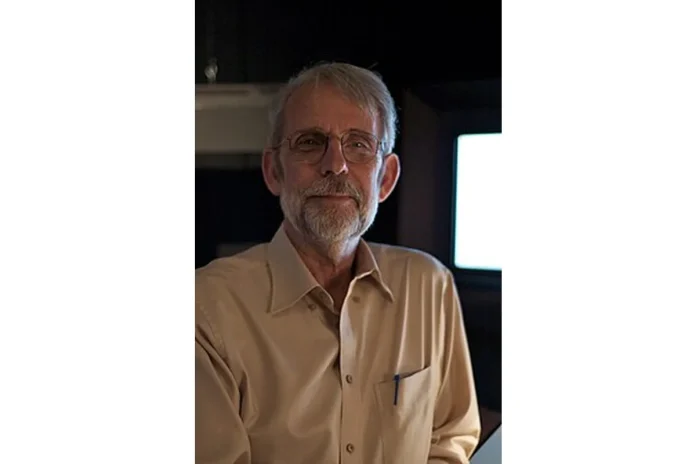
Walter Murch Bio
Walter Scott Murch (born July 12, 1943) is an American film editor, director, writer, and sound designer whose six-decade career has shaped the language of modern cinema. Renowned for his work on classics such as THX 1138, The Godfather trilogy, Apocalypse Now, and The English Patient, Murch has earned three Academy Awards from nine nominations. For Apocalypse Now, he became the first person credited as “Sound Designer,” establishing a job title now standard across the industry. He also directed Return to Oz in 1985 and authored the influential book In the Blink of an Eye.
Beyond his feature work, Murch is the subject of Michael Ondaatje’s The Conversations and remains a foundational figure in film editing and sound design. Critics Roger Ebert and David Thomson have both praised him as one of the most important craftspeople in the modern cinema. He continues to be honored with honorary degrees and lifetime achievement awards well into the 2020s.
Early Life and Background
Walter Scott Murch was born on July 12, 1943, in New York City, New York, the son of Katharine Scott and the Canadian-born painter Walter Tandy Murch (1907–1967). His maternal grandmother, Mary Elizabeth MacCallum Scott, was a Canadian physician and Christian medical missionary who helped establish the Green Memorial Hospital in Manipay, Sri Lanka. His paternal grandmother, Louise Tandy Murch, was a music teacher who became the subject of a 1975 documentary film.
As a boy, Murch began experimenting with sound recording, taping unusual noises and layering them into new combinations. This early fascination with audio would later define his professional contributions. He attended The Collegiate School, a private preparatory school in Manhattan, from 1949 to 1961. During the summer of 1961, he worked as a music librarian and production assistant at Riverside Church’s radio station WRVR, where he assisted with a twelve-hour folk music broadcast that featured the first radio performance of a young Bob Dylan.
Murch went on to attend Johns Hopkins University from 1961 to 1965, graduating Phi Beta Kappa in the liberal arts. During his junior year, he studied Romance Languages and the History of Art at Perugia in Italy and at the Sorbonne in France. While at Johns Hopkins, he met future collaborators Matthew Robbins, Caleb Deschanel, and Andrew Feenberg, with whom he staged a number of artistic happenings.
Path to Film Editor
In 1965, Murch and Robbins enrolled in the graduate program of the University of Southern California’s Department of Cinema, soon encouraging Deschanel to follow them. At USC, they met fellow students George Lucas, Hal Barwood, Robert Dalva, Willard Huyck, Don Glut, and John Milius, all of whom would go on to influential careers in Hollywood. It was here that Murch refined the editing and sound techniques that would later make him a sought-after collaborator.
Not long after film school, in 1969, Murch joined Francis Ford Coppola and George Lucas at American Zoetrope in San Francisco. He began his professional career with Coppola’s The Rain People in 1969. His transition into the broader film industry was rapid, and within a few years he had established himself as one of the most thoughtful post-production artists of his generation.
Murch married Muriel Ann “Aggie” Slater at Riverside Church, New York City, on August 6, 1965. Shortly after the wedding, the couple took a six-thousand-mile motorcycle trip zig-zagging across the United States and Canada. The couple settled in Bolinas, California, in 1972, where they have lived ever since.
Walter Murch Career
Early Career (1969–1974)
Murch started editing and mixing sound with Francis Ford Coppola’s The Rain People in 1969, marking his entry into professional filmmaking. He subsequently worked on George Lucas’s THX 1138 and American Graffiti, as well as Coppola’s The Godfather, all of which showcased his distinctive approach to picture editing. He then edited picture and mixed sound on Coppola’s The Conversation, a film that earned him an Academy Award nomination in sound in 1974.
Murch also mixed the sound for Coppola’s The Godfather Part II, released the same year as The Conversation. These early collaborations with Coppola and Lucas cemented his reputation as a meticulous collaborator and an innovator in post-production sound.
Breakthrough (1974–1990)
Murch’s breakthrough came with his work on Apocalypse Now, on which he served as picture editor and sound designer. For this film, he won his first Academy Award for sound mixing in 1979 and also received a nomination for picture editing. Apocalypse Now was also notable as the first film to credit anyone as Sound Designer, a designation Murch is widely credited with coining. He later served as editor and re-recording mixer on the extended Apocalypse Now Redux in 2001.
In 1985, Murch directed his only feature film, Return to Oz, which he co-wrote with Gill Dennis. After the film failed at the box office and drew criticism for its dark imagery, he chose not to direct another feature. In 1988, Murch was one of the editors on Philip Kaufman’s The Unbearable Lightness of Being, further demonstrating his range across European and American productions.
Murch is famously known for editing in a standing position, comparing the process to “conducting, brain surgery and short-order cooking.” When writing, however, he prefers to lie down in order to separate his editorial mindset from his creative one. His book In the Blink of an Eye (1995) describes many of his editing techniques, including “the rule of six,” a set of criteria he uses when making a cut.
Notable Works and Milestones
Walter Murch’s signature works include THX 1138, The Godfather, The Godfather Part II, The Godfather Part III, American Graffiti, The Conversation, Apocalypse Now, Ghost, and The English Patient. His three Academy Award wins remain unmatched by any other person for both sound mixing and film editing. He is also the only film editor to have received Academy Award nominations for films edited on four different systems.
Walter Murch Award Nominations
Walter Murch has received nine Academy Award nominations across his career, including six for picture editing and three for sound mixing. His nominations span landmark films such as The Conversation, Apocalypse Now, The English Patient, and Cold Mountain. Murch is the only person in Academy history to be nominated for both sound mixing and film editing.
Walter Murch Awards Won
Walter Murch has won three Academy Awards and received numerous other honors for his contributions to cinema. His first Oscar came for Best Sound Mixing on Apocalypse Now in 1979. He then won both Best Sound Mixing and Best Film Editing for The English Patient in 1997, making him the only person ever to win Academy Awards in both categories.
| Award | Work | Year |
|---|---|---|
| Academy Award for Best Sound Mixing | Apocalypse Now | 1979 |
| Academy Award for Best Sound Mixing | The English Patient | 1997 |
| Academy Award for Best Film Editing | The English Patient | 1997 |
Walter Murch Family
Walter Murch was born to Katharine Scott and the Canadian-born painter Walter Tandy Murch (1907–1967). His paternal grandmother, Louise Tandy Murch, was a music teacher featured in a 1975 documentary, while his maternal grandmother, Mary Elizabeth MacCallum Scott, was a Canadian physician and missionary who helped found the Green Memorial Hospital in Sri Lanka. These family influences helped shape his lifelong interest in art, music, and storytelling.
Personal Life
Walter Murch married Muriel Ann “Aggie” Slater at Riverside Church, New York City, on August 6, 1965. The couple has four children and has lived in Bolinas, California, since 1972. Outside of his film work, Murch has authored the book In the Blink of an Eye and published translations of short stories by the Italian writer Curzio Malaparte in 2012. He continues to receive honorary degrees from major institutions, including an Honorary Degree from the AFI in August 2025.