
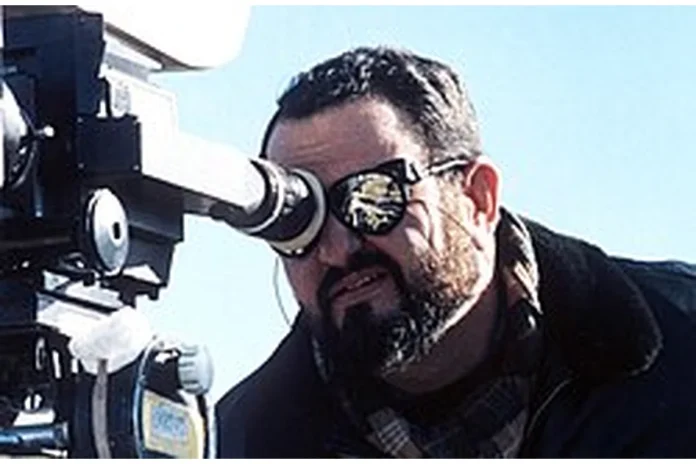
John Milius Bio
John Frederick Milius, born on 11 April 1944 in St. Louis, Missouri, is an American film director, screenwriter, and producer widely regarded as a founding voice of the New Hollywood era. He first gained attention in the early 1970s for writing the screenplays for The Life and Times of Judge Roy Bean (1972) and Jeremiah Johnson (1972), and he made his directorial debut with the gangster film Dillinger (1973). Over the following decade he built a reputation for muscular, mythic filmmaking, directing The Wind and the Lion (1975), Big Wednesday (1978), Conan the Barbarian (1982), and Red Dawn (1984), while co-writing Apocalypse Now (1979) with Francis Ford Coppola. Beyond his feature work, Milius helped create the acclaimed BBC/HBO series Rome and later co-created a documentary about his own life titled Milius (2013).
Early Life and Background
John Frederick Milius was born on 11 April 1944 in St. Louis, Missouri, the youngest of three children of Elizabeth Marie Roe and William Styx Milius, a shoe manufacturer whose family owned the Milius Shoe Company. When Milius was seven years old, his father sold the company and relocated the family to Bel Air, California, where the young John became an enthusiastic surfer. By his early teens his parents had become concerned enough about his behavior to send him to the Lowell Whiteman School, a small private school in the mountains of Steamboat Springs, Colorado, that he later described as a turning point in his youth.
At the Lowell Whiteman School, Milius discovered a love of reading and began writing short stories in the styles of authors he admired, including Ernest Hemingway, Herman Melville, Joseph Conrad, and Jack Kerouac. He also became fascinated with Japanese culture, studying judo, kendo, and Japanese painting while reading widely about Asian history and philosophy. Surfing and Japanese tradition became lifelong reference points for his artistic voice, and he would later describe himself in interviews as an American samurai shaped by the oral storytelling tradition of California surfers.
In his late teens, Milius attempted to enlist in the Marine Corps during the Vietnam War but was rejected because of a chronic, sometimes disabling case of asthma. He later called that rejection one of the defining disappointments of his life and said it pushed him toward writing war stories instead of serving in one. In 1962, a chance encounter with a weeklong Akira Kurosawa retrospective at a movie theatre in Hawaii ignited his interest in filmmaking, leading him to enroll at the University of Southern California School of Cinema-Television, where he would meet a generation of future directors.
Path to Director
At the University of Southern California School of Cinema-Television, Milius studied alongside a remarkable group of classmates that included George Lucas, Walter Murch, Basil Poledouris, Randal Kleiser, and Donald F. Glut. His teacher, Irwin Blacker, drilled him in the formal structure of screenplay writing and encouraged a free, expressive approach to storytelling. Milius’s student short films, including Marcello, I’m So Bored (1967), won best animation at the National Student Film Festival and drew praise from New York Times critic Vincent Canby, helping him decide that a career behind the camera was possible.
After graduating, Milius worked briefly in the story department of American International Pictures and completed early scripts such as Los Gringos (1968) and The Last Resort (1969). A 1968 Time magazine profile that mentioned him alongside George Lucas and Martin Scorsese brought him to the attention of agent Mike Medavoy, who began representing him and quickly secured paying assignments. Milius wrote Jeremiah Johnson for Warner Bros., selling it in 1970 for $5,000 with escalators that eventually paid him $90,000, and followed with scripts for The Life and Times of Judge Roy Bean and uncredited work on the first Dirty Harry film (1971).
Having established himself as one of the most colorful and sought-after screenwriters in Hollywood, Milius was ready to move into directing. American International Pictures offered him the chance to write and direct a gangster film in exchange for a reduced fee, and he agreed. The result was Dillinger (1973), the picture that launched his directing career and helped establish him as part of the so-called movie brats generation alongside Francis Ford Coppola, George Lucas, Martin Scorsese, and Terrence Malick.
John Milius Career
Early Career (1966-1972)
John Milius’s first completed script was the unproduced Western Los Gringos (1968), followed by The Last Resort (1969), neither of which reached the screen but both of which gave him professional momentum. His first produced credit came with co-writing the action drama The Devil’s 8 (1968), and he soon landed assignments for Warner Bros. and First Artists that would shape his career, including Jeremiah Johnson and The Life and Times of Judge Roy Bean. He also contributed an uncredited rewrite to the enormously successful Dirty Harry (1971) and wrote the first draft of its sequel, Magnum Force (1973), establishing his reputation for tough, politically charged genre material.
Working alongside classmates such as George Lucas, Milius became a recognizable figure in the new wave of young Hollywood filmmakers profiled in the late 1960s and early 1970s. He grew close to Lucas, Francis Ford Coppola, and Steven Spielberg, a circle Steven Spielberg would later describe as the New Hollywood and call Milius their Scoutmaster. By the time his directorial debut Dillinger opened in 1973, Milius was regarded as one of the most original writer-directors of his generation.
Breakthrough (1973-1984)
John Milius made his directorial debut with Dillinger (1973), a tightly crafted gangster picture starring Warren Oates as the Depression-era bank robber John Dillinger. He followed it with the historical adventure The Wind and the Lion (1975), starring Sean Connery and Candice Bergen, which he has called his first real film. His next directorial effort, Big Wednesday (1978), was a personal, autobiographical surf drama that became a cult favorite despite a difficult theatrical run.
Milius’s most celebrated work as a writer during this period was the screenplay for Apocalypse Now (1979), co-written with Francis Ford Coppola and adapted from Joseph Conrad’s Heart of Darkness. The film earned Milius and Coppola an Academy Award nomination for Best Adapted Screenplay, as well as a Writers Guild of America Award nomination, cementing his standing as a leading screenwriter of the era. He later cemented his directing reputation with Conan the Barbarian (1982), a sword-and-sorcery hit that turned Arnold Schwarzenegger into a global star and earned roughly $39.5 million at the United States box office.
In 1984, Milius wrote and directed Red Dawn, a controversial action film about a Soviet invasion of the United States that became the 19th highest-grossing film of its year in the United States, taking in about $38.4 million domestically. The film drew both praise and criticism for what some called its militaristic tone, though Milius always described it as an anti-war statement. Together with Conan the Barbarian, Red Dawn cemented Milius’s image as a director of bold, large-canvas genre films.
Notable Works and Milestones
Beyond Conan the Barbarian and Red Dawn, Milius is remembered for co-writing Apocalypse Now and for his run of early 1970s scripts, including Jeremiah Johnson, The Life and Times of Judge Roy Bean, and his uncredited work on Dirty Harry (1971) and Magnum Force (1973). He also wrote memorable dialogue for the USS Indianapolis monologue in Jaws (1975) and later suggested the framing scenes at a Normandy cemetery for Saving Private Ryan (1998). In television, he co-created the BBC/HBO series Rome, which won a Primetime Emmy Award, and he directed the cable films Motorcycle Gang (1994) and Rough Riders (1997), the latter about Theodore Roosevelt and the Rough Riders.
John Milius Award Nominations
John Milius has received major industry nominations for his screenwriting, most notably for his work on Apocalypse Now. He and Francis Ford Coppola were nominated for the Academy Award for Best Adapted Screenplay for Apocalypse Now in 1980, and they were also nominated by the Writers Guild of America for the Best Drama Written Directly for the Screen. These nominations remain among the most prominent recognition of his long career as a screenwriter.
John Milius Awards Won
John Milius has collected a select group of honors for his writing and filmmaking. In 2007, he received the Austin Film Festival’s Distinguished Screenwriter Award, using his acceptance speech to single out The Wind and the Lion, Big Wednesday, and Conan the Barbarian as his personal favorites among his own films. His television work on the BBC/HBO series Rome contributed to a Primetime Emmy Award win for the show, and his screenwriting on Jeremiah Johnson (1972) and Geronimo: An American Legend (1993) earned him Bronze Wrangler awards from the National Cowboy and Western Heritage Museum for Theatrical Motion Picture.
John Milius Family
John Milius is the son of Elizabeth Marie Roe and William Styx Milius, the latter a shoe manufacturer who once owned the Milius Shoe Company founded by his own father, George W. Milius, in 1923. When Milius was a child, his father sold the company and moved the family from St. Louis to Bel Air, California. Milius has credited his parents with introducing him to the outdoors and to traditional American values, themes that would later run through many of his films.
Personal Life
John Milius has been married three times. His first marriage was to Renee Fabri from 1967 to 1978, and the couple had two children. He then married actress Celia Kaye in 1978, with whom he has one child, and he has been married to Elan Oberon since 1992. A passionate surfer for much of his life, Milius gave up the sport when he turned fifty, citing the physical toll of the waves. In 2010 he suffered a stroke that briefly left him unable to speak or move, but he eventually recovered. As of 2025 he has been publicly battling terminal pancreatic cancer.