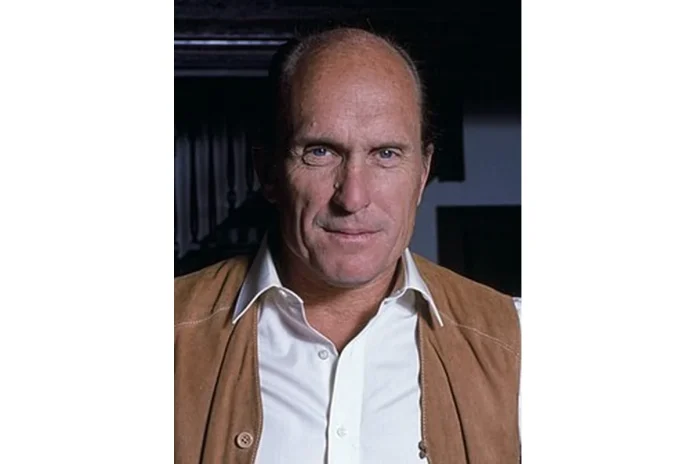
Robert Duvall Bio
Robert Selden Duvall was an American actor, film director, and producer whose career on stage and screen spanned seven decades. Widely regarded as one of the greatest actors of his generation, he was praised for his chameleon-like ability to disappear into characters and was once called the American Olivier by New York Times critic Vincent Canby in 1980. His body of work included defining performances in landmark films of the late twentieth century and beyond, earning him an Academy Award, a BAFTA Award, four Golden Globe Awards, two Primetime Emmy Awards, and a Screen Actors Guild Award.
Early Life and Background
Robert Selden Duvall was born on January 5, 1931, in San Diego, California, the second of three sons of Mildred Virginia Duvall, an amateur actress, and Rear Admiral William Howard Duvall of the United States Navy. His father was descended from early Maryland settler Mareen Duvall, and the family followed the Christian Science religion, though Duvall later said he did not attend church. He spent much of his childhood in Annapolis, Maryland, where his father was stationed at the United States Naval Academy, attending Severn School in Severna Park.
Duvall later transferred to The Principia in St. Louis, Missouri, before going on to graduate with a Bachelor of Arts degree in drama from Principia College in Elsah, Illinois, in 1953. His father had expected him to attend the United States Naval Academy, but Duvall recalled that he was terrible at everything but acting and could barely get through school. Instead of the Navy, he enlisted in the United States Army after the Korean War, serving from August 1953 to August 1954 and leaving with the rank of private first class.
Path to Acting
After leaving the Army, Duvall pursued formal training at the Neighborhood Playhouse School of the Theatre in New York City, where he studied under Sanford Meisner on the G.I. Bill during the winter of 1955. His classmates at the Playhouse included Gene Hackman and James Caan, and he shared a New York apartment with Dustin Hoffman while they worked odd jobs to support themselves. To make ends meet, he clerked at Macy’s, sorted mail, and drove a truck.
He began his professional acting career in the 1952 season at the Gateway Playhouse, an Equity summer theater on Long Island, debuting in an adaptation of The Little Prince. After one year away for military service, he returned to Gateway for additional summer seasons, appearing in a wide range of plays including Picnic, Bus Stop, and Witness for the Prosecution. His performance as Eddie Carbone in Arthur Miller’s A View from the Bridge, directed by Ulu Grosbard, became a turning point that helped him transition from regional theater to television and film.
Robert Duvall Career
Early Career (1952–1969)
Duvall’s film debut came in 1962, when he was cast as the reclusive Boo Radley in To Kill a Mockingbird on the recommendation of playwright Horton Foote, whom he had met at the Neighborhood Playhouse. Throughout the 1960s, he built a reputation as a dependable character actor in midsized and supporting parts, including roles in Captain Newman, M.D. (1963), Bullitt (1968), and True Grit (1969), where his gunfight with John Wayne’s Rooster Cogburn became a memorable highlight.
He also worked steadily on television during this period, appearing as a guest actor on shows such as The Twilight Zone, The Outer Limits, Combat!, The Fugitive, and The Wild Wild West. In 1965, his off-Broadway performance as Eddie Carbone in A View from the Bridge won him an Obie Award, and in 1966 he made his Broadway debut as Harry Roat Jr. in Frederick Knott’s Wait Until Dark.
Breakthrough (1970–1989)
Duvall became a major presence in American cinema during the 1970s, earning widespread attention for his portrayal of the malevolent Major Frank Burns in M*A*S*H (1970) and the title role in THX 1138 (1971). His first major critical success came with the role of Tom Hagen in The Godfather (1972) and The Godfather Part II (1974), the first film earning him an Academy Award nomination for Best Supporting Actor. He also played the iconic Lieutenant Colonel Kilgore in Apocalypse Now (1979), a performance that brought him a BAFTA Award and Golden Globe Award, along with another Oscar nomination for Best Supporting Actor.
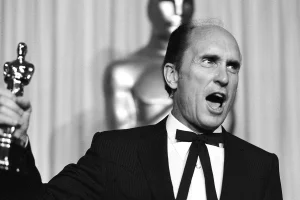
In 1983, Duvall won the Academy Award for Best Actor for Tender Mercies, in which he portrayed an alcoholic former country music star named Mac Sledge. He insisted on doing his own singing for the role, and his performance was widely praised for its quiet power and emotional honesty. Other notable films of the decade included The Natural (1984) and Colors (1988), and in 1989 he took on the role he considered his personal favorite, Captain Augustus Gus McCrae in the CBS miniseries Lonesome Dove, which earned him a Golden Globe Award and an Emmy nomination.
Notable Works and Milestones
Duvall’s signature works include The Godfather, Apocalypse Now, Tender Mercies, and Lonesome Dove, the last of which he regarded as his favorite role. He earned an Academy Award for Tender Mercies in 1983, becoming the oldest Best Actor winner of his era. His delivery of the line I love the smell of napalm in the morning from Apocalypse Now became one of the most quoted moments in American cinema.
Robert Duvall Award Nominations
Robert Duvall received a BAFTA Award nomination for Best Actor across his career, along with multiple Academy Award nominations including Best Supporting Actor for The Godfather (1972) and Apocalypse Now (1979), Best Actor for The Great Santini (1979), Best Actor for The Apostle (1997), Best Supporting Actor for A Civil Action (1998), and Best Supporting Actor for The Judge (2014). He was also nominated for Primetime Emmy Awards for Lonesome Dove (1989), Stalin (1992), and The Man Who Captured Eichmann (1996), as well as for Golden Globe and Screen Actors Guild recognition for The Judge.
Robert Duvall Awards Won
Duvall won the Academy Award for Best Actor for Tender Mercies (1983), along with a BAFTA Award, four Golden Globe Awards, two Primetime Emmy Awards, and a Screen Actors Guild Award. He also received the National Medal of Arts from President George W. Bush at the White House in 2005 and earned a star on the St. Louis Walk of Fame.
| Award | Wins | Year |
|---|---|---|
| Academy Award for Best Actor | 1 | 1983 |
| BAFTA Award | 1 | — |
| Golden Globe Award | 4 | — |
| Primetime Emmy Award | 2 | — |
| Screen Actors Guild Award | 1 | — |
| National Medal of Arts | 1 | 2005 |
Robert Duvall Family
Robert Duvall was the son of Rear Admiral William Howard Duvall of the United States Navy and Mildred Virginia Duvall, an amateur actress. He grew up alongside an older brother, William Jr., and a younger brother, John, who later became an entertainment lawyer. Through his second marriage to Gail Youngs, he was briefly the brother-in-law of actors John Savage, Robin Young, and Jim Youngs.
Personal Life
Duvall was married four times and did not have any children. He met his first wife, Barbara Benjamin, a former announcer and dancer on The Jackie Gleason Show, during the filming of To Kill a Mockingbird, and they were married from 1964 to 1975. His second marriage was to Gail Youngs from 1982 to 1986, and his third was to dancer Sharon Brophy from 1991 to 1995. In 2005 he married his fourth wife, Luciana Pedraza, an Argentine whom he had met in Argentina in 1997, and the couple shared a love of tango and trained together in Brazilian jiu-jitsu.