
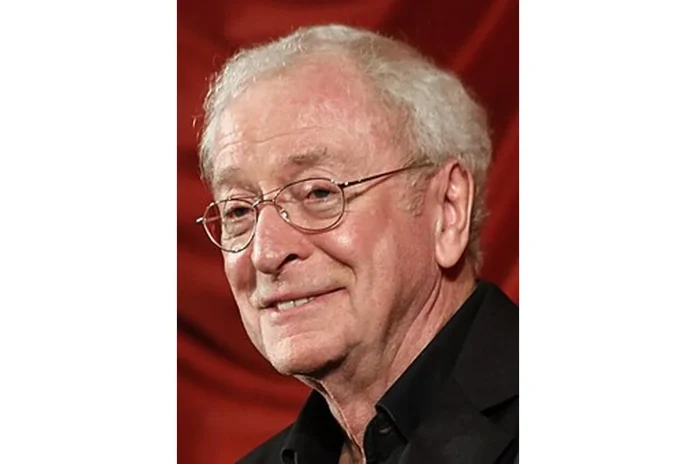
Michael Caine Bio
Sir Michael Caine (born Maurice Joseph Micklewhite; 14 March 1933) is an English retired actor known for his distinctive Cockney accent and a career spanning eight decades. He has appeared in more than 130 films, including Zulu, Alfie, The Italian Job, Get Carter, Hannah and Her Sisters, The Cider House Rules, Interstellar, and the Batman trilogy. Knighted in 2000 for services to cinema, he has earned two Academy Awards and multiple BAFTA and Golden Globes. Renowned for his versatility and longevity, he publicly retired from acting in 2023. He has been married twice and has two daughters, Dominique and Natasha.
Early Life and Background
Michael Caine was born Maurice Joseph Micklewhite at St Olave’s Hospital in the Rotherhithe district of London on 14 March 1933, the son of cook and charwoman Ellen Frances Marie (née Burchell) and a fish market porter also called Maurice Joseph Micklewhite. His father was from a Catholic Irish Traveller family background. Caine was raised in his mother’s Protestant religion. He had a younger brother, Stanley, who also became an actor, and an older maternal half-brother named David Burchell. He grew up in London’s Southwark district. During the Second World War, he was evacuated 100 miles to North Runcton, Norfolk, where he made his acting debut at the village school and had a pet horse called Lottie.
Path to Acting
After the war, Caine’s family was rehoused by the council in Marshall Gardens in London’s Elephant and Castle area, where they lived in a prefabricated house made in Canada as much of London’s housing stock had been destroyed during the Blitz. At the age of ten, Caine acted in a school play as the father of the ugly sisters in Cinderella. His trousers’ zipper was undone, prompting the audience to laugh, which inspired him to pursue an acting career. In 1944, he passed his eleven-plus examination, winning a scholarship to Hackney Downs School. After a year there, he moved to Wilson’s School in Camberwell, which he left at age 16 after gaining School Certificates in six subjects. He then worked briefly as a filing clerk and messenger for a film company in Victoria, London and film producer Jay Lewis on Wardour Street.
Michael Caine Career
Early Career (1950–1963)
Caine’s film debut was an uncredited walk-on role in Morning Departure (1950). Adopting the stage name Michael Scott, in July 1953 he was cast as the drunkard Hindley in the Westminster Repertory Company’s production of Wuthering Heights. He moved to the Lowestoft Repertory Company in Suffolk for a year when he was 21, where he met his first wife, Patricia Haines. When his career took him to London in 1954, his agent informed him that there was already a Michael Scott performing as an actor in London, so he had to come up with a new name. Speaking to his agent from a telephone booth in Leicester Square, London, he looked around for inspiration, noted that The Caine Mutiny was being shown at the Odeon Cinema, and decided to change his name to Michael Caine.
Breakthrough (1964–1975)
Caine’s breakthrough came when he was cast as a snobbish, upper-class officer in Zulu (1964), a film produced by his former colleague Stanley Baker. Though he tested poorly, the director Cy Endfield gave him the part that would make him a film star. Caine’s roles as effete-seeming aristocrats were to contrast with his next projects, in which he was to become notable for using a regional accent. Zulu was followed by two of Caine’s best-known roles: the rough-edged petty-crook-turned-spy Harry Palmer in The Ipcress File (1965) and the titular womanising young Cockney in Alfie (1966). In a 2016 interview Caine cited Alfie as his favourite film of his career, saying, “it made me a star in America as well, and it was my first nomination for an Academy Award”.
Notable Works and Milestones
Caine starred in the 1969 comedy caper film The Italian Job as Charlie Crooker, the leader of a Cockney criminal gang released from prison with the intention of doing a “big job” in Italy to steal gold bullion from an armoured security truck. One of the most celebrated roles of his career, in a 2002 poll his line “You’re only supposed to blow the bloody doors off!” was voted the second-funniest line in film. After working on The Italian Job with Noël Coward, and a role as RAF fighter pilot squadron leader Canfield in the all-star cast of Battle of Britain (both 1969), Caine played the lead in Get Carter (1971), a British gangster film. Caine continued with successes including Sleuth (1972) opposite Laurence Olivier, and John Huston’s The Man Who Would Be King (1975) co-starring Sean Connery, which received widespread acclaim.
Michael Caine Award Nominations
Throughout his career, Michael Caine has received numerous award nominations, including six Academy Award nominations for acting. He has been recognized for his versatility across different decades, earning nominations for performances that showcased his range from working-class Cockney characters to complex dramatic roles.
Michael Caine Awards Won
Michael Caine has earned two Academy Awards for Best Supporting Actor for his roles as Elliot in Woody Allen’s dramedy Hannah and Her Sisters (1986), and as Dr. Wilbur Larch in Lasse Hallström’s drama The Cider House Rules (1999). His other Oscar-nominated film roles were in Alfie (1966), Sleuth (1972), Educating Rita (1983), and The Quiet American (2002)—all four of which were for Best Actor. In 2000, he received a BAFTA Fellowship Award and was knighted by Queen Elizabeth II for his contribution to cinema. Caine was appointed as Commander of the Order of the British Empire (CBE) in the 1992 Birthday Honours
| Award | Wins | Year |
|---|---|---|
| Academy Awards | Best Supporting Actor | 1987 |
| Academy Awards | Best Supporting Actor | 2001 |
Michael Caine Family
Michael Caine was married to actress Patricia Haines from 1954 to 1958. They had a daughter, Dominique (born 1957). He has been married to actress and model Shakira Baksh since 8 January 1973. They met after Caine saw her in a Maxwell House coffee commercial and a friend gave him her telephone number. He called her every day for ten days until she finally agreed to meet him. They have a daughter, Natasha Haleema (born 1973). Baksh is a Muslim while Caine is a Christian. He reflected in 2009, “My wife is a Muslim and she does Muslim stuff; I’m a Christian and I do Christian stuff, and no questions ever come up. The media view of Muslims is different from mine, which is very benign and peaceful”.
Personal Life
As of 2023, Caine divides his time between residences in Chelsea Harbour and Wimbledon, London. He previously lived in Leatherhead, Surrey, in a house with a theatre which cost him £100,000 to build. He was patron to the Leatherhead Drama Festival. He has also lived in North Stoke, Oxfordshire; Clewer, Berkshire and Lowestoft, Suffolk. Caine owns a flat at the Apogee in Miami Beach, Florida. He still keeps a small flat near where he grew up in London. In July 2016, Caine changed his name by deed poll to his long-time stage name to simplify security checks at airports, stating that because the security guard often recognised him but was unaware of his real name, it would waste a considerable amount of his time as he tried to prove that he and “Maurice Joseph Micklewhite” were the same person.