
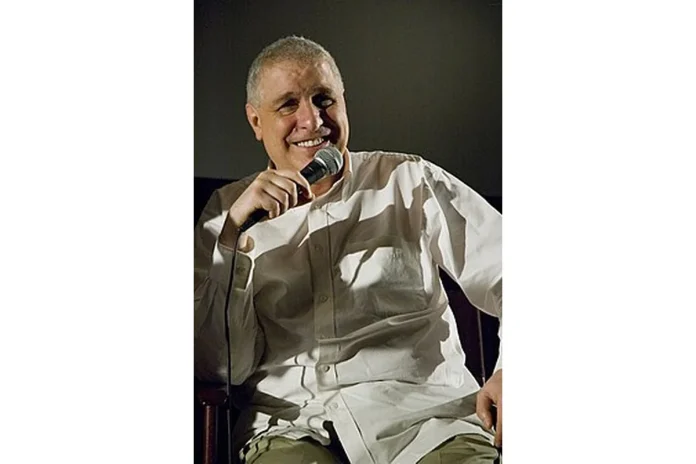
Errol Morris Bio
Errol Mark Morris (born February 5, 1948) is an American documentary filmmaker and film director whose work reshaped the possibilities of non-fiction cinema. He is widely known for interview-driven narratives that interrogate how people remember, explain, and sometimes distort the truth, and for inventing the Interrotron, a camera device that allows a subject and an interviewer to make eye contact through the lens at the same time. His most celebrated films include Gates of Heaven (1978), The Thin Blue Line (1988), Fast, Cheap & Out of Control (1997), and The Fog of War (2003), the last of which won the Academy Award for Best Documentary Feature. Across more than four decades, Morris has blended investigative journalism, psychological portraiture, and formal experimentation, leaving a deep mark on both documentary storytelling and television advertising.
Early Life and Background
Errol Mark Morris was born on February 5, 1948, in Hewlett, New York, into a Jewish family. His father died when he was two, and he was raised by his mother, a piano teacher, alongside an older brother named Noel, who later became a computer programmer. As a child, Morris was treated for strabismus, but he refused to wear the prescribed eye patch; the resulting limited sight in one eye gave him a lifelong lack of normal stereoscopic vision, a condition that later shaped how he thought about perception and point of view.
During his high school years, Morris attended The Putney School, a boarding school in Vermont. He became a serious cellist and spent a summer in France studying music under the acclaimed Nadia Boulanger, who also taught his future collaborator Philip Glass. Classmates remembered him as a reader of the Oz books, an avid television watcher, and a regular at Saturday matinee horror pictures such as This Island Earth and Creature from the Black Lagoon.
Morris went on to attend the University of Wisconsin–Madison, graduating in 1969 with a Bachelor of Arts in history. Before turning to film, he worked briefly as a cable-television salesman and as a term-paper writer, while also trying to talk his way into graduate school by showing up uninvited at admissions offices.
Path to Documentary Filmmaking
After college, Morris talked his way into Princeton University, where he studied the history of science and concentrated on the history of physics. His time there was short, marked by a difficult relationship with his adviser Thomas Kuhn, and he left in 1972. He enrolled next as a doctoral student in philosophy at the University of California, Berkeley, but once again felt mismatched with the program and eventually departed.
Following his years in academia, Morris became a regular at the Pacific Film Archive in Berkeley, where he immersed himself in film noir screenings. Through the archive’s director Tom Luddy, he met the German filmmaker Werner Herzog, who became a close friend and ally. In 1975, Morris traveled to Plainfield, Wisconsin, to interview the convicted murderer Ed Gein, and he and Herzog made plans to secretly open the grave of Gein’s mother. While Herzog arrived on schedule, Morris had second thoughts, abandoned the plan, and spent nearly a year in Plainfield conducting hundreds of hours of interviews that ultimately fed into his later work.
With only two thousand dollars from Herzog, Morris made his way to Vernon, Florida, and then to Napa Valley, where a headline about 450 dead pets being shipped for burial inspired the film that would become his first feature. That film, Gates of Heaven, premiered in 1978 and immediately established Morris as a singular new voice in documentary filmmaking.
Errol Morris Career
Early Career (1978–1987)
Gates of Heaven, released in 1978, brought Morris early attention and a passionate champion in the critic Roger Ebert. The film was given a limited theatrical release in the spring of 1981. Morris followed it with Vernon, Florida, a return visit to the town he had first explored for the unfinished Nub City project; the film premiered at the 1981 New York Film Festival and was praised by Newsweek as a film as odd and mysterious as its subjects. Both early features suffered from poor distribution but won a devoted following among critics.
In 1984, Morris married Julia Sheehan, whom he had met in Wisconsin while researching Ed Gein and other serial killers. During this period, he also worked on scripts that never reached the screen, including a story about the Pardue brothers, Missouri bank robbers, for which he hoped to cast Tom Waits and Mickey Rourke, as well as ill-fated Stephen King adaptations.
Breakthrough (1988–2003)
The Thin Blue Line (1988) marked Morris’s breakthrough. Built around the case of Randall Dale Adams, who was serving a life sentence for the 1976 murder of a Dallas police officer, the film used unedited interviews to expose contradictions in the prosecution’s case. After Morris’s tapes were entered into Adams’s 1986 habeas corpus hearing, David Harris effectively confessed to the killing, and Adams was eventually found innocent. The Thin Blue Line placed fifth on a Sight & Sound poll of the greatest documentaries ever made and won documentary of the year honors from both the New York Film Critics Circle and the National Society of Film Critics. Its non-fiction classification, however, kept it out of the Academy Award race.
Morris continued to expand his range with A Brief History of Time (1991), a portrait of physicist Stephen Hawking commissioned after Steven Spielberg suggested him for the project. He then directed Fast, Cheap & Out of Control (1997), a four-strand meditation on obsession and control that interweaves the stories of an animal trainer, a topiary gardener, a robot scientist, and a naked mole-rat specialist. In 2002, Morris directed a short film for the 75th Academy Awards and was nominated for an Emmy, and he returned to a similar format for the 79th Academy Awards in 2007.
The decade closed with his most celebrated achievement. The Fog of War: Eleven Lessons from the Life of Robert S. McNamara (2003) examined the career of former U.S. Secretary of Defense Robert S. McNamara and won the Academy Award for Best Documentary Feature. The film used re-enactments extensively, helping to rehabilitate a technique many had considered inappropriate for documentaries.
Notable Works and Milestones
Morris’s signature works, including The Thin Blue Line, Fast, Cheap & Out of Control, and The Fog of War, share a restless curiosity about memory, evidence, and the reliability of testimony. His films are also milestones in the legitimization of re-enactment, stylized lighting, and original musical scores within non-fiction filmmaking, practices embraced by younger generations of documentary directors. In 2013, he noted that he had made roughly one thousand television commercials, a parallel career that has included campaigns for Apple Computer, Nike, Adidas, Levi’s, PBS, and Chipotle.
Errol Morris Award Nominations
Errol Morris has received recognition across his career for both feature documentaries and shorter works. Among his notable nominations is an Emmy nod for a short film he made for the 75th Academy Awards ceremony in 2002, which featured interviews with figures ranging from Laura Bush to Iggy Pop.
Errol Morris Awards Won
Morris’s most prestigious win came in 2003, when The Fog of War: Eleven Lessons from the Life of Robert S. McNamara earned the Academy Award for Best Documentary Feature. Earlier, The Thin Blue Line had been named documentary of the year by both the New York Film Critics Circle and the National Society of Film Critics in recognition of its investigation into the Randall Dale Adams case.
Errol Morris Family
Morris married Julia Sheehan in 1984; the two had met in Wisconsin while he was researching serial killers including Ed Gein. Their son, Hamilton Morris, has appeared in his father’s work, including as a teenager in a short film produced for the 75th Academy Awards.
Personal Life
Beyond his filmmaking, Morris is known as a prolific writer of long-form journalism for The New York Times, collected in his 2011 book Believing is Seeing: Observations on the Mysteries of Photography. In 2012, he published A Wilderness of Error: The Trials of Jeffrey MacDonald, a detailed examination of the MacDonald murder case that argues MacDonald may not be guilty. Morris has long collaborated with the composer Philip Glass, who scored The Thin Blue Line and other films, and he remains closely identified with the Interrotron device he invented to give documentary interviews a direct, first-person intimacy.