
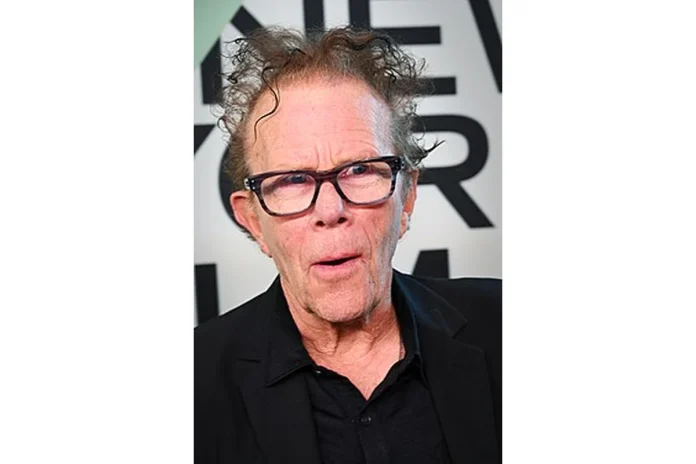
Tom Waits Bio
Thomas Alan Waits, born on December 7, 1949, in Pomona, California, is an American singer, songwriter, composer, and actor whose career has spanned more than five decades. Known for his deep, gravelly voice and a theatrical stage persona, Waits first emerged from the 1970s folk scene before reinventing his sound with experimental records in the 1980s. He has won multiple Grammy Awards, earned an induction into the Rock and Roll Hall of Fame in 2011, and built a long parallel career as a character actor in independent and mainstream films.
Throughout his career, Waits has been celebrated for vivid storytelling, offbeat character roles, and his willingness to draw on blues, jazz, vaudeville, and avant-garde influences. Married to his frequent collaborator Kathleen Brennan since 1980, he has lived for many years in Sonoma County, California, and remains an influential figure in American music and film.
Early Life and Background
Thomas Alan Waits was born on December 7, 1949, in Pomona, California, the son of Jesse Frank Waits, a Texas-born schoolteacher of Scots-Irish descent, and Alma Fern Johnson, who had Norwegian ancestry. The middle-class family soon moved to Whittier, California, where Waits grew up on Kentucky Avenue with one older and one younger sister. His father, who taught Spanish at a local school, struggled with alcoholism, and the household was managed by his mother, a regular churchgoer.
When Waits was ten, his parents separated and his mother relocated the children to Chula Vista, a middle-class suburb of San Diego. There he attended O’Farrell Community School, where he fronted a school band and developed a love of Ray Charles, Wilson Pickett, and Roy Orbison. By the time he enrolled at Hilltop High School, he had become a self-described amateur juvenile delinquent drawn to the Beat Generation writers Jack Kerouac, Allen Ginsberg, and William S. Burroughs, as well as to Bob Dylan, whose lyrics he taped to his bedroom walls.
After dropping out of high school at eighteen, Waits worked at a pizza restaurant and as a fireman, served briefly with the U.S. Coast Guard, and enrolled at Southwestern Community College to study photography. It was during this period, while frequenting the Heritage coffeehouse in San Diego, that he was drawn into the local folk scene and began performing his own songs. An uncle’s raspy, gravelly singing voice would later inspire the distinctive timbre for which Waits himself became known.
Path to Celebrity
Waits’s first real break came in 1969, when he was hired as a doorman at the Heritage coffeehouse in San Diego and gradually worked his way onto its stage. He began performing covers of Bob Dylan and writing bittersweet original ballads such as “Ol’ 55” and “I Hope That I Don’t Fall in Love With You”. After gaining a following in San Diego, he traveled into Los Angeles to play the Troubadour in West Hollywood, where he attracted the attention of manager Herb Cohen and, in 1971, the record executive David Geffen.
He signed a recording contract with Asylum Records and released his debut album, Closing Time, in 1973. Although it sold modestly, the album was praised for its literate, jazz-tinged songwriting, and an early break came when the Eagles covered “Ol’ 55” on their 1974 record On the Border. Subsequent albums, including The Heart of Saturday Night (1974) and the live Nighthawks at the Diner (1975), established him as a cult figure with a growing reputation for painting the seedy underbelly of American nightlife.
By the late 1970s, Waits was a fixture in the Los Angeles scene, collaborating with Chuck E. Weiss, Bette Midler, and the singer-songwriter Rickie Lee Jones, with whom he had a well-known relationship. In 1978, he made his film debut as a drunken piano player in Sylvester Stallone’s Paradise Alley, opening a parallel career in acting that would expand steadily from the 1980s onward.
Tom Waits Career
Early Career (1969-1980)
Waits’s recording career began in earnest in 1973 with the release of Closing Time on Asylum Records, produced by Jerry Yester. The album drew on the singer-songwriter school of the early 1970s, with its piano-led jazz stylings and Kerouac-inspired storytelling. Over the next several years, he issued a string of critically acclaimed records, including The Heart of Saturday Night (1974), Nighthawks at the Diner (1975), Small Change (1976), and Foreign Affairs (1977). Small Change in particular was hailed as a breakthrough, breaking into the Billboard Top 100 Album List and earning Waits a reputation as a master storyteller influenced by crime-noir writers such as Dashiell Hammett.
During this period he toured the United States, Europe, and Japan as a supporting act for artists such as Frank Zappa and Charlie Rich, gradually building a devoted cult following. In 1978, he expanded into film with his debut role in Paradise Alley, the same year that Blue Valentine was released to strong reviews. The closing stretch of the decade was marked by his increasingly public relationship with Rickie Lee Jones and his work on Francis Ford Coppola’s soundtrack for One from the Heart, where he met his future wife, Kathleen Brennan.
Breakthrough (1980-1992)
In 1980, Waits married Kathleen Brennan, fired his longtime manager Herb Cohen, and signed with Island Records, signaling a dramatic artistic reinvention. The result was Swordfishtrombones (1983), an album that abandoned the jazz piano of his earlier work in favor of marimbas, bagpipes, and percussion, and was named the second best album of the year by NME. He continued this experimental direction with Rain Dogs (1985), recorded with Keith Richards and Marc Ribot, which topped many year-end lists and earned him the title of “Songwriter of the Year” from Rolling Stone in 1985.
Throughout the 1980s, Waits’s acting profile rose steadily, with supporting roles in Coppola’s Rumble Fish, The Outsiders, and The Cotton Club (all 1983), followed by Jim Jarmusch’s Down by Law (1986) and Hector Babenco’s Ironweed (1987). He also completed the loose trilogy of experimental albums with Franks Wild Years (1987), drawn from a musical of the same name he had created with the Steppenwolf Theatre Company.
In 1989, Waits began a long-running collaboration with theater director Robert Wilson on the “cowboy opera” The Black Rider, which premiered at the Thalia Theater in Hamburg in 1990. Their partnership led to two further stage works, Alice (1992) and Woyzeck (2000), each later yielding a studio album. Waits also delivered a string of notable film performances during this period, including a turn as Renfield in Coppola’s Bram Stoker’s Dracula (1992) and an appearance in Terry Gilliam’s The Fisher King (1991). His decade closed with the release of Bone Machine in 1992, a stark, percussion-driven record that won the Grammy Award for Best Alternative Music Album.
Notable Works and Milestones
Waits’s signature work in acting includes his role as Earl Piggot, an alcoholic limousine driver, in Robert Altman’s Short Cuts (1993), often cited as one of his finest screen performances. Other highlights include The Ballad of Buster Scruggs (2018) for the Coen brothers and Paul Thomas Anderson’s Licorice Pizza (2021). His musical catalog is anchored by landmark records such as Swordfishtrombones, Rain Dogs, Bone Machine, and Mule Variations, the last of which won a Grammy Award for Best Contemporary Folk Album in 1999.
Tom Waits Award Nominations
Waits received an Academy Award nomination in 1982 for his original music score for the Francis Ford Coppola film One from the Heart, and earned a Grammy Award nomination for Best Contemporary Folk Album in 1999 for Mule Variations. He was also nominated for Best International Male Solo Artist at the 2005 Brit Awards for the album Real Gone. In 2016, the honor The Song Lyrics of Literary Excellence Award from PEN New England was jointly presented to him and his wife and collaborator, Kathleen Brennan.
Tom Waits Awards Won
Waits has won multiple Grammy Awards, including Best Alternative Music Album for Bone Machine in 1992 and Best Contemporary Folk Album for Mule Variations in 1999. In 2011, he was inducted into the Rock and Roll Hall of Fame by Neil Young. He and Brennan have been widely recognized for their collaborative songwriting, including being named among Paste magazine’s hundred greatest living songwriters in 2006.
| Award | Wins | Year |
|---|---|---|
| Grammy Awards – Best Alternative Music Album (Bone Machine) | 1 | 1992 |
| Grammy Awards – Best Contemporary Folk Album (Mule Variations) | 1 | 1999 |
| Rock and Roll Hall of Fame – Inductee | 1 | 2011 |
Tom Waits Family
Waits was born to Jesse Frank Waits, a Texas-born schoolteacher of Scots-Irish descent, and Alma Fern Johnson, an Oregon native of Norwegian ancestry. He has one older sister and one younger sister. In 1980, he married the Irish-American writer and frequent collaborator Kathleen Brennan, whom he met on the set of Francis Ford Coppola’s One from the Heart.
The couple have three children: daughters Kellesimone Wylder Waits, born in 1983, and sons Casey Waits, born in 1985, and Sullivan Blake Waits, born in 1993. Both of his sons have performed alongside their father on tour. Waits has been notably protective of his family’s privacy, becoming increasingly reclusive after marriage and rarely speaking about his home life in interviews.
Personal Life
During the 1970s, Waits had well-publicized relationships with the comedian Elayne Boosler, the singer Bette Midler, and the singer-songwriter Rickie Lee Jones. He has been married to Kathleen Brennan since 1980, and the two have built one of the most enduring creative partnerships in American music, co-writing songs for albums, theatrical productions, and film soundtracks.
Waits quit drinking alcohol in 1992 and joined Alcoholics Anonymous. He has lived for many years in Sonoma County, California, in a secluded house near Valley Ford. He has refused to sanction any biography and has deflected questions about his personal life throughout his career, preferring to let his music and his carefully constructed stage persona speak for themselves.