
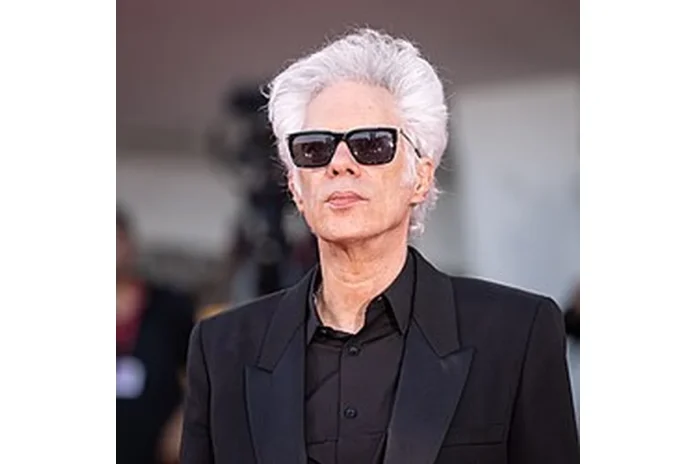
Jim Jarmusch Bio
James Robert Jarmusch (born January 22, 1953) is an American filmmaker and musician widely regarded as a leading figure in independent cinema since the 1980s. Born in Cuyahoga Falls, Ohio, he studied at Northwestern University, Columbia University, and New York University before directing his first feature, Permanent Vacation. He first reached wide audiences with Stranger Than Paradise (1984), a deadpan, minimalistic road movie that helped define the modern American independent film movement.
Over the following four decades, Jarmusch built a body of work that prizes atmosphere, sparse dialogue, and cool understatement, often crossing cultures and genres. His notable films include Down by Law, Mystery Train, Night on Earth, Dead Man, Ghost Dog: The Way of the Samurai, Coffee and Cigarettes, Broken Flowers, Only Lovers Left Alive, Paterson, and Father Mother Sister Brother. Beyond film, he has long been active as a musician, performing with the no wave band The Del-Byzanteens and later collaborating on multiple albums with Dutch lutenist Jozef van Wissem.
Early Life and Background
James Robert Jarmusch was born on January 22, 1953, in Cuyahoga Falls, Ohio, the second of three children in a middle-class suburban family. His mother, of German and Irish descent, reviewed film and theatre for the Akron Beacon Journal before marrying his father, a businessman of Czech and German descent who worked for the B.F. Goodrich Company. She introduced him to cinema by leaving him at a local theater to watch matinee double features, including Attack of the Crab Monsters and Creature from the Black Lagoon, while she ran errands. The 1958 cult film Thunder Road, viewed when he was seven, left a lasting mark on him, as did the eccentric Cleveland horror-host program Ghoulardi.
An avid reader in his youth, Jarmusch developed a stronger interest in literature than in religion, encouraged by his grandmother, and grew into the counterculture of his peer group. He and his friends stole records and books from older siblings, including works by William Burroughs, Jack Kerouac, and The Mothers of Invention, and forged fake identity cards to enter bars and the local art house cinema. At one point he apprenticed with a commercial photographer and later summed up his Ohio upbringing with the remark, “Growing up in Ohio was just planning to get out.”
After graduating from high school in 1971, Jarmusch moved to Chicago and enrolled in the Medill School of Journalism at Northwestern University, but left after neglecting to take any journalism courses in favor of literature and art history. He transferred to Columbia University, intending to become a poet, and studied English and American literature under New York School poets Kenneth Koch and David Shapiro, while editing the undergraduate literary journal The Columbia Review. During his final year, he spent ten months in Paris on an exchange program, working as a delivery driver for an art gallery and spending much of his time at the Cinémathèque Française, where his deep love of world cinema took root.
Path to Filmmaker
Jarmusch graduated from Columbia University with a Bachelor of Arts degree in 1975 and, after a year of working as a musician in New York City, applied on a whim to the graduate film school at New York University’s School of the Arts. His acceptance was secured by a submission of photographs and an essay on film rather than any prior filmmaking experience, and he studied there for four years. At NYU he met future collaborators Sara Driver, Tom DiCillo, Howard Brookner, and Spike Lee, and was part of the no wave scene around the CBGB music club that inspired the formation of his band The Del-Byzanteens.
In his final year at NYU, Jarmusch served as a personal assistant to the film noir director Nicholas Ray, who was teaching in the department. After showing Ray his first script and receiving criticism for its lack of action, Jarmusch reworked the script to be even less eventful; on seeing the revision, Ray approved of his student’s independent streak. Ray brought him to work on Lightning Over Water, a documentary about his dying years being made with Wim Wenders, and after Ray’s death in 1979, Jarmusch used Louis B. Mayer Foundation scholarship funds to shoot his own first feature as his university thesis project.
Jim Jarmusch Career
Early Career (1979-1983)
Jarmusch’s NYU thesis project, completed in 1980 as Permanent Vacation, was his first feature. The quasi-autobiographical film follows an adolescent drifter wandering downtown Manhattan and was shot in 16 mm by cinematographer Tom DiCillo on a shoestring budget of around $12,000. It premiered at the International Filmfestival Mannheim-Heidelberg, where it won the Josef von Sternberg Award, but it was not released theatrically and went largely unnoticed in the United States.
Although critics initially dismissed Permanent Vacation, it established the derelict urban settings, chance encounters, and wry sensibility that would mark his later features. Through the early 1980s, Jarmusch continued to hone his voice within the downtown New York film and music scene, building the relationships that would soon support his breakthrough.
Breakthrough (1984-1989)
Jarmusch’s first major film, Stranger Than Paradise, was produced on a budget of approximately $125,000 and released in 1984 to wide critical acclaim. A deadpan comedy recounting a strange journey of three disillusioned youths from New York through Cleveland to Florida, the film broke many conventions of traditional Hollywood filmmaking. It was awarded the Caméra d’Or at the 1984 Cannes Film Festival as well as the 1985 National Society of Film Critics Award for Best Film, and became a landmark work in modern independent film.
In 1986, Jarmusch wrote and directed Down by Law, starring musicians John Lurie and Tom Waits, and Italian comic actor Roberto Benigni as three convicts who escape from a New Orleans jailhouse. Shot in black and white, it marked his first collaboration with Dutch cinematographer Robby Müller. His next two films each experimented with parallel narratives: Mystery Train (1989) told three successive stories set on the same night in and around a small Memphis hotel, while Night on Earth (1991) involved five cab drivers and their passengers in five different world cities. Each of the four films had its premiere at the New York Film Festival, and Mystery Train competed at the 1989 Cannes Film Festival, solidifying Jarmusch’s reputation as a leading independent voice.
1990s and 2000s
In 1995, Jarmusch released Dead Man, a 19th-century American West period film starring Johnny Depp and Gary Farmer, with a high-profile cast including John Hurt, Gabriel Byrne, and Robert Mitchum in his final role. Shot in black and white by Robby Müller and scored by Neil Young, the film was poorly received by mainstream American reviewers but found favor internationally and with critics, who have since called it a visionary masterpiece. He achieved wider mainstream recognition with Ghost Dog: The Way of the Samurai (1999), a far-East philosophical crime film starring Forest Whitaker as an inner-city hit man devoted to the 18th-century Hagakure text, with a soundtrack supplied by RZA of the Wu-Tang Clan.
After a five-year creative gap following the September 11 attacks, Jarmusch released Coffee and Cigarettes in 2004, a collection of eleven short films he had shot over the previous two decades, including the Short Film Palme d’Or-winning segment “Somewhere in California” with Tom Waits and Iggy Pop. He followed it in 2005 with Broken Flowers, starring Bill Murray as an early retiree searching for the mother of his unknown son, which won the Grand Prix at the 58th Cannes Film Festival. In 2009 he released The Limits of Control, a sparse, meditative crime film shot in Spain and starring Isaach de Bankolé.
2010s and 2020s
After protracted financing efforts, Jarmusch began shooting Only Lovers Left Alive in 2012 with Tilda Swinton, Tom Hiddleston, Mia Wasikowska, Anton Yelchin, and John Hurt, with his musical project Sqürl contributing the soundtrack. The film screened at the 2013 Cannes Film Festival and the 2013 Toronto International Film Festival, with a UK release on February 21, 2014. He next wrote and directed Paterson (2016), about an inner-city bus driver and poet in Paterson, New Jersey, played by Adam Driver, which earned 22 award nominations for Jarmusch, Driver, and Nellie, the dog featured in the film.
Jarmusch wrote and directed his first horror film, the zombie comedy The Dead Don’t Die, featuring Bill Murray, Adam Driver, Chloë Sevigny, Steve Buscemi, Tilda Swinton, Carol Kane, and Selena Gomez, which premiered at the 72nd Cannes Film Festival in 2019. He directed and wrote a short film titled French Water for the Yves Saint Laurent House of Fashion to celebrate their spring/summer 2021 collection, starring Charlotte Gainsbourg and Julianne Moore. He followed that with Father Mother Sister Brother, which premiered at the 82nd Venice International Film Festival in 2025, where it won the Golden Lion.
Notable Works and Milestones
Stranger Than Paradise was added to the National Film Registry in December 2002, and is widely credited with helping to instigate the American independent film movement. Jarmusch is one of the few directors to have won the Caméra d’Or at Cannes, the Grand Prix at Cannes, and the Golden Lion at Venice, marking him as a singular presence in international festival cinema.
Jim Jarmusch Award Nominations
Jarmusch has received recognition from major film festivals and critics’ organizations across his career, including competition for the Palme d’Or at Cannes with both Mystery Train (1989) and Broken Flowers (2005), as well as the 2013 Cannes selection of Only Lovers Left Alive. His film Paterson (2016) earned 22 award nominations for Jarmusch, lead actor Adam Driver, and Nellie, the dog featured in the film.
Jim Jarmusch Awards Won
Jarmusch’s most prominent awards include the 1984 Caméra d’Or at the Cannes Film Festival for Stranger Than Paradise, the 1985 National Society of Film Critics Award for Best Film for the same picture, and the 1980 Josef von Sternberg Award at the International Filmfestival Mannheim-Heidelberg for Permanent Vacation. He was honored with the “Filmmaker on the Edge Award” at the 2004 Provincetown International Film Festival, received the Carrosse d’Or at the 2008 Cannes Film Festival, and won the Grand Prix at the 2005 Cannes Film Festival for Broken Flowers. Most recently, he won the Golden Lion at the 82nd Venice International Film Festival in 2025 for Father Mother Sister Brother.
| Award | Wins | Year |
|---|---|---|
| Cannes Film Festival: Caméra d’Or (Stranger Than Paradise) | 1 | 1984 |
| International Filmfestival Mannheim-Heidelberg: Josef von Sternberg Award (Permanent Vacation) | 1 | 1980 |
| Cannes Film Festival: Grand Prix (Broken Flowers) | 1 | 2005 |
| Venice Film Festival: Golden Lion (Father Mother Sister Brother) | 1 | 2025 |
Jim Jarmusch Family
Jarmusch was the second of three children born to a middle-class family in Cuyahoga Falls, Ohio. His mother, of German and Irish descent, was a reviewer of film and theatre for the Akron Beacon Journal before marrying his father, a businessman of Czech and German descent who worked for the B.F. Goodrich Company. His maternal grandmother encouraged his early love of literature, while his peers, who shared his taste for counterculture, introduced him to the books, music, and underground films that shaped his artistic outlook.
Personal Life
Jarmusch rarely discusses his personal life in public. He divides his time between New York City and the Catskill Mountains, has been a vegetarian since 1987, and stopped drinking coffee in 1986, although he continues to smoke cigarettes. He is a founding member of The Sons of Lee Marvin, a humorous “semi-secret society” of artists who resemble the iconic actor and gather periodically to watch his films. He has been a supporter of pro-Palestine causes and was one of 55 celebrities to sign the Artists4Ceasefire letter calling for an immediate ceasefire in Gaza.