
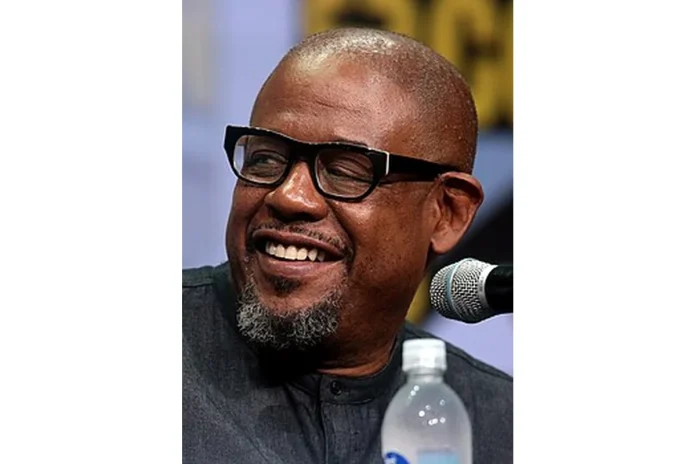
Forest Whitaker Bio
Forest Steven Whitaker, born on July 15, 1961, in Longview, Texas, is an American actor, filmmaker, and activist whose career spans more than four decades. Whitaker has earned an Academy Award, a Golden Globe Award, a British Academy Film Award, two Screen Actors Guild Awards, and the Best Actor Award at the 1988 Cannes Film Festival. He is widely respected for his intense character study work across films such as Bird, The Last King of Scotland, and Black Panther, and for his ongoing humanitarian efforts through the Whitaker Peace and Development Initiative.
Beyond acting, Whitaker has directed feature films, produced through his company Significant Productions, and served as a UNESCO Goodwill Ambassador and Special Envoy for Peace and Reconciliation. His body of work includes collaborations with directors including Clint Eastwood, Oliver Stone, Martin Scorsese, Jim Jarmusch, and Ryan Coogler, and television roles on The Shield, Empire, and Godfather of Harlem.
Early Life and Background
Forest Steven Whitaker was born on July 15, 1961, in Longview, Texas, the son of Laura Francis Smith, a special education teacher, and Forest E. Whitaker Jr., an insurance salesman. When Whitaker was in elementary school, his family moved to Carson, California, a suburb of Los Angeles, where he grew up alongside two younger brothers and an older sister. His first role as a performer came in the lead of Dylan Thomas’s play Under Milk Wood, staged during his school years.
Whitaker attended Palisades High School in Los Angeles, where he played on the football team and sang in the choir, graduating in 1979. He entered California State Polytechnic University, Pomona on a football scholarship, but a back injury forced him to shift his major to music. While at Cal Poly, he toured England with the Cal Poly Chamber Singers in 1980 and later transferred to the University of Southern California to study opera as a tenor before being accepted into USC’s Drama Conservatory. He graduated from USC with a Bachelor of Fine Arts degree in Acting in 1982 and also took a course at Drama Studio London.
Path to Acting
Whitaker’s screen debut came in 1982 with a supporting role as a high school football player in Amy Heckerling’s Fast Times at Ridgemont High. Throughout the early 1980s, he built experience through television appearances, including Diff’rent Strokes, the anthology series Amazing Stories, and the miniseries North and South in 1985 and 1986. These early credits allowed him to work steadily while developing the immersive approach to character that would later define his career.
His breakthrough into more substantial film roles arrived in 1986, when he appeared in Martin Scorsese’s The Color of Money and Oliver Stone’s Vietnam War drama Platoon. The following year, he co-starred alongside Robin Williams in the comedy Good Morning, Vietnam. In 1988, Clint Eastwood cast him as jazz saxophonist Charlie Parker in Bird, a role for which Whitaker studied the saxophone, sequestered himself with only the instrument in a loft, and conducted extensive research. The performance earned him the Best Actor award at the 1988 Cannes Film Festival and a Golden Globe nomination, establishing him as a serious dramatic actor.
Forest Whitaker Career
Early Career (1982-1987)
Whitaker’s first notable film work came in 1982 with Fast Times at Ridgemont High, followed by supporting roles in Vision Quest and the 1985 television episodes of Diff’rent Strokes and Amazing Stories. He also appeared in the first and second parts of the miniseries North and South in 1985 and 1986, building a foundation in both film and television during this formative period.
By the mid-1980s, Whitaker had attracted the attention of major directors, leading to roles in The Color of Money (1986), Platoon (1986), and Good Morning, Vietnam (1987). Each project broadened his range and demonstrated his ability to disappear into supporting parts, setting the stage for the lead role in Bird that would soon change his career.
Breakthrough (1988-2006)
Whitaker’s performance as Charlie Parker in Bird (1988) earned him the Best Actor award at the Cannes Film Festival and a Golden Globe nomination. He followed this with the pivotal role of Jody, a captive British soldier in Neil Jordan’s The Crying Game (1992), which Todd McCarthy of Variety called big-hearted and simply terrific. Throughout the 1990s, Whitaker continued to take on complex characters, including roles in Smoke (1995) and Phenomenon (1996), and won a National Board of Review Award for ensemble acting for Robert Altman’s Prêt-à-Porter in 1994.
In the 1990s, Whitaker expanded into directing and producing. He made his directorial debut with Strapped (1993) for HBO, which won the International Critics’ Award at the Toronto International Film Festival. He then directed Waiting to Exhale (1995), Hope Floats (1998), and First Daughter (2004), while executive producing several television films. As an actor, he played the serene, pigeon-raising mob hit man in Jim Jarmusch’s Ghost Dog: The Way of the Samurai (1999), a role many consider a definitive work. His performance as Idi Amin in The Last King of Scotland (2006) earned him the Academy Award for Best Actor, the British Academy Film Award, the Golden Globe Award, the Screen Actors Guild Award, and recognition from critics’ groups across the United States and United Kingdom.
Notable Works and Milestones
Whitaker’s signature works include Bird (1988), The Crying Game (1992), Ghost Dog: The Way of the Samurai (1999), and The Last King of Scotland (2006), the last of which swept the major acting awards and made him the fourth Black actor in history to win the Academy Award for Best Actor. Other notable credits include Platoon (1986), Good Morning, Vietnam (1987), The Color of Money (1986), Panic Room (2002), Phone Booth (2002), Arrival (2016), Rogue One: A Star Wars Story (2016), The Butler (2013), and Black Panther (2018), in which he played Zuri.
Established Actor (2007-2018)
Following his Academy Award win, Whitaker took on a range of dramatic and franchise roles. He played Dr. James Farmer Sr. in The Great Debaters (2007) and appeared in films such as Street Kings, Vantage Point, and The Air I Breathe (all 2008). His television work during this period included an arc on ER in 2006, a recurring role on The Shield in 2006 and 2007, and the lead in the short-lived Criminal Minds: Suspect Behavior.
Whitaker experienced a major resurgence with Lee Daniels’ The Butler (2013), which became one of his greatest critical and commercial successes and earned him an NAACP Image Award for Outstanding Actor in a Motion Picture. He entered the Star Wars universe as Saw Gerrera in Rogue One: A Star Wars Story (2016) and reprised the role in Star Wars Rebels. He made his Broadway debut in the 2016 revival of Eugene O’Neill’s Hughie and appeared in Denis Villeneuve’s Arrival (2016). In 2018, he played Zuri in the Marvel Cinematic Universe’s Black Panther, sharing in the Screen Actors Guild Award for Outstanding Performance by a Cast in a Motion Picture.
Recent Work (2019-Present)
Since 2019, Whitaker has starred as Bumpy Johnson in the Epix crime drama Godfather of Harlem, which explores the intersection of the criminal underworld and the civil rights movement in the 1960s. He reprised Saw Gerrera for the Disney+ series Andor in 2022 and 2025, and voiced the character in the 2019 video game Star Wars Jedi: Fallen Order. In 2020, he starred as Jeronicus Jangle in the Netflix Christmas musical Jingle Jangle: A Christmas Journey.
Recent projects include the film Respect (2021), in which he portrayed Reverend C. L. Franklin opposite Jennifer Hudson as Aretha Franklin, and Havoc (2021), alongside Tom Hardy. Whitaker also portrayed boxing trainer Doc Broadus in Big George Foreman (2023), appeared in the Apple TV+ anthology Extrapolations, and starred in the MGM+ series adaptation of Stephen L. Carter’s novel The Emperor of Ocean Park in 2024.
Forest Whitaker Award Nominations
Forest Whitaker has received multiple award nominations across his career, including a Golden Globe nomination for Bird in 1988, a Primetime Emmy Award nomination for his guest role in ER in 2006, and an NAACP Image Award nomination for Outstanding Supporting Actor for The Great Debaters in 2007. He was also nominated for a Screen Actors Guild Award for Outstanding Performance by a Male Actor in a Leading Role for The Butler in 2013.
Forest Whitaker Awards Won
Whitaker won the Best Actor Award at the 1988 Cannes Film Festival for Bird and received the Academy Award for Best Actor, the British Academy Film Award, the Golden Globe Award, the Screen Actors Guild Award, and numerous critics’ awards for his portrayal of Idi Amin in The Last King of Scotland in 2006. He won the NAACP Image Award for Outstanding Actor in a Motion Picture for The Butler in 2013 and shared in the Screen Actors Guild Award for Outstanding Performance by a Cast in a Motion Picture for Black Panther in 2018. In 2022, he received the Honorary Palme d’Or from the Cannes Film Festival, and the 41st Cannes Best Actor Award remains one of the most celebrated honors of his career.
| Award | Wins | Year |
|---|---|---|
| Academy Award for Best Actor | 1 | 2006 |
| Best Actor at the Cannes Film Festival | 1 | 1988 |
| British Academy Film Award | 1 | 2006 |
| Golden Globe Award | 1 | 2006 |
| Screen Actors Guild Award for Outstanding Performance by a Male Actor in a Leading Role | 1 | 2006 |
| Screen Actors Guild Award for Outstanding Performance by a Cast in a Motion Picture (shared) | 1 | 2018 |
| NAACP Image Award for Outstanding Actor in a Motion Picture | 1 | 2013 |
Forest Whitaker Family
Forest Steven Whitaker was born to Forest E. Whitaker Jr., an insurance salesman, and Laura Francis Smith, a special education teacher. He grew up in Carson, California, with two younger brothers and an older sister after his family relocated from Longview, Texas, during his childhood. His ancestry has been traced to Nkwerre in Imo State of Nigeria, where he was made an honorary titled chief on April 5, 2009.
Personal Life
In 1996, Whitaker married actress Keisha Nash, whom he met on the set of Blown Away. The couple had two daughters together, including actress True Whitaker, and he also raised his son and her daughter from previous relationships. In December 2018, Whitaker filed for divorce from Nash, citing irreconcilable differences. Whitaker studies yoga, holds a black belt in kenpō, follows a vegetarian diet, and trains in eskrima. In 2021, he joined NBA Africa as a minority owner and strategic investor.