
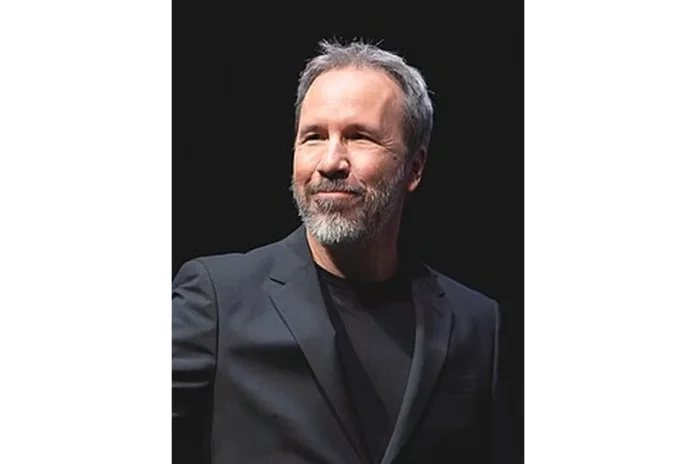
Denis Villeneuve Bio
Denis Villeneuve (born October 3, 1967) is a Canadian film director and screenwriter. He has received seven Canadian Screen Awards as well as nominations for four Academy Awards, five BAFTA Awards, and two Golden Globe Awards. His films have grossed more than $1.8 billion worldwide.
Villeneuve began his filmmaking career in Quebec cinema, directing French-language dramas that brought him international attention, before expanding into English-language thrillers and large-scale science fiction. He is widely recognized for his visually precise style, atmospheric storytelling, and ambitious adaptations of complex source material, including the two-part adaptation of Frank Herbert’s novel Dune.
Early Life and Background
Denis Villeneuve was born on October 3, 1967, in the village of Gentilly in Bécancour, Quebec, Canada, to Nicole Demers, a homemaker, and Jean Villeneuve, a notary. He is the eldest of four siblings, and his younger brother, Martin Villeneuve, also became a filmmaker. By adolescence, Villeneuve was already passionate about cinema.
He started writing screenplays and making short films while in secondary school, building an early foundation in the craft that would later define his career. These formative years in Quebec shaped his interest in narrative storytelling and visual composition, and encouraged his decision to pursue cinema at a professional level.
Path to Directing
Villeneuve attended the Séminaire Saint-Joseph de Trois-Rivières for his secondary education and later studied science at the Cégep de Trois-Rivières. He went on to study cinema at the Université du Québec à Montréal, where he developed his technical and artistic foundations. After becoming an established filmmaker, he received an honorary Doctorate in Fine Arts from Concordia University in Montreal on June 6, 2024.
His early professional work included short films, and he won Radio-Canada’s youth film competition, La Course Europe-Asie, in 1991. This early recognition helped him transition from student projects to his first feature-length work, launching a career that would move between French-language Quebec cinema and major international productions.
Denis Villeneuve Career
Early Career (1991-2012)
August 32nd on Earth (1998), Villeneuve’s feature directorial debut, premiered in the Un Certain Regard section at the 1998 Cannes Film Festival. The film was selected as the Canadian entry for the Best Foreign Language Film at the 71st Academy Awards, though it was not nominated. His second film, Maelström (2000), attracted further attention by screening at festivals worldwide, ultimately winning eight Jutra Awards and the award for Best Canadian Film from the Toronto International Film Festival.
After a deliberate pause to recenter his life, Villeneuve returned with the black-and-white drama Polytechnique (2009), about the 1989 shootings at the University of Montreal. The film premiered at the Cannes Film Festival and received nine Genie Awards, including Best Motion Picture. His fourth film, Incendies (2010), was selected by The New York Times as one of the top ten best films of that year and was nominated for the Academy Award for Best Foreign Language Film, cementing his international profile.
Breakthrough (2013-2016)
Villeneuve followed Incendies with the crime thriller Prisoners (2013), starring Hugh Jackman and Jake Gyllenhaal, which was nominated for the Academy Award for Best Cinematography. The same year, he released the psychological thriller Enemy, which won him the Canadian Screen Award for Best Direction. He then directed the crime thriller Sicario (2015), written by Taylor Sheridan and starring Emily Blunt, Benicio del Toro, Daniel Kaluuya, and Josh Brolin. The film competed for the Palme d’Or at the 2015 Cannes Film Festival and went on to gross nearly $80 million worldwide.
His eighth film, Arrival (2016), was based on the short story Story of Your Life by Ted Chiang and starred Amy Adams and Jeremy Renner. The film grossed $203 million worldwide, received eight nominations at the 89th Academy Awards including Best Picture and Best Director, and won the Academy Award for Best Sound Editing. Arrival also earned the Ray Bradbury Award for Outstanding Dramatic Presentation and the Hugo Award for Best Dramatic Presentation in 2017.
Notable Works and Milestones
Villeneuve’s signature works include Arrival, Blade Runner 2049, and the two-part adaptation of Frank Herbert’s Dune, the latter grossing a combined $1.15 billion globally. He has won four Canadian Screen Awards for Best Direction, for Maelström, Polytechnique, Incendies, and Enemy, and was named Director of the Decade by the Hollywood Critics Association in 2019.
Denis Villeneuve Award Nominations
Across his career, Denis Villeneuve has received four Academy Award nominations, including for Best Director for Arrival and Best Picture for both Dune and Dune: Part Two, along with a Best Adapted Screenplay nomination for Dune. He has also received five BAFTA Award nominations and two Golden Globe Award nominations, reflecting his consistent recognition by major international film institutions for his direction and screenplays.
Denis Villeneuve Awards Won
Villeneuve has won seven Canadian Screen Awards, including four wins for Best Direction, for Maelström in 2001, Polytechnique in 2009, Incendies in 2010, and Enemy in 2013. His films Maelström, Polytechnique, and Incendies also won the Canadian Screen Award for Best Motion Picture. Additional honours include the Academy Award for Best Sound Editing for Arrival, the Ray Bradbury Award and Hugo Award for Arrival, the Director of the Decade prize from the Hollywood Critics Association in 2019, and the Academy Icon Award at the 12th Canadian Screen Awards on May 31, 2024.
| Award | Wins | Year |
|---|---|---|
| Canadian Screen Award for Best Direction (Maelström) | 1 | 2001 |
| Canadian Screen Award for Best Direction (Polytechnique) | 1 | 2009 |
| Canadian Screen Award for Best Direction (Incendies) | 1 | 2010 |
| Canadian Screen Award for Best Direction (Enemy) | 1 | 2013 |
| Hollywood Critics Association Director of the Decade | 1 | 2019 |
Denis Villeneuve Family
Denis Villeneuve was born to Jean Villeneuve, a notary, and Nicole Demers, a homemaker. He is the eldest of four siblings, and his younger brother, Martin Villeneuve, is also a filmmaker in Quebec. His daughter, Salomé Villeneuve, has followed the family tradition into filmmaking, and her debut short film III premiered at the 2022 Venice Film Festival.
Personal Life
Villeneuve is married to Tanya Lapointe, a journalist and filmmaker with whom he collaborates as a director-producer team. He has three children from a previous relationship with actress Macha Grenon. Villeneuve remains an active supporter of the arts in Quebec and Canada, frequently encouraging young filmmakers in the country.