
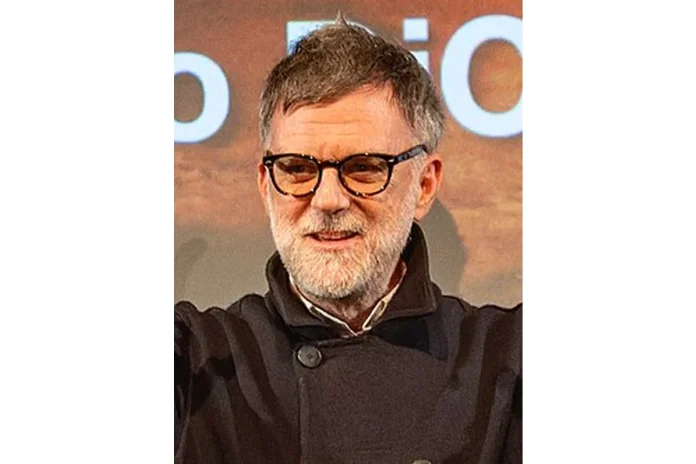
Paul Thomas Anderson Bio
Paul Thomas Anderson, born on June 26, 1970, in Los Angeles, California, is an American filmmaker widely regarded as one of the most distinctive voices in modern cinema. Also known by his initials PTA, Anderson has built a career on psychological dramas that examine flawed characters, dysfunctional families, and the restless energy of contemporary American life. His films are known for their bold visual style, long takes, and memorable use of music, and they have earned him a BAFTA Award, three Academy Awards, three Golden Globe Awards, and four BAFTA Awards overall.
Over more than three decades, Anderson has directed a string of influential features, beginning with Hard Eight in 1996 and continuing through celebrated works such as Boogie Nights, Magnolia, There Will Be Blood, The Master, Phantom Thread, and Licorice Pizza. He is the only filmmaker to have won the top directorial prizes at the Cannes Film Festival, the Venice Film Festival, and the Berlin International Film Festival, cementing his place among the leading auteurs of his generation.
Early Life and Background
Paul Thomas Anderson was born in Studio City, Los Angeles, to Edwina, known by her maiden name Gough, and the media personality Ernie Anderson. His father was the well-known voice of ABC and famously played a Cleveland late-night horror host called Ghoulardi, the name Anderson later used for his production company. He grew up in the San Fernando Valley in a Catholic household with three siblings and five half-siblings from his father’s first marriage, and he was closer to his father than to his mother, a relationship that would later echo through the family-centered tensions in many of his films.
Anderson attended a series of private schools, including the Buckley School, John Thomas Dye School, Campbell Hall School, Cushing Academy, and Montclair College Preparatory School. He was drawn to filmmaking from an early age and never had an alternative plan to directing. He made his first film when he was eight years old and began making more ambitious projects on a Betamax videocamera his father bought in 1982, eventually upgrading to an 8 mm camera and later a Bolex 16 mm camera during his teenage years.
As a senior at Montclair Prep, using money he earned cleaning cages at a pet store, Anderson wrote and filmed his first real production, a 30-minute mockumentary about a porn star called The Dirk Diggler Story in 1988. The story, inspired by the adult film actor John Holmes, would later become the foundation for his breakout feature Boogie Nights. The experience confirmed for him that filmmaking, not traditional education, was the path he wanted to pursue.
Path to Filmmaking
After high school, Anderson attended Santa Monica College before spending two semesters as an English major at Emerson College, where he was taught by the novelist David Foster Wallace. He later enrolled at New York University, but after receiving a low grade on a first assignment, in which he turned in a page from a David Mamet screenplay, he dropped out after just two days. Convinced that film school turned material into homework, he decided to make his own short film as his real education.
He began his professional career as a production assistant on television shows, feature films, music videos, and game shows in Los Angeles and New York City. On a budget of about $10,000, drawn from gambling winnings, his girlfriend’s credit card, and money his father had set aside for college, he made the short film Cigarettes and Coffee in 1993, which connected multiple storylines through a single $20 bill. The short screened at the 1993 Sundance Festival Shorts Program and earned him an invitation to the 1994 Sundance Feature Film Program, where he caught the attention of the director Michael Caton-Jones, who became his mentor and helped him develop the discipline needed for a feature film.
Paul Thomas Anderson Career
Early Career (1988–1996)
While at Sundance, Anderson secured a deal with Rysher Entertainment to direct his first full-length feature film, originally titled Sydney and later retitled Hard Eight. After Rysher reedited the film, Anderson retrieved his original cut and submitted it to the 1996 Cannes Film Festival, where it was shown in the Un Certain Regard section. He then raised $200,000 from Philip Baker Hall, John C. Reilly, Gwyneth Paltrow, and his own resources to finish his preferred version, which became the one released theatrically and launched his career. The film follows the life of a senior gambler and a homeless man and drew praise from critics, including Roger Ebert of the Chicago Sun-Times, who called it a reminder of how compelling original characters can be on screen.
While still finishing Hard Eight, Anderson wrote the script for his second feature, which became the breakout hit Boogie Nights in 1997. Based on his short film The Dirk Diggler Story and set in the Golden Age of Porn, the film follows a nightclub dishwasher who becomes a pornographic actor. New Line Cinema president Michael De Luca championed the script, and the film was released on October 10, 1997, to critical and commercial success. It revived the career of Burt Reynolds, gave breakout roles to Mark Wahlberg and Julianne Moore, and earned three nominations at the 70th Academy Awards, including Best Supporting Actor, Best Supporting Actress, and Best Original Screenplay.
Breakthrough (1999–2009)
After Boogie Nights, New Line gave Anderson complete creative control over his next project, leading to the ensemble drama Magnolia in 1999, inspired by the music of the singer-songwriter Aimee Mann. The film tells the story of several people in the San Fernando Valley whose lives intersect over the course of a single day. Magnolia received three nominations at the 72nd Academy Awards, including Best Supporting Actor for Tom Cruise, Best Original Song for Save Me, and Best Original Screenplay, and Anderson later said it was, for better or worse, the best movie he would ever make.
He followed Magnolia with the romantic comedy-drama Punch-Drunk Love in 2002, starring Adam Sandler in his first widely praised dramatic role as a beleaguered entrepreneur. Anderson won the Best Director Award at the 2002 Cannes Film Festival for the film, which Time Out later included among the best films of the 21st century. His fifth feature, There Will Be Blood in 2007, was loosely based on Upton Sinclair’s 1927 novel Oil! and follows a ruthless oil prospector in early 20th-century Southern California. The film earned eight Academy Award nominations, including Best Picture, Best Director, and Best Adapted Screenplay, and won Best Actor for Daniel Day-Lewis and Best Cinematography for Robert Elswit.
Continued Success (2010–2025)
Anderson’s sixth feature, The Master, was released on September 14, 2012, and follows an alcoholic World War II veteran who falls under the spell of the leader of a new religious movement, widely assumed to be inspired by Scientology. The film earned three Academy Award nominations, including Best Actor for Joaquin Phoenix, Best Supporting Actor for Philip Seymour Hoffman, and Best Supporting Actress for Amy Adams. In 2014, Anderson released Inherent Vice, his adaptation of Thomas Pynchon’s 2009 novel and the first time Pynchon had allowed his work to be adapted for film.
In 2017, Anderson released Phantom Thread, set in the London fashion industry and starring Daniel Day-Lewis alongside Lesley Manville and Vicky Krieps. The film earned six Academy Award nominations and won Best Costume Design. He followed it with Licorice Pizza in 2021, which follows a teenage actor in love with a photography assistant, and earned nominations for Best Picture, Best Director, and Best Original Screenplay at the 94th Academy Awards. In 2025, Anderson released One Battle After Another, a loose adaptation of Pynchon’s novel Vineland starring Leonardo DiCaprio, Regina Hall, and Sean Penn. The film became his highest-grossing release and won him Academy Awards for Best Director, Best Adapted Screenplay, and Best Picture at the 98th Academy Awards.
Notable Works and Milestones
Across his career, Anderson has built a body of work defined by long takes, constantly moving cameras, and a deep bench of recurring collaborators, including the cinematographer Robert Elswit, the composer Jonny Greenwood, the costume designer Mark Bridges, the producer JoAnne Sellar, and a group of actors he calls his little rep company, including John C. Reilly, Philip Baker Hall, Julianne Moore, and Philip Seymour Hoffman. There Will Be Blood was named Best Film of the 21st Century So Far in 2017 by the New York Times critics A. O. Scott and Manohla Dargis, and Boogie Nights, Magnolia, and The Master have all been cited among the most influential American films of their eras. He is the only filmmaker to have won the top directorial prizes at Cannes, Venice, and Berlin.
Paul Thomas Anderson Award Nominations
Anderson has been nominated for major awards across virtually every phase of his career, beginning with three Academy Award nominations for Boogie Nights in 1998. He earned three more nominations for Magnolia in 2000 and eight for There Will Be Blood in 2008, including for Best Picture, Best Director, and Best Adapted Screenplay. The Master brought him further Academy Award attention, and Phantom Thread, Licorice Pizza, and One Battle After Another all received nominations for Best Picture and Best Director, in addition to other categories. Outside the Academy Awards, he has received multiple Golden Globe, BAFTA, Directors Guild of America, and Grammy nominations, including a nomination for Best Music Film at the 2020 Grammy Awards for the short film Anima.
Paul Thomas Anderson Awards Won
Anderson has won a BAFTA Award, three Academy Awards, three Golden Globe Awards, four BAFTA Awards overall, and a Golden Bear at the Berlin International Film Festival. He won the Best Director Award at the 2002 Cannes Film Festival for Punch-Drunk Love, the Silver Bear for Best Director at Berlin, and the Silver Lion for Best Director at Venice. His most recent Academy Award wins came at the 98th Academy Awards for One Battle After Another, taking home Best Director, Best Adapted Screenplay, and Best Picture, making him the only filmmaker to have won the top directorial prizes at all three of Europe’s major film festivals.
Paul Thomas Anderson Family
Paul Thomas Anderson was born to the media personality Ernie Anderson and Edwina, known by her maiden name Gough. His father was a well-known television voice and horror host whose stage name, Ghoulardi, later inspired the name of Anderson’s production company. Anderson has three siblings from his parents’ marriage and five half-siblings from his father’s first marriage. He is the father of four children with the actress and comedian Maya Rudolph, and although the couple are not legally married, Rudolph refers to Anderson as her husband.
Personal Life
Anderson is known for being secretive about his personal life. He dated the singer-songwriter Fiona Apple from 1997 to 2002, and Anderson has been in a long-term relationship with Maya Rudolph, with whom he shares four children. He lives and works primarily in the Los Angeles area, where he was born and raised, and he is a vegan.