
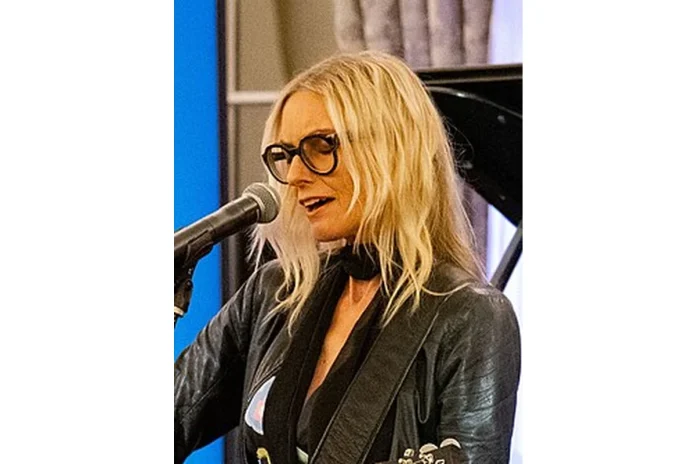
Aimee Mann Bio
Aimee Elizabeth Mann, born on September 8, 1960, in Richmond, Virginia, is an American singer-songwriter whose literate and often sardonic lyrics have earned her a dedicated following across four decades. She first rose to prominence as co-founder of the new wave band ‘Til Tuesday, whose single “Voices Carry” became a top-ten hit in 1985. Mann later built a respected solo career with albums such as Whatever (1993) and I’m with Stupid (1995), and reached a wider audience through her contributions to the Magnolia soundtrack in 1999, including the Oscar-nominated song “Save Me.” She founded the independent label SuperEgo Records and won the Grammy Award for Best Folk Album for Mental Illness in 2018.
Early Life and Background
Aimee Elizabeth Mann was born at the Medical College of Virginia in Richmond on September 8, 1960. She had two brothers and two stepbrothers, and her early life was marked by upheaval: when she was three, her mother had an affair and became pregnant, and her parents divorced. Mann was kidnapped by her mother and her new boyfriend and taken to Europe, where they traveled for a time before a private detective hired by her father brought her back from England a year later. The experience left her with post-traumatic stress disorder and a lasting anxiety around travel. She did not see her mother again until she was 14, though she forgave her decades later.
Mann grew up in Bon Air, Virginia, and attended Midlothian High School in Chesterfield County. As a young person, she was quiet and withdrawn, and her father and stepmother sent her to a psychiatrist. Her drama teacher remembered her as “kind of an insecure kid, very quiet, very introspective,” but added that “when she did start talking, she was worth listening to.” Mann learned to play her brother’s guitar at the age of 12 while confined to bed with glandular fever, and as a teenager she found inspiration in David Bowie, Iggy Pop, and the broader punk and new wave movements, especially the example of Patti Smith.
Path to Music
In 1978, feeling that she did not fit into the “normal world,” Mann enrolled at Berklee College of Music in Boston to study bass guitar. She had wanted to learn the instrument as a child but her family had ridiculed the idea as unladylike. She lived on twenty-five dollars a week, ran in the mornings, and practiced intensely. After 18 months, she dropped out and joined the Boston punk band the Young Snakes on bass, although she grew unhappy when the other members objected to her love songs and melodic writing. She also joined the band Ministry, which she later credited with teaching her to write songs efficiently, and worked at Newbury Comics in Massachusetts during the early 1980s.
At Berklee, Mann had formed the new wave band ‘Til Tuesday, signing to Epic Records and releasing their debut album Voices Carry in 1985. The title single reached number eight on the Billboard Hot 100 and won the MTV Video Music Award for Best New Artist, making Mann an early female star on MTV. ‘Til Tuesday released two more albums, Welcome Home (1986) and Everything’s Different Now (1988), the latter of which showed significant development in Mann’s songwriting. The band broke up in 1990 when Mann left to pursue a solo career, though Epic did not release her from her contract for another three years, an experience that shaped her later skepticism of the major-label system.
Aimee Mann Career
Early Career (1990-1995)
Mann recorded her first solo albums with the producer Jon Brion, a former member of the ‘Til Tuesday touring band, and together they developed a polished, melodic sound that critics would later call “LA alternative.” Her debut solo album, Whatever, arrived in 1993 on the independent label Imago and earned positive reviews without strong sales. After her second album, I’m with Stupid, was delayed by Imago’s financial troubles, the label sold it to Geffen, which signed Mann in 1994 and released the record in 1995. Both albums demonstrated Mann’s sharp, self-possessed songwriting, but sales remained modest, and the music industry began to view her as a relic of the 1980s.
During this period, Mann contributed to film and tribute projects, recording a cover of Harry Nilsson’s “One” for the 1995 album For the Love of Harry: Everybody Sings Nilsson. She moved to Los Angeles in 1994 and toured as part of the British band Squeeze, performing her own songs alongside Squeeze material. In 1995, she also spent about six months in London, where she befriended the Labour politician Tony Banks, a fan of her work.
Breakthrough (1995-2002)
Mann wrote “Wise Up” for the 1996 film Jerry Maguire, though the song was not used in the final cut. She later recorded a cover of “Nobody Does It Better” for the 1997 James Bond tribute album Shaken and Stirred, contributed “Amateur” to the 1998 film Sliding Doors, and made a cameo as a nihilist in The Big Lebowski the same year. She became a regular performer at Largo, a Los Angeles nightclub hosted by Jon Brion, and the venue’s community of alternative songwriters, including Elliott Smith, Fiona Apple, and Rufus Wainwright, helped shape her writing in this period.
Her wider recognition arrived with the Paul Thomas Anderson film Magnolia in 1999, for which she contributed “One,” “Wise Up,” “Save Me,” and “You Do.” The Magnolia soundtrack went gold, and “Save Me” earned nominations for the Academy Award for Best Original Song and the Grammy Award for Best Female Pop Vocal. Mann performed “Save Me” at the 72nd Academy Awards, and the Los Angeles Times later called the song her masterpiece, with Pitchfork listing it among the best songs of the 1990s.
After Geffen refused to release her third album, Bachelor No. 2, Mann took direct control of her career. With royalties from Magnolia, she bought back the album’s masters and, in 1999, co-founded the independent label SuperEgo Records with her manager Michael Hausman. She also helped establish United Musicians, a collective of artists working outside the major-label system. Bachelor No. 2 eventually sold 270,000 copies and was named the 28th-best-reviewed album of the decade by Metacritic, confirming Mann as a career artist outside the mainstream industry.
Notable Works and Milestones
Mann’s signature work is the Magnolia song “Save Me,” which solidified her reputation as an esteemed songwriter. Her solo album Mental Illness won the Grammy Award for Best Folk Album at the 60th Annual Grammy Awards in 2018, a major recognition late in her career. In 2006, Paste named her the 54th-greatest living songwriter and NPR listed her among the ten greatest living songwriters.
Aimee Mann Award Nominations
Throughout her career, Aimee Mann has received nominations from the Academy Awards, the Grammy Awards, and the MTV Video Music Awards. Her most prominent nominations include the Academy Award for Best Original Song for “Save Me” in 1999, a Grammy Award for Best Female Pop Vocal for the same song, and a Grammy Award for Best Recording Package for the artwork of @#%&*! Smilers. She has also been nominated for Grammy Awards tied to her work as a songwriter and album artist across multiple decades.
Aimee Mann Awards Won
Aimee Mann’s most significant award is the Grammy Award for Best Folk Album, which she received in 2018 for Mental Illness. Earlier in her career, she won the MTV Video Music Award for Best New Artist as a member of ‘Til Tuesday for “Voices Carry” in 1985. The artwork for The Forgotten Arm also won a Grammy Award for Best Recording Package, reflecting the visual care she has brought to her recorded catalog.
Aimee Mann Family
Mann was raised in a blended family in Bon Air, Virginia, with two brothers and two stepbrothers. Her father, a marketing executive, brought her back to the United States from England after a year away, and she later said he seemed “like a stranger” when they were reunited. Mann has been married to the singer-songwriter Michael Penn, brother of actors Sean Penn and Chris Penn, since 1997, and the couple live in Los Angeles. She and her manager, Michael Hausman, formerly the drummer of ‘Til Tuesday, have worked together since the band’s breakup and co-founded SuperEgo Records in 1999.
Personal Life
In her personal life, Mann has been open about her struggles with anxiety and post-traumatic stress disorder rooted in her early kidnapping experience. In 2002, she entered the Sierra Tucson rehabilitation center to address these issues, and in 2008 she attended Al-Anon to cope with exhaustion from supporting addicts close to her. In 2020, she developed a nervous system disorder that brought tinnitus, migraines, nausea, and dizziness and kept her from listening to music for a year. She holds left-wing political views, contributed the song “Can’t You Tell” to the 2016 30 Days, 30 Songs campaign against Donald Trump, and remains active as a painter and comic artist alongside her music career.