
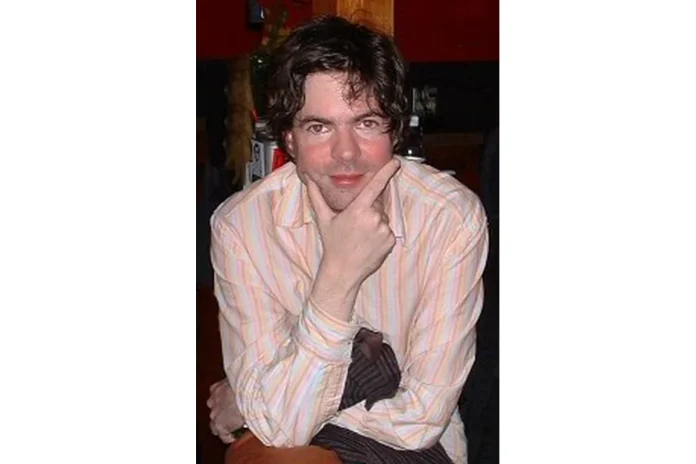
Jon Brion Bio
Jon Brion (born December 11, 1963) is an American singer, songwriter, multi-instrumentalist, record producer, and composer whose work has shaped alternative rock, film scoring, and modern pop production. Over a career that began in 1982, he has performed with groups such as the Excerpts, the Bats, ‘Til Tuesday, and the Grays, and later gained wider recognition as a producer and film-score composer. Brion has produced and collaborated with artists including Aimee Mann, Fiona Apple, Kanye West, Frank Ocean, and Mac Miller, and he released his debut solo album Meaningless in 2001. He is also widely known for his film scores, including work on Magnolia, Punch-Drunk Love, Eternal Sunshine of the Spotless Mind, Lady Bird, and Christopher Robin, and for his long-running live shows at the Los Angeles club Largo.
Early Life and Background
Jon Brion was born in Glen Ridge, New Jersey, on December 11, 1963, and grew up in a deeply musical household. His mother, LaRue, worked as a singer and administrative assistant, while his father, Keith Brion, served as a band director at Yale. Brion’s brother became a composer and arranger, and his sister became a violinist, giving him an early environment rich in classical and popular music.
Brion grew up in Connecticut and attended Hamden High School, where he chose to leave at the age of 17 in order to pursue music professionally. From 1980 to 1985, he played with the band The Excerpts alongside Stephen Harris, Dean Falcone, Jim Balga, Bobby Butcher, and Spike Priggen, sharpening the multi-instrumental skills that would later define his career. This period of constant gigging and band work laid the foundation for his later roles as a session player, producer, and composer.
Path to Music
Brion’s entry into the wider music industry came through a steady build of bands and collaborations during the early 1980s. In New Haven, Connecticut, he and musician Bill Murphy formed a writing partnership that grew into the Bats, joined by bassist Don “Riff” Fertman. The group released a single titled “Popgun” and an album called How Pop Can You Get? on Gustav Records in 1982, earning critical praise even though commercial success remained limited.
By 1987, Brion had moved to Boston, where he formed the short-lived band World’s Fair and joined the final touring lineup of Aimee Mann’s new wave group ‘Til Tuesday. These experiences positioned him within a growing network of alternative and pop musicians, and his reputation as a flexible session player soon brought calls from major artists. He later joined the Grays in 1994 with Dan McCarroll, Buddy Judge, and former Jellyfish guitarist Jason Falkner, further extending his profile before focusing on production and film scoring.
Jon Brion Career
Early Career (1982–1995)
Brion’s early career was defined by constant band work, session playing, and steady artistic growth. Following the Bats, he contributed guitar work to Jellyfish’s 1993 album Spilt Milk and played guitar on the Wallflowers’ hit single “One Headlight,” famously using a screwdriver resting on a nearby amp as a slide. These appearances helped establish his reputation as a creative and unusually resourceful studio musician.
He also played numerous instruments on Sam Phillips’ 1996 release Omnipop and became a regular contributor to projects by Aimee Mann, with whom he had been in a relationship since the late 1980s. His production work began in earnest when he co-produced Mann’s 1993 solo debut Whatever and its follow-up, I’m With Stupid. These records gave him a foothold in the production world and led to commissions from a growing list of singer-songwriters.
Breakthrough (1996–2010)
Brion’s breakthrough arrived through film scoring, beginning with his collaboration with director Paul Thomas Anderson on Hard Eight in 1996. He went on to score several of Anderson’s films, contributed music to Boogie Nights, and even had a cameo as a moustached guitar player in that film. His score for Anderson’s Magnolia in 1999 earned him a Grammy nomination for Best Score Soundtrack Album, signaling his arrival as a major film composer.
He followed that success with the scores for Punch-Drunk Love (2002) and Eternal Sunshine of the Spotless Mind (2004), the latter earning another Grammy nomination for Best Score Soundtrack Album. In parallel, he produced and collaborated with a remarkable range of artists, including Kanye West on Late Registration in 2005, Fiona Apple on Extraordinary Machine, Sean Lennon on Friendly Fire, Dido, Spoon, Keane, and Of Montreal. He also produced Best Coast’s second album, released in early 2012, expanding his reach into contemporary indie rock.
Later Career and Recent Work (2011–2025)
Brion’s later career has balanced high-profile film scores with continued production work for some of the most respected artists in contemporary music. He scored ParaNorman in 2012, Greta Gerwig’s Lady Bird in 2017, and Disney’s Christopher Robin in 2018, often collaborating with other composers such as Geoff Zanelli. He also composed the score for the Disney/Pixar short film The Blue Umbrella alongside Sarah Jaffe, and his music has continued to appear in the work of Paul Thomas Anderson, including two previously unreleased tracks used in the 2025 film One Battle After Another.
On the production side, Brion worked extensively on Mac Miller’s album Swimming in 2018 and completed production on Miller’s posthumous album Circles in 2020. Earlier in his career, his debut solo album Meaningless was released independently in 2001, and it was remastered and re-released through Jealous Butcher Records in 2022 with Brion’s approval. He has also maintained a strong presence as a live performer, returning to the Largo stage in September 2023 after a pandemic-related pause.
Notable Works and Milestones
Brion’s signature solo recording is Meaningless (2001), and his most celebrated film scores include Magnolia (1999), Punch-Drunk Love (2002), Eternal Sunshine of the Spotless Mind (2004), Lady Bird (2017), and Christopher Robin (2018). His work on Aimee Mann’s first solo albums is widely credited with helping shape the sound of notable alternative acts at the turn of the century, and his live looping performances at the Los Angeles club Largo have become a destination for musicians and fans alike.
Jon Brion Award Nominations
Jon Brion has received two Grammy Award nominations across his career, both in the category of Best Score Soundtrack Album. The first came for his score to Paul Thomas Anderson’s Magnolia in 1999, and the second for his work on Eternal Sunshine of the Spotless Mind in 2004. These nominations reflect his standing as one of the most respected film composers working in contemporary American cinema.
Jon Brion Awards Won
Based on the verified information available, Jon Brion has not been confirmed as a winner of a major industry award. His two Grammy nominations for Best Score Soundtrack Album remain the most prominent formal recognitions documented in his career record.
Jon Brion Family
Jon Brion comes from a musical family that strongly influenced his early development. His mother, LaRue, was a singer and administrative assistant, and his father, Keith Brion, worked as a band director at Yale. His brother went on to become a composer and arranger, while his sister became a violinist, creating a household environment in which performance and music theory were part of daily life.
Personal Life
Brion has lived and worked in Los Angeles, where he built his production studio and maintained his long-running performances at the club Largo. He was in a relationship with singer Aimee Mann from the late 1980s to the early 1990s, a period that overlapped with his earliest production work. He later had a relationship with actress Mary Lynn Rajskub from 1997 to 2002. No information regarding children has been publicly confirmed in the verified sources.