
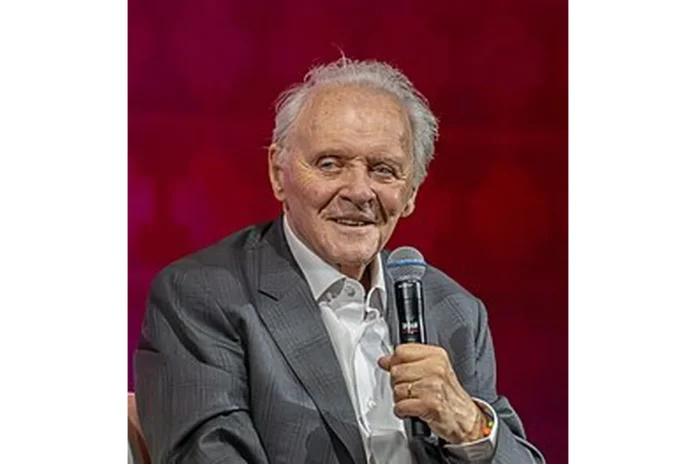
Anthony Hopkins Bio
Sir Philip Anthony Hopkins stands among the most accomplished actors in modern cinema, with a career spanning stage, television, and film across more than six decades. Trained at the Royal Welsh College of Music & Drama and the Royal Academy of Dramatic Art, he rose to international recognition through the National Theatre in London and achieved global fame for his portrayal of Hannibal Lecter in The Silence of the Lambs (1991). His career continued to flourish with celebrated performances in Howards End (1992), The Remains of the Day (1993), and The Father (2020), the latter earning a second Academy Award for Best Actor. Hopkins has also distinguished himself as a director, producer, and composer, and was knighted in 1993 for his contributions to the dramatic arts.
Hopkins has received numerous accolades over his career, including two Academy Awards, four BAFTA Awards, two Primetime Emmy Awards, and a Laurence Olivier Award. He was awarded the Cecil B. DeMille Award in 2006 for lifetime achievement and the BAFTA Academy Fellowship in 2008, the highest honor bestowed by the British Film Academy. A naturalised United States citizen since 2000, he retains strong ties to Wales and continues to be recognised as one of Britain’s most enduring and prolific performers.
Early Life and Background
Philip Anthony Hopkins was born on 31 December 1937 in the Margam district of Port Talbot, Glamorgan, Wales, the son of Annie Muriel Yeates and baker Richard Arthur Hopkins. One of his grandfathers was from Wiltshire, England. He has described his father’s working-class values as foundational to his life, recalling his father’s hardened, calloused hands as a reminder to remain humble. His school days were largely unproductive, as he preferred painting, drawing, and playing the piano to academic study, and he grew up with an inferiority complex, convinced he was unintelligent.
In 1949, his parents insisted he attend Jones’ West Monmouth Boys’ School in Pontypool in the hope of instilling discipline, but he remained there for only five terms before transferring to Cowbridge Grammar School in the Vale of Glamorgan. At the age of 15, he met fellow Welsh actor Richard Burton, an encounter that proved formative in steering him toward a career in acting. He later called Burton a phenomenal actor, though he noted that the two were never close despite their shared Welsh heritage and proximity growing up. Hopkins enrolled at the Royal Welsh College of Music & Drama in Cardiff, graduating in 1957, and then served in the British Army’s Royal Artillery regiment for two years between 1958 and 1960 before moving to London.
Path to Actor
In London, Hopkins studied at the Royal Academy of Dramatic Art, graduating in 1963 with a firm commitment to building a stage career. He made his first professional stage appearance in 1960 with the Swansea Little Theatre production of Have a Cigarette at the Palace Theatre in Swansea, Wales. After several years working in repertory theatre, he was spotted by Sir Laurence Olivier in 1965, who invited him to join the Royal National Theatre in London. Hopkins became Olivier’s understudy, and during a 1967 production of The Dance of Death at the National Theatre, he stepped in when Olivier was struck by appendicitis and delivered a performance that Olivier praised in his memoir as exceptional. Olivier offered him a memorable piece of advice about overcoming stage nerves: nerves are vanity, he told him, so forget what people think and simply jump.
His early screen work began with a 1964 short film titled Changes, followed by a supporting role in The Lion in Winter in 1968 as Richard the Lionheart, which earned him a BAFTA nomination for Best Actor in a Supporting Role. He delivered a breakthrough television performance as Pierre Bezukhov in the BBC miniseries War and Peace in 1972, winning the British Academy Television Award for Best Actor. In 1974, he starred in the original Broadway production of Equus at the Ethel Barrymore Theatre, earning the Drama Desk Award for Outstanding Actor in a Play for the 1974–75 season. These early successes established him as a formidable talent on both sides of the Atlantic and set the stage for the remarkable career that followed.
Anthony Hopkins Career
Early Career (1960–1979)
Hopkins built a versatile body of work throughout the 1960s and 1970s, appearing in films such as The Looking Glass War, When Eight Bells Toll, and A Doll’s House while simultaneously delivering acclaimed stage performances in London and New York. He began a five-film collaboration with director Richard Attenborough in 1972 with Young Winston, and portrayed psychologist Dysart in the original Broadway production of Equus, a role that brought him a Drama Desk Award and international theatrical recognition. During this decade, he also starred as British Army officer John Frost in Attenborough’s war film A Bridge Too Far and appeared in the psychological horror film Magic alongside Burgess Meredith, establishing himself as an actor equally at home in drama, horror, and comedy.
Breakthrough (1980–1999)
The 1980s brought Hopkins some of his most lauded performances. He starred as the English doctor Sir Frederick Treves in David Lynch’s The Elephant Man in 1980, a film that received eight Academy Award nominations including Best Picture, and delivered an extraordinary performance as Adolf Hitler in the CBS television film The Bunker in 1981, winning a Primetime Emmy Award. He earned the Laurence Olivier Award for Outstanding Achievement for his portrayal of Lambert Le Roux in the National Theatre production of Pravda in 1985, and played Prospero at the Mark Taper Forum in Los Angeles and Abel Magwitch in the ITV miniseries Great Expectations in 1989. By the close of the decade, Hopkins had become one of the most respected character actors of his generation, though he had grown disillusioned with the film industry and largely retreated to the London stage.
His career was transformed in 1991 when Jonathan Demme cast him as Dr. Hannibal Lecter in The Silence of the Lambs. Hopkins had all but given up on a Hollywood career, telling himself the chapter was closed, but his portrayal of the cannibalistic psychiatrist became one of the most iconic performances in cinema history. He won the Academy Award for Best Actor, with the film also winning Best Picture, Best Director, and Best Adapted Screenplay. The American Film Institute later ranked Lecter as the greatest film villain of all time. Hopkins reprised the role in Hannibal in 2001 and Red Dragon in 2002, cementing the character as a cornerstone of his legacy. The same year as The Silence of the Lambs, he appeared in Spotswood, Freejack, Chaplin, and Bram Stoker’s Dracula as Professor Van Helsing, and in 1992 he starred opposite Emma Thompson and Helena Bonham Carter in Merchant-Ivory’s critically acclaimed Howards End as the cold businessman Henry Wilcox.
In 1993, Hopkins reunited with Merchant-Ivory and Emma Thompson for The Remains of the Day, playing the emotionally repressed butler Stevens opposite Thompson’s housekeeper. The film was ranked by the British Film Institute as one of the 64 greatest British films of the 20th century, and Hopkins’s performance earned him a second Academy Award nomination for Best Actor and the BAFTA Award for Best Actor. That same year, he portrayed Oxford academic C. S. Lewis in Shadowlands, also earning a BAFTA nomination, and appeared opposite Isabella Rossellini in The Innocent. In 1994, he starred in Legends of the Fall with Brad Pitt and Aidan Quinn, and in 1997 appeared in The Edge alongside Alec Baldwin. By 1998, Hopkins was Britain’s highest-paid performer, starring in The Mask of Zorro and Meet Joe Black, and agreed to reprise Hannibal Lecter for a fee of 15 million pounds.
Notable Works and Milestones
The Silence of the Lambs remains the defining work of Hopkins’s career, a performance that earned him his first Academy Award and redefined the cinematic villain for a generation. The Father, released in 2020, brought him his second Academy Award for Best Actor at age 83, making him the oldest performer ever to win an acting Oscar. In between, his portrayal of Stevens in The Remains of the Day stands as one of his most nuanced performances, demonstrating his extraordinary ability to convey volumes through stillness and restraint. His role as Odin in the Marvel Cinematic Universe from 2011 to 2017 brought his commanding screen presence to a new generation of audiences, while his performance as Robert Ford in HBO’s Westworld from 2016 to 2018 earned a Primetime Emmy nomination and reaffirmed his capacity to reinvent himself across decades.
Anthony Hopkins Award Nominations
Across his career, Hopkins has received an extraordinary breadth of nominations from the film and television industries. He has been nominated for eight Golden Globe Awards and seven Screen Actors Guild Awards, in addition to Academy Award nominations for The Remains of the Day, Nixon, Amistad, The Two Popes, and The Father. His nomination for The Two Popes in 2019, alongside Jonathan Pryce, was particularly notable for the critical acclaim both actors received for their portrayals of Pope Benedict XVI and Pope Francis. With The Father, he became the oldest nominee ever in the Academy Award for Best Actor category, underscoring the remarkable longevity of his talent and the sustained quality of his work well into his eighties.
Anthony Hopkins Awards Won
Hopkins’s trophy cabinet reflects one of the most decorated careers in the history of screen acting. He has won two Academy Awards for Best Actor, four BAFTA Awards including one for Best Actor for The Father, two Primetime Emmy Awards for The Lindbergh Kidnapping Case and The Bunker, and a Laurence Olivier Award for his performance in Pravda. He was awarded the BAFTA Academy Fellowship in 2008, the highest honor the British Film Academy can bestow, and received the Golden Globe Cecil B. DeMille Award in 2006 in recognition of his lifetime contribution to entertainment. He earned a star on the Hollywood Walk of Fame in 2003 and was appointed a CBE in 1987 before being knighted by Queen Elizabeth II in 1993 for services to drama.
| Award | Wins | Year |
|---|---|---|
| Academy Award for Best Actor | The Silence of the Lambs | 1991 |
| Academy Award for Best Actor | The Father | 2021 |
| Primetime Emmy Award for Outstanding Lead Actor | The Lindbergh Kidnapping Case | 1976 |
| Primetime Emmy Award for Outstanding Lead Actor | The Bunker | 1981 |
| Laurence Olivier Award for Outstanding Achievement | Pravda | 1985 |
| BAFTA Award for Best Actor | The Silence of the Lambs | 1991 |
| BAFTA Award for Best Actor | The Remains of the Day | 1993 |
| BAFTA Award for Best Actor in a Leading Role | The Father | 2021 |
| BAFTA Academy Fellowship Award | Lifetime achievement | 2008 |
| Golden Globe Cecil B. DeMille Award | Lifetime achievement | 2006 |
| Hollywood Walk of Fame Star | Lifetime achievement | 2003 |
Anthony Hopkins Family
Hopkins is the son of Richard Arthur Hopkins and Annie Muriel Yeates. He has a daughter from his first marriage to actress Petronella Barker, whom he married in 1966 and divorced in 1972. His daughter was born during that marriage, though the two are now estranged. Hopkins has said he has no relationship with his daughter and expressed a philosophy of accepting the separation without resentment.
Personal Life
Hopkins has been married three times: to Petronella Barker from 1966 to 1972, to Jennifer Lynton from 1973 to 2002, and to Stella Arroyave since 2003. Arroyave, a Colombian-born antiques dealer, helped him through a period of depression in the early 2000s, and the couple celebrated their tenth wedding anniversary with a blessing at St Davids Cathedral in St Davids, Wales, on Christmas Eve 2013. Hopkins maintains a residence in Malibu, California, and became a naturalised United States citizen on 12 April 2000 while retaining his British citizenship. He has been sober since just after Christmas 1975, and was diagnosed with Asperger syndrome around 2011, describing the diagnosis as a great gift. He is a recovering alcoholic, a pescatarian, and a well-known mimic who famously recreated Laurence Olivier’s voice during the 1991 restoration of Spartacus. In January 2025, two neighbouring homes he owned in Pacific Palisades, Los Angeles, were destroyed in the Palisades Fire.