
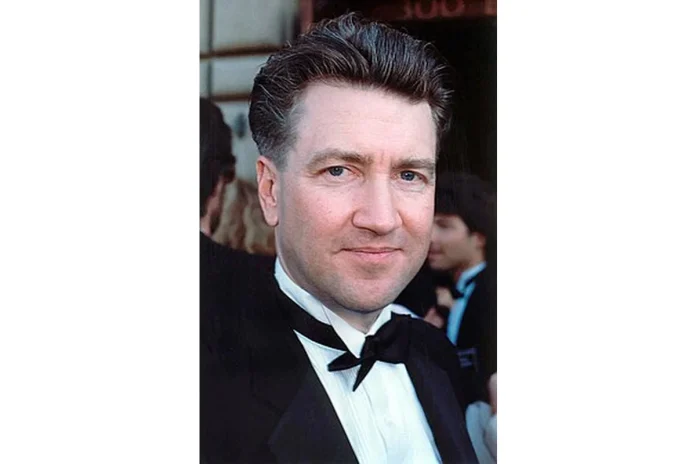
David Lynch Bio
David Keith Lynch (January 20, 1946 – January 16, 2025) was an American filmmaker, actor, painter, and musician widely regarded as one of the most influential directors in cinema history. His films are defined by a distinctive surreal sensibility that blends dreamlike imagery with noirish mood and offbeat humor, a style so unique it became known as “Lynchian.” Over a career spanning more than five decades, Lynch directed landmark works including Eraserhead (1977), The Elephant Man (1980), Blue Velvet (1986), and Mulholland Drive (2001), and co-created the groundbreaking television series Twin Peaks. He received numerous accolades, including a Golden Lion for Lifetime Achievement, an Academy Honorary Award, and multiple Oscar, Golden Globe, and Emmy nominations.
Early Life and Background
David Keith Lynch was born at St. Patrick’s Hospital in Missoula, Montana, on January 20, 1946, the son of English-language tutor Edwina “Sunny” Lynch and USDA research scientist Donald Walton Lynch. His mother’s grandparents were Swedish-speaking Finns who settled in the United States in the 19th century. The family moved frequently during Lynch’s childhood due to his father’s work with the USDA, living in Idaho, Washington, North Carolina, and Virginia. Lynch described his upbringing as “Middle America as it’s supposed to be” but noted that looking closer revealed darker realities beneath the surface.
Lynch joined the Boy Scouts during his youth and achieved the rank of Eagle Scout. A pivotal moment came when he befriended Toby Keeler, whose father Bushnell was a painter who gave Lynch a copy of Robert Henri’s book The Art Spirit. This gift inspired Lynch to dedicate himself to what he called “the art life.” At Francis C. Hammond High School in Alexandria, Virginia, Lynch struggled academically but was popular with fellow students.
Path to Filmmaking
After high school, Lynch decided to pursue painting in college. He began at the Corcoran School of the Arts and Design in Washington, D.C., before transferring to the School of the Museum of Fine Arts in Boston, where his roommate was future musician Peter Wolf. He dropped out after a year, later saying he “was not inspired at all in that place.” Lynch traveled to Europe with his friend Jack Fisk, hoping to train with Austrian painter Oskar Kokoschka, but the plan fell through and they returned to the United States after just two weeks.
In Philadelphia, Lynch enrolled at the Pennsylvania Academy of the Fine Arts, where he thrived among serious painters. In 1967, he married Peggy Reavey and their daughter Jennifer was born the following year. To support his family, Lynch worked printing engravings while studying. During this period, he created his first short film, Six Men Getting Sick (Six Times), which he made for just $150. The 57-second animated short won joint-first prize at the academy’s annual exhibit. He later made The Grandmother (1970), which received funding from the American Film Institute.
Lynch moved with his family to Los Angeles in 1970 and enrolled at the AFI Conservatory. He began writing a script called Gardenback but grew frustrated with interference from the program. Feeling the project was “wrecked,” he set out on a new film that would become Eraserhead. He quit the Conservatory after one year but was asked to return by dean Frank Daniel, who considered Lynch one of the school’s best students.
David Lynch Career
Early Career (1967-1977)
Filming for Eraserhead began on May 29, 1972, at night in abandoned stables. Lynch assembled a small crew including Sissy Spacek, Jack Fisk, cinematographer Frederick Elmes, and sound designer Alan Splet. The AFI provided a $10,000 grant, but it was insufficient to complete the film. Lynch relied on loans from his father and money earned from a paper route delivering The Wall Street Journal. The production was haphazard due to financial problems, regularly stopping and starting again. Eraserhead was finally completed in 1976, five years after filming began.
Filmed in black and white, Eraserhead tells the story of Henry, a quiet young man living in a dystopian industrial wasteland whose girlfriend leaves him to care for a deformed baby. The film was heavily influenced by the fearful atmosphere of Philadelphia, which Lynch later called “my Philadelphia Story.” After being rejected by the Cannes Film Festival and the New York Film Festival, Eraserhead found an audience through distributor Ben Barenholtz on the midnight movie circuit in 1977. It became one of the most important midnight movies of the 1970s. Stanley Kubrick later called it one of his all-time favorite films.
Breakthrough (1980-1990)
After Eraserhead’s success on the underground circuit, Mel Brooks viewed the film and embraced Lynch, declaring him “a madman” and offering him a deal. Through producer Stuart Cornfeld, Lynch was given the opportunity to direct The Elephant Man (1980), based on the true story of Joseph Merrick, a severely deformed man in Victorian London. Starring John Hurt as Merrick and Anthony Hopkins as surgeon Frederick Treves, the film was shot in London and earned eight Academy Award nominations, including Best Director and Best Adapted Screenplay.
After The Elephant Man’s success, George Lucas offered Lynch the opportunity to direct Return of the Jedi. Lynch declined, saying he had “next to zero interest” and arguing Lucas should direct it himself. Instead, Lynch accepted an offer from Dino de Laurentiis to adapt Frank Herbert’s novel Dune (1984). Despite his efforts to create a distinctive look for the film, Lynch was unhappy with extensive studio interference and many of his scenes were removed from the final cut. The film cost $45 million to make but grossed only $27.4 million domestically and was a critical and commercial disappointment.
Lynch returned to form with Blue Velvet (1986), a deeply disturbing exploration of the darkness beneath suburban America. The film follows college student Jeffrey Beaumont, who discovers a severed ear in a field and uncovers a criminal underworld involving psychopath Frank Booth, played by Dennis Hopper. Isabella Rossellini played singer Dorothy Vallens in a performance that required considerable courage. Blue Velvet won the National Society of Film Critics Award for Best Film and earned Lynch his second Academy Award nomination for Best Director. Pauline Kael praised him as a “genius naïf” and predicted he might become “the first populist surrealist.”
Breakthrough (1990-2001)
In 1990, Lynch co-created the television series Twin Peaks with Mark Frost. The show followed FBI agent Dale Cooper investigating the murder of high school student Laura Palmer in a small Washington town. It premiered on ABC in April 1990 and became a cultural phenomenon, blending soap opera, horror, and surrealism in unprecedented ways. Lynch also appeared as FBI agent Gordon Cole in several episodes and received nine Primetime Emmy Award nominations for the series. However, disputes with ABC executives over revealing Laura Palmer’s killer led to declining ratings and cancellation after two seasons.
The same year, Lynch released Wild at Heart, an adaptation of Barry Gifford’s novel about two lovers on a road trip starring Nicolas Cage and Laura Dern. The film won the Palme d’Or at the 1990 Cannes Film Festival, making Lynch the first American director to win the award since Francis Ford Coppola in 1974. He later directed Twin Peaks: Fire Walk with Me (1992), a prequel exploring the final days of Laura Palmer’s life. While initially a commercial failure, the film has since been recognized as a masterpiece.
Lynch continued with Lost Highway (1997), a non-linear noir film co-written with Barry Gifford, and The Straight Story (1999), a G-rated drama about an elderly man traveling 300 miles on a lawnmower to visit his dying brother. The latter was Lynch’s only film released by Walt Disney Pictures and was praised as one of the year’s best films by The New York Times.
In 2001, Lynch released Mulholland Drive, a nonlinear surrealist exploration of Hollywood’s dark side. Originally conceived as a television pilot for ABC that was shelved, Lynch completed it as a feature film with French financing. Starring Naomi Watts and Laura Harring, the film was a critical success, earning Lynch Best Director at the 2001 Cannes Film Festival and his third Academy Award nomination for Best Director. In 2016, a BBC poll of 177 film critics named Mulholland Drive the best film of the 21st century.
David Lynch Award Nominations
David Lynch received multiple major award nominations throughout his career. He earned four Academy Award nominations spanning different decades, beginning with Best Director nominations for The Elephant Man (1980), Blue Velvet (1986), and Mulholland Drive (2001), as well as a Best Picture nomination for Top Gun: Maverick (2023). He also received two BAFTA Award nominations, four Golden Globe nominations, and nine Primetime Emmy Award nominations for his work on Twin Peaks.
David Lynch Awards Won
Throughout his career, David Lynch won numerous prestigious awards. He won the Palme d’Or at the Cannes Film Festival for Wild at Heart (1990) and received the Golden Lion for Lifetime Achievement at the Venice Film Festival. He won France’s César Award for Best Foreign Film twice. Lynch also received an Independent Spirit Award, a Saturn Award, an Academy Honorary Award, and a posthumous Laurel Award for Screenwriting Achievement from the Writers Guild of America.
David Lynch Family
David Lynch was married to Peggy Reavey in 1968, with whom he had his first child, Jennifer Lynch, a film director. They divorced in 1974. In June 1977, Lynch married Mary Fisk, sister of his longtime collaborator Jack Fisk. They had one son, Austin Jack Lynch, born in 1982, before separating in 1985 and divorcing in 1987. Lynch had a relationship with actress Isabella Rossellini from 1986 to 1991.
He later entered into a relationship with his editor Mary Sweeney, with whom he had a son, Riley Sweeney Lynch, born in 1992. They married in May 2006 but filed for divorce the following month. In 2009, Lynch married actress Emily Stofle, who appeared in Inland Empire and the 2017 Twin Peaks revival. They had one daughter, Lula Boginia Lynch, born in 2012. Stofle filed for divorce in 2023, and a settlement was reached in December 2024.
Personal Life
David Lynch was a longtime practitioner of Transcendental Meditation, which he began in 1973 after his sister suggested he try it. He described it as a revelation and said he never missed a session since. He met Maharishi Mahesh Yogi, founder of the Transcendental Meditation movement, in 1975. In July 2005, Lynch launched the David Lynch Foundation for Consciousness-Based Education and Peace, established to fund meditation lessons for students and research on the technique. He hosted benefit concerts for the foundation, including a 2009 event at Radio City Music Hall featuring Paul McCartney, Ringo Starr, and other artists. Lynch authored the book Catching the Big Fish: Meditation, Consciousness, and Creativity in 2006, describing his creative processes and the benefits of meditation.
Beyond filmmaking, Lynch pursued music, founding his own record label David Lynch MC and releasing several albums including BlueBob (2001), Crazy Clown Time (2011), The Big Dream (2013), and Cellophane Memories (2024), a collaboration with Chrystabell. He also worked as a painter throughout his career, with major exhibitions at the Fondation Cartier in Paris and the Pennsylvania Academy of the Fine Arts. Lynch was known for his daily weather reports posted online and his distinctive personal brand of coffee called “David Lynch Signature Cup.”