
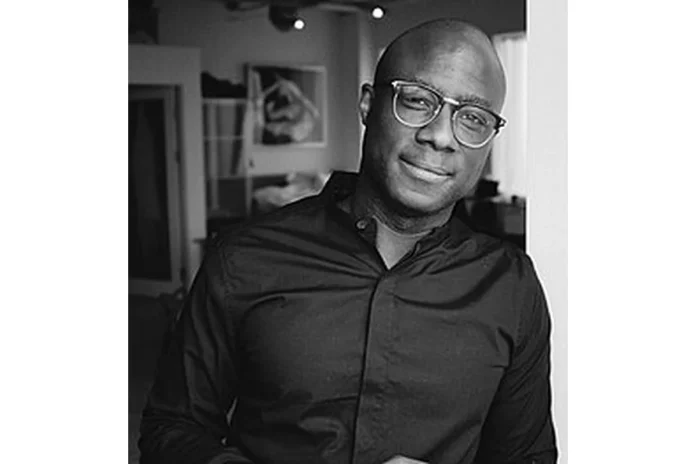
Barry Jenkins Bio
Barry Jenkins (born November 19, 1979) is an American filmmaker whose work as a director, screenwriter, and producer has reshaped contemporary independent cinema. He first gained recognition with his short film My Josephine and went on to direct the acclaimed features Moonlight and If Beale Street Could Talk. Barry Jenkins won the Academy Award for Best Picture for Moonlight, becoming a defining voice for stories centered on Black identity, family, and belonging.
Born and raised in Miami, Florida, Barry Jenkins studied film at Florida State University before moving to Los Angeles to build his career. Over more than two decades, he has moved fluidly between intimate low-budget drama, literary adaptation, prestige television, and large-scale studio filmmaking, while remaining committed to character-driven storytelling and nuanced portrayals of Black American life.
Early Life and Background
Barry Jenkins was born on November 19, 1979, at Jackson Memorial Hospital in Miami, Florida. He was the youngest of four siblings, each of whom shared a different father. His father left the family before Jenkins was born, uncertain of his paternity, and died when Jenkins was twelve years old. Jenkins has said that he still has no idea who his biological father is and has spoken openly about the impact of that absence on his sense of self.
Jenkins grew up in Liberty City, a predominantly Black neighborhood in Miami, in an overcrowded apartment. He was primarily raised by an older woman who had also cared for his mother during her teen years, rather than by his own blood relatives. His mother, a nurse, struggled with addiction, and Jenkins has described his childhood as lonely and disordered, marked by moments of abandonment that later shaped his art.
As a teenager, Barry Jenkins attended Miami Northwestern Senior High School, where he played football and ran track while living with friends from school. He dreamed of pursuing a creative-writing degree, and the escape of an active imagination carried him through a difficult home life. That early attraction to storytelling on the page would eventually point him toward the cinema.
Path to Filmmaking
Barry Jenkins chose to study film at the Florida State University College of Motion Picture Arts, drawn initially by the campus atmosphere. He later recalled thinking of the school as one of the Blackest places in America, a setting where he felt he belonged. At Florida State, he met many of the collaborators who would shape his career, including cinematographer James Laxton, producer Adele Romanski, and editors Nat Sanders and Joi McMillon.
Feeling uncertain about his technical skills, Jenkins took a year away from the program to strengthen them. While his classmates often turned to Hollywood and genre cinema for inspiration, Jenkins looked toward foreign arthouse directors such as Wong Kar-wai, Claire Denis, Hou Hsiao-hsien, and Lynne Ramsay. He became a member of Alpha Phi Alpha fraternity during his college years and, four days after graduating, moved to Los Angeles to chase a filmmaking career.
In Los Angeles, Barry Jenkins spent two years working as a production assistant on a variety of projects, including a stint at Harpo Productions. He grew disillusioned with the commercial side of Hollywood filmmaking, which stood in stark contrast to the love of cinema he had discovered in school. That tension between personal artistry and industry demands has remained a quiet through-line in his career ever since.
Barry Jenkins Career
Early Career (2003–2008)
Barry Jenkins made his filmmaking debut in 2001 with the short film My Josephine, a portrait of a young Arabic-speaking man navigating romance in the aftermath of the September 11 attacks. The film demonstrated to Jenkins that he could do the work required to stand alongside any filmmaker, regardless of background. He followed it with another short, Little Brown Boy, which examined Black children tried as adults for the deaths of their peers.
Building on these shorts, Barry Jenkins wrote and directed his first feature film, Medicine for Melancholy (2008). The low-budget drama, starring Wyatt Cenac and Tracey Heggins, was linked to the mumblecore scene and addressed the lack of African-American representation within it. The film received critical praise, toured festivals, earned small awards and a limited theatrical release, and brought Jenkins an Independent Spirit Award nomination for Best First Feature.
Breakthrough (2016)
After an eight-year absence from feature filmmaking, Barry Jenkins returned with Moonlight (2016), a deeply personal drama adapted from Tarell Alvin McCraney’s play In Moonlight Black Boys Look Blue. Co-written with McCraney, the film draws on the shared childhoods of both writers in Miami. Jenkins composed his screenplay in just ten days, and the movie was shot on a tight schedule in Miami over twenty-five days, an experience cast member Naomie Harris described as intimate and collaborative.
Moonlight premiered at the Telluride Film Festival in September 2016 to immediate critical acclaim and went on to dominate awards season. The film won the Golden Globe Award for Best Picture – Drama, and at the 89th Academy Awards it won the Academy Award for Best Picture, with Jenkins and McCraney jointly winning Best Adapted Screenplay. With his Best Director nomination, Jenkins became the fourth Black filmmaker nominated in that category and the second to direct a Best Picture winner.
In a 2022 Sight and Sound poll of more than 1,600 critics, programmers, and scholars, Moonlight was named the 60th greatest film of all time. Scholars have called it among the most racially significant Best Picture winners in Oscars history, and anthropologists have pointed to its success as evidence of growing institutional recognition for Black storytelling. For Jenkins, it marked a career-defining breakthrough.
Notable Works and Milestones
Following Moonlight, Barry Jenkins adapted James Baldwin’s novel If Beale Street Could Talk, working closely with Baldwin’s estate and incorporating handwritten notes the novelist had left about a potential film version. Released in December 2018, the film earned widespread critical praise and garnered Academy Award and Golden Globe nominations for Best Adapted Screenplay, along with a Best Supporting Actress win for Regina King at both ceremonies. Jenkins has described Moonlight, If Beale Street Could Talk, and The Underground Railroad as a loose thematic trilogy exploring childhood abandonment, family, and Black American identity.
Barry Jenkins Award Nominations
Barry Jenkins has earned nominations across the most prestigious film and television awards. His Independent Spirit Award nomination for Best First Feature came for Medicine for Melancholy in 2008. For Moonlight, he received Academy Award nominations for Best Director and Best Adapted Screenplay, the latter of which he won alongside Tarell Alvin McCraney. He earned another Academy Award nomination for Best Adapted Screenplay for If Beale Street Could Talk, along with Golden Globe and other screenplay nominations.
Barry Jenkins Awards Won
Barry Jenkins has collected major honors throughout his career. His biggest awards include the Academy Award for Best Picture and the Academy Award for Best Adapted Screenplay for Moonlight, the Golden Globe Award for Best Picture – Drama for Moonlight, and the Best Supporting Actress Oscar and Golden Globe won by Regina King for If Beale Street Could Talk. His television work on The Underground Railroad earned him a Primetime Emmy Award nomination for Outstanding Directing for a Limited Series or Movie and a Peabody Award. In 2017, Jenkins was included on the annual Time 100 list of the most influential people in the world.
Barry Jenkins Family
Barry Jenkins was raised primarily by an older woman in his Liberty City neighborhood, rather than by his biological family. He is the youngest of four siblings from different fathers, and his mother struggled with addiction during his early years. These early experiences of family separation and chosen kinship echo through his body of work and have shaped his portrayal of parenthood, friendship, and love on screen.
Personal Life
Barry Jenkins began dating filmmaker Lulu Wang in 2018, and the two were married in a private ceremony in December 2024. Wang, known for directing The Farewell, has spoken publicly about the influence she has had on his creative process. Jenkins lives in the United States and continues to split his time between personal projects in film and television and his ongoing collaborations with longtime creative partners.