
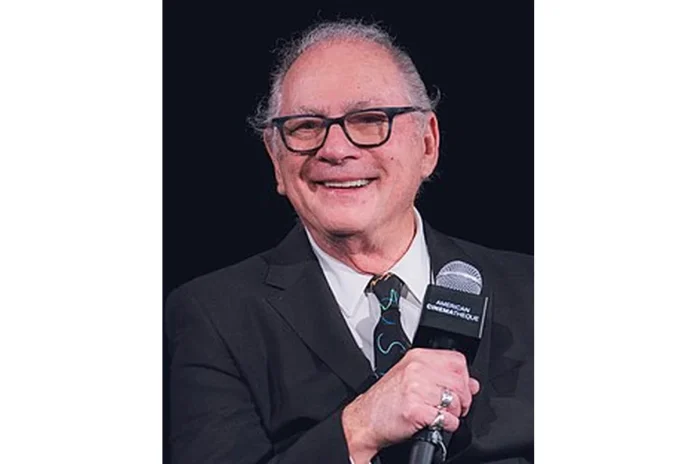
Barry Levinson Bio
Barry Lee Levinson, born on April 6, 1942, is an American film director, producer, and screenwriter whose career has stretched across more than five decades of Hollywood history. A Baltimore native, he first drew widespread attention with the character-driven comedy Diner in 1982, then expanded his range with the baseball drama The Natural and the war satire Good Morning, Vietnam. His biggest commercial and critical triumph came with Rain Man in 1988, the sibling road movie that earned him the Academy Award for Best Director and the Best Picture prize for the producing team.
Across the 1990s and 2000s, Levinson built a versatile résumé that included the gangster epic Bugsy, the political satire Wag the Dog, and producing duties on films such as The Perfect Storm. In recent years he has turned much of his energy toward television, co-executive producing the Hulu miniseries Dopesick in 2021 and directing its opening episodes, while continuing to develop new feature projects.
Early Life and Background
Barry Lee Levinson was born on April 6, 1942, in Baltimore, Maryland, and raised in the Forest Park neighborhood of the city. He is the son of Irvin Levinson and Violet Krichinsky, who worked in the furniture and appliance business. Levinson is of Russian-Jewish descent, a heritage that has quietly informed several of his later projects about family and immigration.
He graduated from Forest Park Senior High School in 1960 and went on to study broadcast journalism at Baltimore Junior College. He later continued his studies at American University in Washington, D.C., where he sharpened the storytelling instincts that would later define his work. As a young man, Levinson moved to Los Angeles to pursue a career as an actor and writer, performing comedy routines and absorbing the rhythms of the entertainment industry from the inside.
During those early years in Los Angeles, Levinson shared an apartment with George Jung, the figure later portrayed in the film Blow. The friendship placed Levinson at the margins of a counterculture world that would occasionally surface in his screenplays, even as he focused his professional life on mainstream comedy and drama.
Path to Directing
Levinson’s first notable work as a writer was for television variety shows, including The Marty Feldman Comedy Machine, The Lohman and Barkley Show, The Tim Conway Show, and The Carol Burnett Show. Those assignments taught him the discipline of writing on tight deadlines and for established comedic voices, a grounding that shaped his later feature work. He then moved into film screenwriting, contributing to Mel Brooks comedies such as Silent Movie in 1976 and High Anxiety in 1977, where he also played a small role as a bellboy.
He co-wrote the Oscar-nominated script for …And Justice for All in 1979, a legal satire that announced his arrival as a serious feature writer. He also worked as an uncredited co-writer on the Dustin Hoffman comedy Tootsie in 1982. These writing credits gave him the leverage to make his own directorial debut with Diner in 1982, a project he also wrote and that earned him an Oscar nomination for Best Original Screenplay.
Barry Levinson Career
Early Career (1970–1984)
Levinson began his professional film career in 1970 as a writer, working primarily on comedy television programs throughout the first half of the decade. His transition to feature films began with the screenplays for the Mel Brooks comedies Silent Movie and High Anxiety, followed by the Oscar-nominated script for …And Justice for All. These writing assignments established his reputation for sharp dialogue and a strong sense of ensemble character.
His directorial debut came with Diner in 1982, a Baltimore-set comedy that doubled as a writer’s showcase and earned him an Academy Award nomination for Best Original Screenplay. He followed that success with The Natural in 1984, a period baseball drama starring Robert Redford that cemented his ability to handle larger-scale storytelling.
Breakthrough (1985–1997)
The period from the mid-1980s through the late 1990s marked Levinson’s emergence as a major Hollywood director. In 1987 he released both Tin Men, the second of his Baltimore-set films, and Good Morning, Vietnam, the Robin Williams war comedy that became one of the year’s biggest hits. Those projects positioned him for the most defining moment of his career.
Rain Man arrived in 1988, starring Dustin Hoffman and Tom Cruise as brothers on a cross-country journey. The film won four Academy Awards, including Best Picture and Best Director for Levinson, and also captured the Golden Bear at the 39th Berlin International Film Festival. He continued his strong run with Bugsy in 1991, a gangster drama starring Warren Beatty that drew ten Academy Award nominations, and with Wag the Dog in 1997, a political satire starring Dustin Hoffman and Robert De Niro that won the Silver Bear – Special Jury Prize at the 48th Berlin International Film Festival.
Notable Works and Milestones
Among Levinson’s signature achievements are Diner, The Natural, Good Morning, Vietnam, Rain Man, Bugsy, and Wag the Dog, a run of films that spans comedy, drama, satire, and historical epic. His work has been honored with the Academy Award for Best Director, the Golden Bear at Berlin, and the Silver Bear jury prize, along with the Laurel Award for Screenwriting Achievement from the Writers Guild of America in 2010.
Barry Levinson Award Nominations
Barry Levinson has earned multiple Academy Award nominations across his career as both writer and director, including a Best Original Screenplay nomination for Diner and ten Academy Award nominations for Bugsy as a producer. He has also received nominations and honors from international festivals, including recognition at the Berlin International Film Festival for Rain Man and Wag the Dog, alongside a Distinguished Screenwriter Award from the Austin Film Festival in 2004.
Barry Levinson Awards Won
Levinson won the Academy Award for Best Director for Rain Man at the 1989 ceremony, and shared in the film’s Best Picture win as a producer. He also received the Golden Bear at the 39th Berlin International Film Festival for Rain Man, the Silver Bear – Special Jury Prize at the 48th Berlin International Film Festival for Wag the Dog, and the Laurel Award for Screenwriting Achievement from the Writers Guild of America in 2010.
| Award | Wins | Year |
|---|---|---|
| Academy Award for Best Director (Rain Man) | 1 | 1989 |
| Academy Award for Best Picture (Rain Man) | 1 | 1989 |
| Golden Bear, Berlin International Film Festival (Rain Man) | 1 | 1989 |
| Silver Bear – Special Jury Prize, Berlin International Film Festival (Wag the Dog) | 1 | 1998 |
| Writers Guild of America Laurel Award for Screenwriting Achievement | 1 | 2010 |
Barry Levinson Family
Barry Levinson is the son of Irvin Levinson and Violet Krichinsky, both of whom worked in the furniture and appliance business in Baltimore. He is of Russian-Jewish descent, a background that has shaped several of his family-centered stories. He has two children, including the writer and filmmaker Sam Levinson, known for creating the HBO series Euphoria.
Personal Life
Levinson has long been associated with Baltimore, drawing on his upbringing in the Forest Park neighborhood as the setting for Diner, Tin Men, Avalon, and Liberty Heights. He co-founded the production company Baltimore Pictures with producer Mark Johnson and later partnered with Tom Fontana to form The Levinson/Fontana Company, which produced series such as Homicide: Life on the Street and Oz. In 2003 he published his first novel, Sixty-Six, a semi-autobiographical work set in Baltimore in the 1960s.