
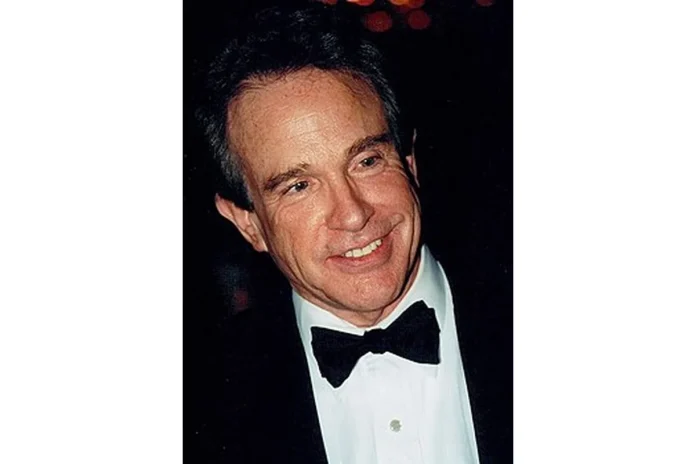
Warren Beatty Bio
Henry Warren Beatty, widely known as Warren Beatty, is an American actor and filmmaker whose career has spanned more than six decades. He has won an Academy Award, three Golden Globe Awards, and a long list of honorary prizes that place him among the most decorated figures in Hollywood history. Over the course of his career, Beatty has been nominated for 14 Academy Awards across acting, directing, writing, and producing categories, and he earned his Best Director Academy Award for the historical epic Reds in 1981.
Beatty first gained attention as a leading man in the 1960s and went on to become one of the rare stars who has produced, directed, written, and starred in his own major films. He is also the younger brother of actress, dancer, and writer Shirley MacLaine. In 1992, he married actress Annette Bening, with whom he has four children, including actress Ella Beatty.
Early Life and Background
Henry Warren Beatty was born on March 30, 1937, in Richmond, Virginia, to Ira Owens Beaty and Kathlyn Corinne Beaty, a schoolteacher from Nova Scotia. His father studied for a PhD in educational psychology and worked as a teacher, school administrator, and real estate professional, while his mother and grandparents were also educators. The family was Baptist, and during Beatty’s childhood his father moved the household from Richmond to Norfolk, then to Arlington and Waverly, before settling again in Arlington, where Ira Beaty took a position at Thomas Jefferson Junior High School in 1945.
Beatty grew up with an older sister, Shirley MacLaine, whose success in Hollywood encouraged his own interest in performing. As a boy, he often accompanied his sister to movie theaters, and he later cited films such as The Philadelphia Story and Love Affair as formative influences. He played football at Washington-Lee High School in Arlington and reportedly turned down several college football scholarships in order to study liberal arts at Northwestern University, where he joined the Sigma Chi fraternity.
After one year at Northwestern, Beatty moved to New York City to study acting under Stella Adler at the Stella Adler Studio of Acting. To support himself, he worked a string of odd jobs, including dishwasher, piano player, bricklayer’s assistant, construction worker, and briefly a sandhog. He supported Shirley MacLaine’s work as a performer during this period and credited her example with helping shape his ambitions behind the camera as well as in front of it.
Path to Acting
Beatty’s professional start came quickly on stage and television. He made his Broadway debut in William Inge’s kitchen-sink drama A Loss of Roses in 1960, earning a Tony Award nomination for Best Featured Actor in a Play and a Theatre World Award. His early television credits included appearances on Studio One in 1957, Kraft Television Theatre in 1957, and Playhouse 90 in 1959, along with a recurring role on The Many Loves of Dobie Gillis during its first season in 1959 and 1960.
He fulfilled his military obligation by enlisting in the California Air National Guard as an airman third class in February 1960, and he was later discharged because of a physical disability. While building his stage résumé, he began working with a series of major directors who shaped his craft, starting with Elia Kazan, who gave him his first film role.
Beatty made his film debut in Elia Kazan’s Splendor in the Grass in 1961, acting opposite Natalie Wood. The film was both a critical and commercial hit, earning Beatty a Golden Globe nomination for Best Actor and the Golden Globe Award for New Star of the Year – Actor. Beatty later described Kazan as the most important mentor of his early career, and the two remained in contact for decades.
Warren Beatty Career
Early Career (1957–1966)
Following his debut in Splendor in the Grass, Beatty moved rapidly through a string of varied roles. He appeared in Tennessee Williams’ The Roman Spring of Mrs. Stone in 1961 with Vivien Leigh, John Frankenheimer’s All Fall Down in 1962 alongside Angela Lansbury, Karl Malden, and Eva Marie Saint, and Robert Rossen’s Lilith in 1963 with Jean Seberg and Peter Fonda. He also starred in Promise Her Anything in 1964, Mickey One in 1965, and Kaleidoscope in 1966, gaining experience across drama, romance, and genre pieces.
In 1965, Beatty formed a production company called Tatira, named for his parents, Kathlyn and Ira. This move marked the beginning of his lifelong habit of taking creative control of his projects. By the end of the decade, he had earned a reputation as a serious young actor willing to challenge himself with complex material, setting the stage for a breakthrough that would change Hollywood.
Breakthrough (1967–1979)
At age 30, Beatty produced and starred as Clyde Barrow in Bonnie and Clyde in 1967, a film that redefined both his career and the New Hollywood movement. He assembled a team that included writers Robert Benton and David Newman, director Arthur Penn, and a cast featuring Faye Dunaway, Gene Hackman, Estelle Parsons, Gene Wilder, and Michael J. Pollard. The film earned ten Academy Award nominations and seven Golden Globe nominations, with Beatty’s share of profits reportedly exceeding six million dollars after he gave co-director Arthur Penn a portion of his stake.
Beatty continued to balance acting and producing in the years that followed, working with directors such as George Stevens on The Only Game in Town in 1970, Robert Altman on McCabe & Mrs. Miller in 1971, and Richard Brooks on Dollars in 1971. In 1975, he produced, co-wrote, and starred in the satire Shampoo, directed by Hal Ashby, which earned four Academy Award nominations and five Golden Globe nominations.
In 1978, Beatty took the next major step by directing, producing, writing, and starring in Heaven Can Wait, sharing co-directing credit with Buck Henry. The film was nominated for nine Academy Awards, including Best Picture, Director, Actor, and Adapted Screenplay, and won three Golden Globe Awards, including Best Motion Picture and Best Actor. The success of Heaven Can Wait established Beatty as a fully fledged filmmaker, not merely a star.
Notable Works and Milestones
Beatty’s most important projects include Bonnie and Clyde in 1967, which transformed his image and his career; Heaven Can Wait in 1978, which proved his abilities as a director; Reds in 1981, for which he won his only Academy Award; Dick Tracy in 1990, which produced three Oscar wins; and Bulworth in 1998, which earned a Best Original Screenplay nomination. Beyond directing, he produced, wrote, and acted as Bugsy Siegel in Bugsy in 1991 and later starred in Rules Don’t Apply in 2016, a Howard Hughes drama he also wrote, produced, and directed.
Warren Beatty Award Nominations
Beatty has earned 14 Academy Award nominations, a tally that places him among the most-nominated performers in Oscar history. His nominations include four for Best Picture, four for Best Actor, two for Best Director, three for Best Original Screenplay, and one for Best Adapted Screenplay. He has also received multiple Golden Globe Award nominations across acting, directing, and producing categories for films such as Bonnie and Clyde, Heaven Can Wait, Shampoo, Reds, Dick Tracy, Bugsy, and Bulworth, along with earlier recognition for his stage work, including a Tony Award nomination for Best Featured Actor in a Play in 1960.
Warren Beatty Awards Won
Beatty’s competitive Academy Award came for Best Director for Reds in 1981, and the film also took Academy Awards for Best Supporting Actress, won by Maureen Stapleton, and Best Cinematography, won by Vittorio Storaro. He has won three Golden Globe Awards in total, including New Star of the Year – Actor for Splendor in the Grass in 1961, Best Actor for Heaven Can Wait in 1978, and Best Director for Reds in 1981. His films have earned many additional Academy Awards, including three wins for Dick Tracy in 1990 for Best Art Direction, Best Makeup, and Best Original Song, and two wins for Bugsy in 1991 for Best Art Direction and Best Costume Design.
| Award | Wins | Year |
|---|---|---|
| Academy Award for Best Director (Reds) | 1 | 1981 |
| Golden Globe – New Star of the Year – Actor | 1 | 1961 |
| Golden Globe – Best Actor in a Motion Picture – Musical or Comedy (Heaven Can Wait) | 1 | 1978 |
| Golden Globe – Best Director (Reds) | 1 | 1981 |
Beatty has also received a series of major honorary awards that recognize his long contribution to film. These include the Irving G. Thalberg Award in 1999, the BAFTA Fellowship in 2002, the Kennedy Center Honors in 2004, the Cecil B. DeMille Award in 2007, and the AFI Life Achievement Award in 2008.
Warren Beatty Family
Warren Beatty is the younger brother of actress, dancer, and writer Shirley MacLaine, whose early Hollywood success helped inspire his own career. Their parents were Ira Owens Beaty and Kathlyn Corinne Beaty, and the family moved several times across Virginia during Beatty’s childhood. His uncle by marriage was Canadian politician A.A. MacLeod, and his niece is Sachi Parker. In 1992, Beatty married actress Annette Bening, with whom he has four children, including actress Ella Beatty.
Personal Life
Beatty has been married to actress Annette Bening since 1992, and the couple share four children, including Ella Beatty. Before his marriage to Bening, Beatty was known for a long list of high-profile romantic relationships that drew extensive media coverage, and he was once famously linked to more than one hundred female celebrities. Early in his career he was briefly engaged to actress Joan Collins, though he later described the engagement as exaggerated. In 2015, singer Carly Simon revealed that the second verse of her 1972 song You’re So Vain was about a past relationship with Beatty.